 よみうち英語Read the classics by typing
Notes Scene 19: The History of a Stone
You've finished this scene
Notes on this scene
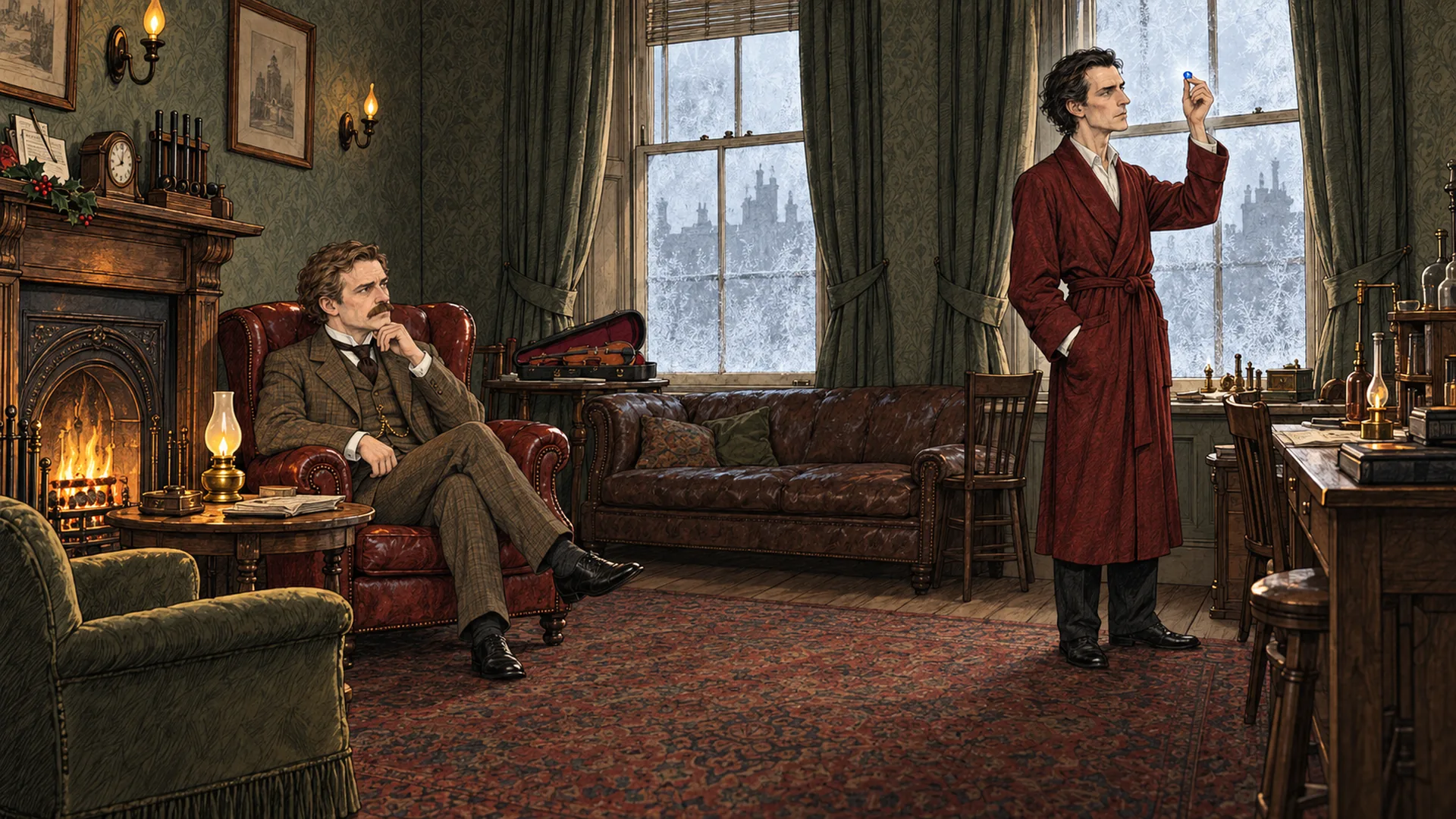
Holmes studies the carbuncle, recounts its violent history, locks it away, and decides to notify the countess. The scene establishes this development clearly and closes before the next step begins, preserving the original passage's order and the limits of what the characters know at this point.
Japanese in this scene
- 若いのに
- In 若いのに, のに contrasts what follows with the result normally expected from the preceding clause.
- これは犯罪の核であり
- In これは犯罪の核であり, であり is the connective form of the formal copula である and links this description to what follows.
- ルビーのような赤ではなく青い色合いだという点を除けば
- In 青い色合いだという点, clause + という turns ‘it has a blue hue’ into the content modifying 点: ‘the point that it is blue.’
- この四十グレインの結晶した炭のために
- In 結晶した炭のために, のために marks cause: crimes were committed because of the crystallized carbon, not for its benefit.
Background
- grain
- A grain is a British unit of weight equal to about 0.065 grams, historically associated with the weight of a single grain of cereal.
Full text: original English and Japanese translation
When the commissionaire had gone, Holmes took up the stone and held it against the light. "It's a bonny thing," said he. "Just see how it glints and sparkles. Of course it is a nucleus and focus of crime. Every good stone is. They are the devil's pet baits. In the larger and older jewels every facet may stand for a bloody deed. This stone is not yet twenty years old. It was found in the banks of the Amoy River in southern China and is remarkable in having every characteristic of the carbuncle, save that it is blue in shade instead of ruby red. In spite of its youth, it has already a sinister history. There have been two murders, a vitriol-throwing, a suicide, and several robberies brought about for the sake of this forty-grain weight of crystallised charcoal. Who would think that so pretty a toy would be a purveyor to the gallows and the prison? I'll lock it up in my strong box now and drop a line to the Countess to say that we have it."
守衛が出ていくと、ホームズは石を手に取り、明かりにかざした。「きれいなものだ」と彼は言った。「ほら、きらりと光って、きらめいているだろう。もちろん、これは犯罪の核であり、中心でもある。上等な石はみなそうだ。悪魔のお気に入りのえさなのさ。もっと大きくて古い宝石になると、切り子面のひとつひとつが、血なまぐさい事件ひとつずつを表していることもある。この石はまだ、見つかって二十年にもならない。中国南部のアモイ川の岸で見つかったもので、ルビーのような赤ではなく青い色合いだという点を除けば、ガーネットの特徴をすべて備えているという、珍しい石だ。若いのに、もう不吉な来歴がある。この四十グレインの結晶した炭のために、殺人が二件、硫酸かけが一件、自殺が一件、それに強盗が何件も起きている。こんなにきれいなおもちゃが、絞首台や監獄へ人を送り込む品になろうとは、誰も思うまい。さて、こいつは私の金庫にしまっておいて、伯爵夫人には、石はこちらにあると一筆書き送るとしよう」