 よみうち英語Read the classics by typing
Notes Scene 42: The Clergyman
You've finished this scene
Notes on this scene
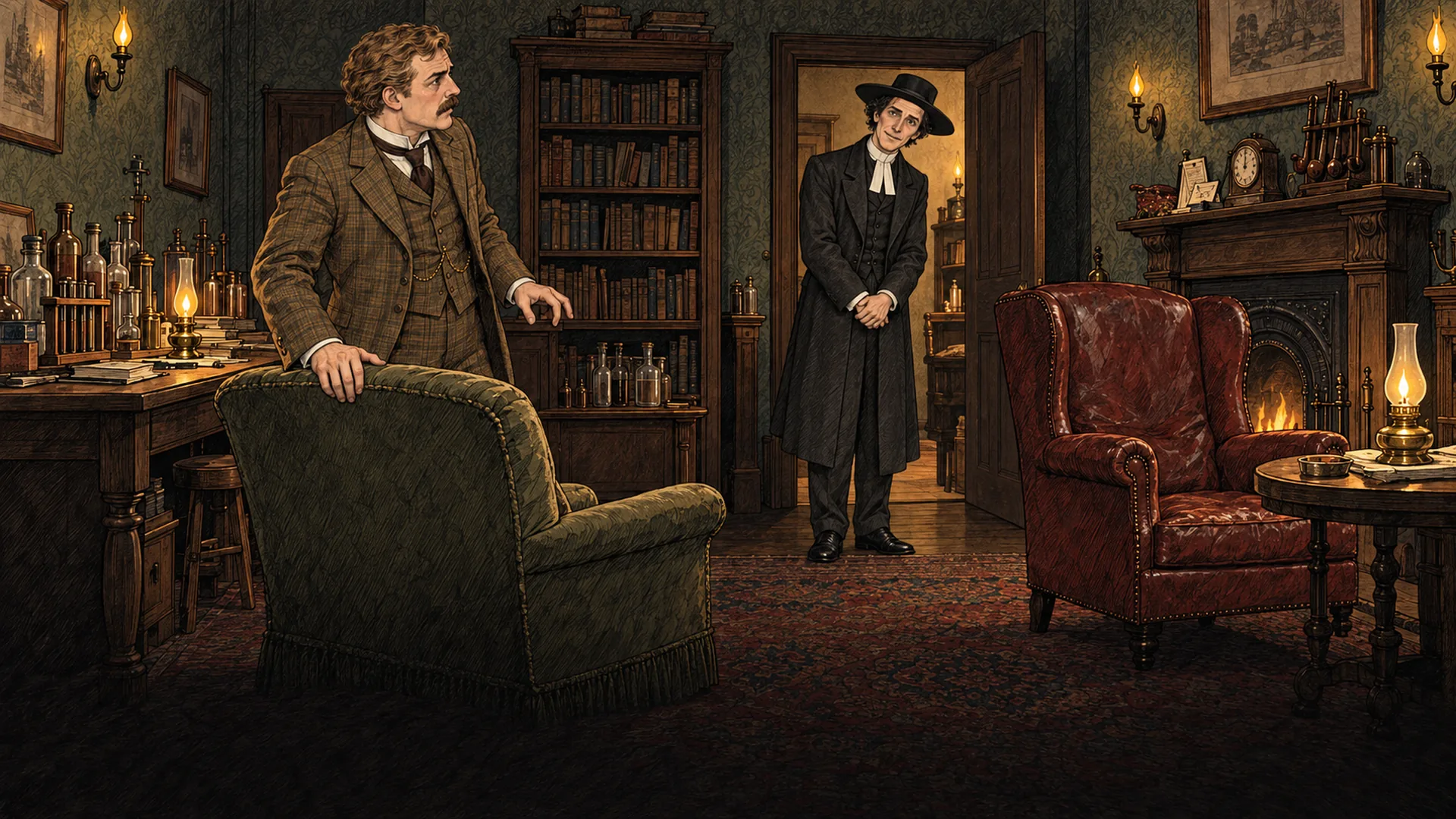
Watson confirms the plan, and Holmes changes into a benevolent Nonconformist minister. Clothing, smile, expression, and manner all fit the new character. Watson compares the performance to that of a distinguished actor and reflects that choosing detective work deprived both the theater and science of an exceptional practitioner.
Japanese in this scene
- でもなければ
- Noun + でもなければ can mean “unless it were someone like.” Watson imagines only an actor of Hare’s ability matching the performance.
- 単に
- 単に means “merely” or “simply.” Together with だけではなかった, it emphasizes that more than the clothes changed.
- 演じるたびに
- Dictionary form + たびに means “every time.” Watson says Holmes’s whole being seems to change with each role.
Background
- Nonconformist
- This term refers to Protestant denominations outside the Church of England, such as Methodists and Baptists. Their ministers suggested greater simplicity than Anglican clergy, fitting Holmes’s role as an unassuming, kindly pastor.
- John Hare
- A real comic actor popular in London at the time, Hare was known for subtle character portrayals. Watson praises Holmes’s disguise by comparing him to a leading professional actor.
Full text: original English and Japanese translation
"I am to remain neutral, to get near the window, to watch you, and at the signal to throw in this object, then to raise the cry of fire, and to wait you at the corner of the street."
「中立を守り、窓に近づき、きみを見張り、合図があったらこの品を投げ込み、それから『火事だ』と叫んで、通りの角できみを待つ、というわけだね」
"Precisely."
「そのとおり」
"Then you may entirely rely on me."
「それなら、すっかり任せてくれ」
"That is excellent. I think, perhaps, it is almost time that I prepare for the new role I have to play."
「それは心強い。さて、そろそろ私も、演じなければならない新しい役の支度をする頃合いだろう」
He disappeared into his bedroom and returned in a few minutes in the character of an amiable and simple-minded Nonconformist clergyman. His broad black hat, his baggy trousers, his white tie, his sympathetic smile, and general look of peering and benevolent curiosity were such as Mr. John Hare alone could have equalled. It was not merely that Holmes changed his costume. His expression, his manner, his very soul seemed to vary with every fresh part that he assumed. The stage lost a fine actor, even as science lost an acute reasoner, when he became a specialist in crime.
彼は寝室へ姿を消し、数分後、人のよさそうな素朴な非国教会派の牧師になりきって戻ってきた。つばの広い黒い帽子、だぶだぶのズボン、白いネクタイ、思いやり深げな微笑み、そして善意から何でものぞき込みたがるような全体の雰囲気は、ジョン・ヘア氏でもなければ真似のできないものだった。ホームズは単に衣装を変えただけではなかった。表情も、物腰も、魂そのものさえも、新しい役を演じるたびに変わるように思えた。彼が犯罪の専門家になったとき、科学が鋭い推理家を失ったのと同じように、舞台はすぐれた俳優をひとり失ったのだ。