 よみうち英語Read the classics by typing
Notes Scene 8: A View of the Evidence
You've finished this scene
Notes on this scene
Watson thinks the circumstances point decisively to James. Holmes warns that changing one's viewpoint can make the same evidence suggest something quite different, although he accepts that the case looks serious. A neighboring landowner's daughter believes James innocent and enlisted Lestrade's help. Lestrade, puzzled by the affair, brought it to Holmes.
Japanese in this scene
- 見えても
- A verb in the て form followed by も means ‘even if’ or ‘although.’ Holmes contrasts what the evidence appears to show with what a different viewpoint might reveal.
- とはいえ
- ‘That said’ or ‘nevertheless.’ This expression introduces a concession. Holmes qualifies his warning about evidence by admitting that the young man's position still looks very unfavorable.
- だからこそ
- こそ emphasizes the preceding reason: ‘that is precisely why.’ Holmes uses it to connect Lestrade's request with the rather unusual situation of the two men speeding west instead of breakfasting at home.
Full text: original English and Japanese translation
"I could hardly imagine a more damning case," I remarked. "If ever circumstantial evidence pointed to a criminal it does so here."
「これほど不利な証拠のそろった事件は、めったに想像できないね」と私は言った。「状況証拠が犯人を指し示すことがあるとすれば、まさにこれだ」
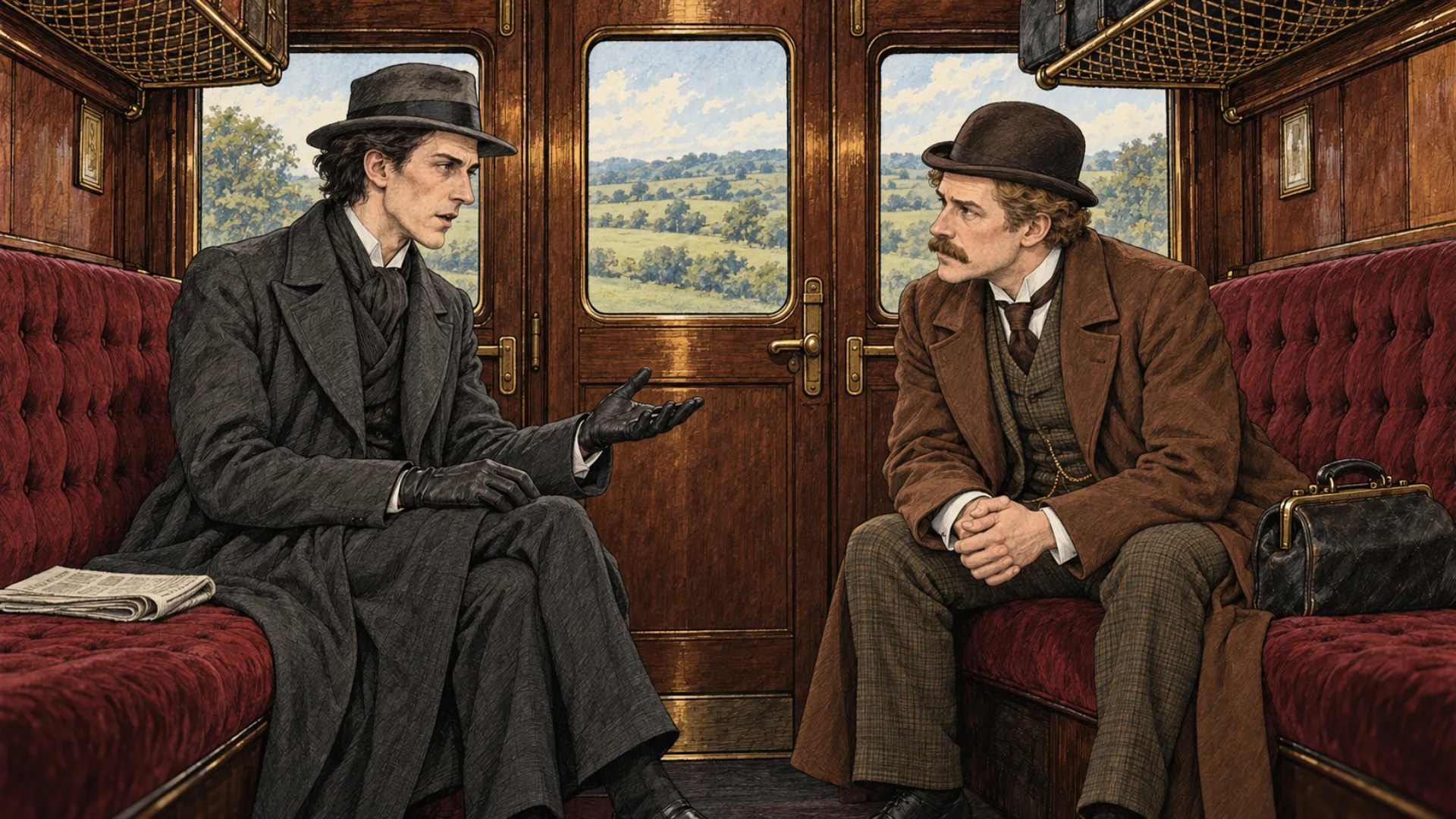
"Circumstantial evidence is a very tricky thing," answered Holmes thoughtfully. "It may seem to point very straight to one thing, but if you shift your own point of view a little, you may find it pointing in an equally uncompromising manner to something entirely different. It must be confessed, however, that the case looks exceedingly grave against the young man, and it is very possible that he is indeed the culprit. There are several people in the neighbourhood, however, and among them Miss Turner, the daughter of the neighbouring landowner, who believe in his innocence, and who have retained Lestrade, whom you may recollect in connection with the Study in Scarlet, to work out the case in his interest. Lestrade, being rather puzzled, has referred the case to me, and hence it is that two middle-aged gentlemen are flying westward at fifty miles an hour instead of quietly digesting their breakfasts at home."
「状況証拠は、実に扱いにくいものだよ」とホームズは考え込みながら答えた。「まっすぐ一つのことを指しているように見えても、自分の見る角度を少し変えれば、まったく別のことを同じくらい断固として指していると分かることがある。とはいえ、若者にきわめて不利な事件に見えることは認めなければならないし、実際に彼が犯人である可能性も十分にある。だが近所には、その無実を信じる人たちもいる。隣の地主の娘、ターナー嬢もその一人で、彼のために事件を調べるよう、レストレードに依頼した。『緋色の研究』の件で、きみも覚えているだろう。そのレストレードが少々困惑して私に事件を持ち込んだ。だからこそ、中年の紳士が二人、自宅で静かに朝食を消化する代わりに、時速五十マイルで西へ飛ぶように進んでいるのさ」
"I am afraid," said I, "that the facts are so obvious that you will find little credit to be gained out of this case."
「事実があまりに明白だから、この事件で得られる手柄はわずかなものになるのではないかな」と私は言った。