 よみうち英語Read the classics by typing
Notes Scene 10: Observation and Inference
You've finished this scene
Notes on this scene
Uneven shaving, combined with Watson's methodical habits, allows Holmes to infer the position of his window. Returning to the case, Holmes notes that James was arrested after reaching home. James said he was not surprised and deserved it. Holmes observes that this remark removed lingering doubts from the minds of the inquest jurors.
Japanese in this scene
- 行くほど
- ほど after a verb shows increasing degree: the farther Holmes looks along one side of the face, the less complete the shaving becomes. The physical progression supports his inference about the light.
- とても思えない
- With a negative predicate, とても can mean ‘cannot possibly,’ rather than simply ‘very.’ 思えない is the potential negative of 思う: Holmes cannot imagine Watson accepting that result under equal lighting.
- にすぎない
- ‘Is no more than’ or ‘is merely.’ James's reported words minimize the arrest as nothing beyond his due. The remark's interpretation matters, so the grammar keeps its limiting force.
Full text: original English and Japanese translation
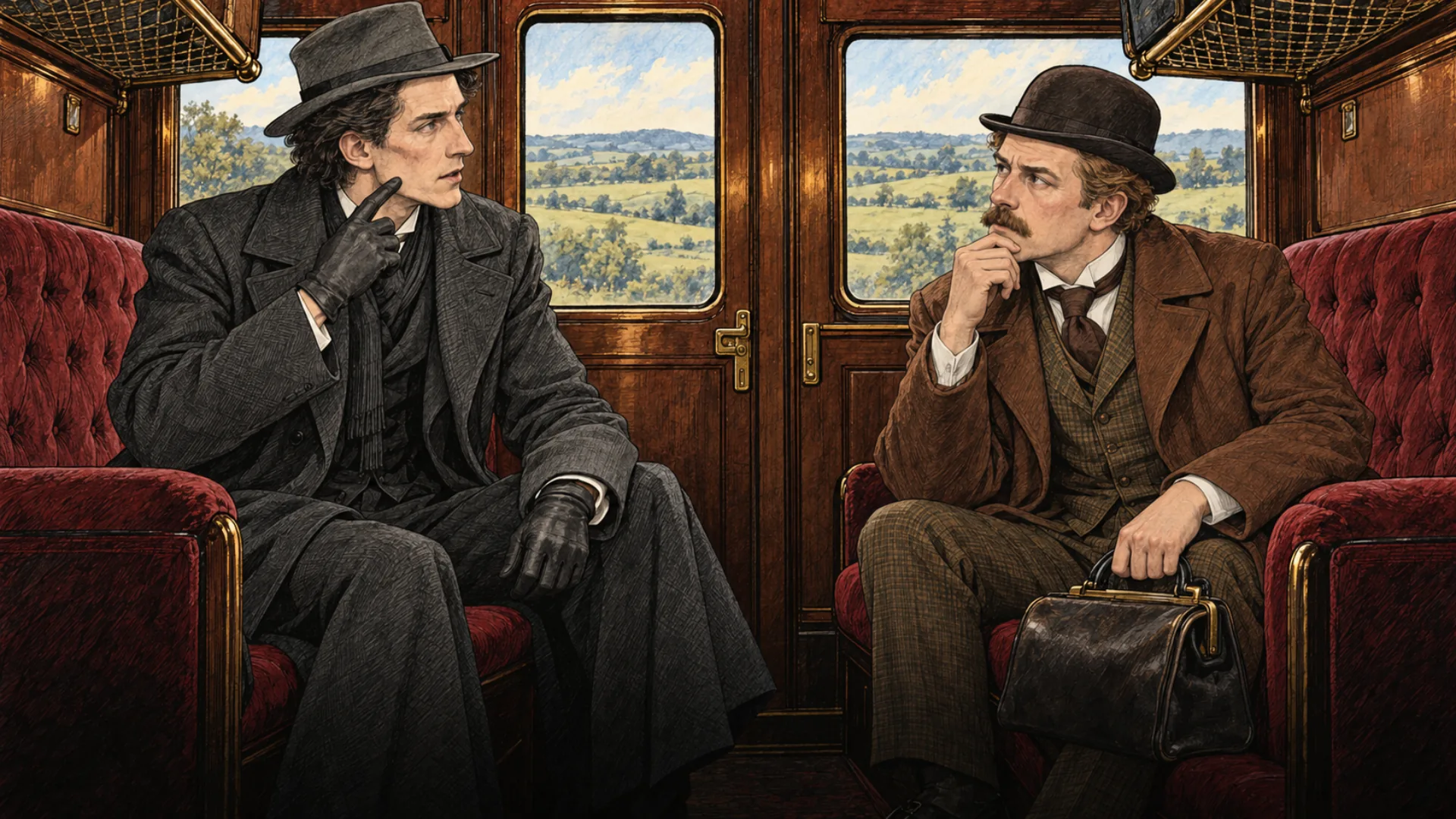
"My dear fellow, I know you well. I know the military neatness which characterises you. You shave every morning, and in this season you shave by the sunlight; but since your shaving is less and less complete as we get farther back on the left side, until it becomes positively slovenly as we get round the angle of the jaw, it is surely very clear that that side is less illuminated than the other. I could not imagine a man of your habits looking at himself in an equal light and being satisfied with such a result. I only quote this as a trivial example of observation and inference. Therein lies my métier, and it is just possible that it may be of some service in the investigation which lies before us. There are one or two minor points which were brought out in the inquest, and which are worth considering."
「きみ、私はきみをよく知っている。きみを特徴づける、軍人らしい几帳面さも知っている。きみは毎朝ひげを剃り、今の季節には日の光で剃る。ところが、左側の奥へ行くほど剃り方が不完全になり、あごの角の辺りになると明らかに雑になる。だから、その側には反対側ほど光が当たらないのは、きわめて明白だろう。きみのような習慣の人が、両側に同じように光の当たる状態で鏡を見て、その結果で満足するとは、とても思えない。これはただ、観察と推論のささいな一例として挙げただけだ。そこにこそ私の得意とする仕事がある。これから当たる捜査にも、多少は役立つかもしれない。検視審問で明らかになった小さな点が一つ二つあり、考えてみる価値がある」
"What are they?"
「どんな点だい」
"It appears that his arrest did not take place at once, but after the return to Hatherley Farm. On the inspector of constabulary informing him that he was a prisoner, he remarked that he was not surprised to hear it, and that it was no more than his deserts. This observation of his had the natural effect of removing any traces of doubt which might have remained in the minds of the coroner's jury."
「どうやら逮捕はその場ですぐではなく、ハザリー農場へ戻ったあとだったらしい。警察の警部から逮捕すると告げられると、彼は、聞いても驚かない、自分には当然の報いにすぎないと言った。この発言には、検視審問の陪審員たちの心に少しでも残っていたかもしれない疑いの跡を、自然に取り除く効果があった」