 よみうち英語Read the classics by typing
Notes Scene 11: Reading His Words
You've finished this scene
Notes on this scene
Holmes sees hope in the remark Watson regards as incriminating. An innocent man could recognize how bad the circumstances looked without pretending surprise at arrest. Holmes also connects James's words with regret over his conduct toward his father that day. To him, the remorse may suggest a sound conscience rather than a guilty one.
Japanese in this scene
- それどころか
- ‘On the contrary’ or ‘quite the opposite.’ Holmes rejects Watson's interpretation and introduces a stronger reversal: the supposedly suspicious remark is his brightest reason for hope.
- どれほど無実だったとしても
- どれほど…としても means ‘however much’ or ‘no matter how.’ Holmes argues that complete innocence would not prevent someone from recognizing how unfavorable the circumstances appeared.
- 憤慨したふりをしたり
- A verb or descriptive clause before ふりをする means to pretend. The たり form makes feigned indignation one example of behavior that Holmes would have found suspicious.
Full text: original English and Japanese translation
"It was a confession," I ejaculated.
「それは自白じゃないか」と私は思わず叫んだ。
"No, for it was followed by a protestation of innocence."
「いや、そのあとで無実だと強く訴えているのだよ」
"Coming on the top of such a damning series of events, it was at least a most suspicious remark."
「これほど不利な出来事が相次いだうえでの言葉なら、少なくとも、ひどく疑わしい発言だったよ」
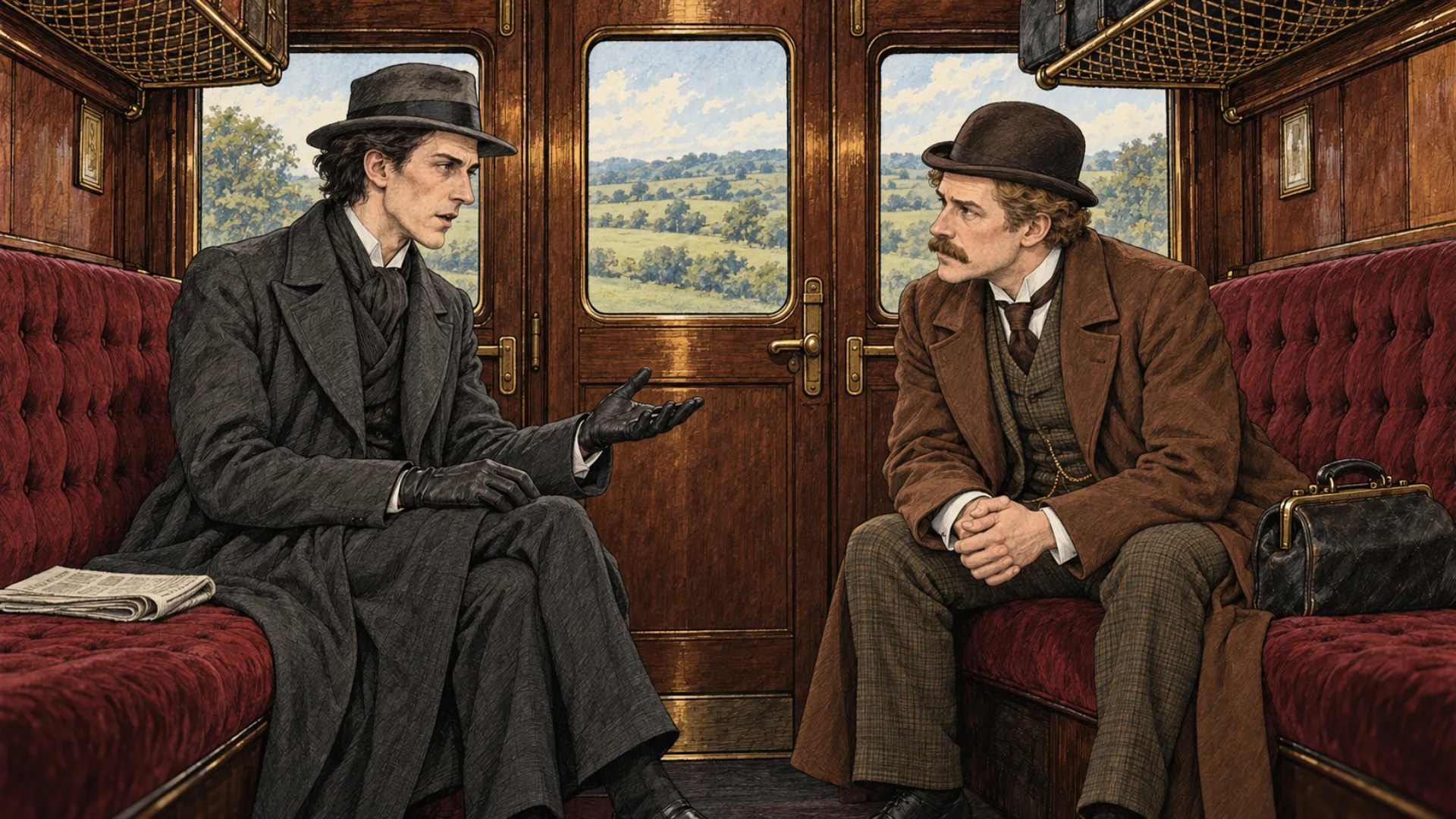
"On the contrary," said Holmes, "it is the brightest rift which I can at present see in the clouds. However innocent he might be, he could not be such an absolute imbecile as not to see that the circumstances were very black against him. Had he appeared surprised at his own arrest, or feigned indignation at it, I should have looked upon it as highly suspicious, because such surprise or anger would not be natural under the circumstances, and yet might appear to be the best policy to a scheming man. His frank acceptance of the situation marks him as either an innocent man, or else as a man of considerable self-restraint and firmness. As to his remark about his deserts, it was also not unnatural if you consider that he stood beside the dead body of his father, and that there is no doubt that he had that very day so far forgotten his filial duty as to bandy words with him, and even, according to the little girl whose evidence is so important, to raise his hand as if to strike him. The self-reproach and contrition which are displayed in his remark appear to me to be the signs of a healthy mind rather than of a guilty one."
「それどころか」とホームズは言った。「私には今のところ、あれが雲間に見えるいちばん明るい切れ目なのだ。どれほど無実だったとしても、自分の置かれた状況がたいへん不利だと分からないほどの大ばか者ではあるまい。自分の逮捕に驚いた様子を見せたり、憤慨したふりをしたりしていたなら、私は大いに疑っただろう。あの状況では、そんな驚きや怒りは自然ではないが、策略をめぐらす男には、それが最善のやり方に思えるかもしれないからだ。状況を率直に受け入れたことは、無実の男であるか、さもなければ、たいへん自制心が強く、しっかりした男であるかを示している。当然の報いだという言葉も、父親の遺体のそばに立っていたことを考えれば不自然ではない。しかも、その日まさに、息子としての務めを忘れて父と言い争い、証言がとても重要なあの少女によれば、父を殴るかのように手まで振り上げたのは、疑いようがないのだからね。あの言葉に表れた自責と悔恨は、私には、罪のある心よりも健全な心のしるしに思える」