 よみうち英語Read the classics by typing
Notes Scene 5: The Wet Coat
You've finished this scene
Notes on this scene
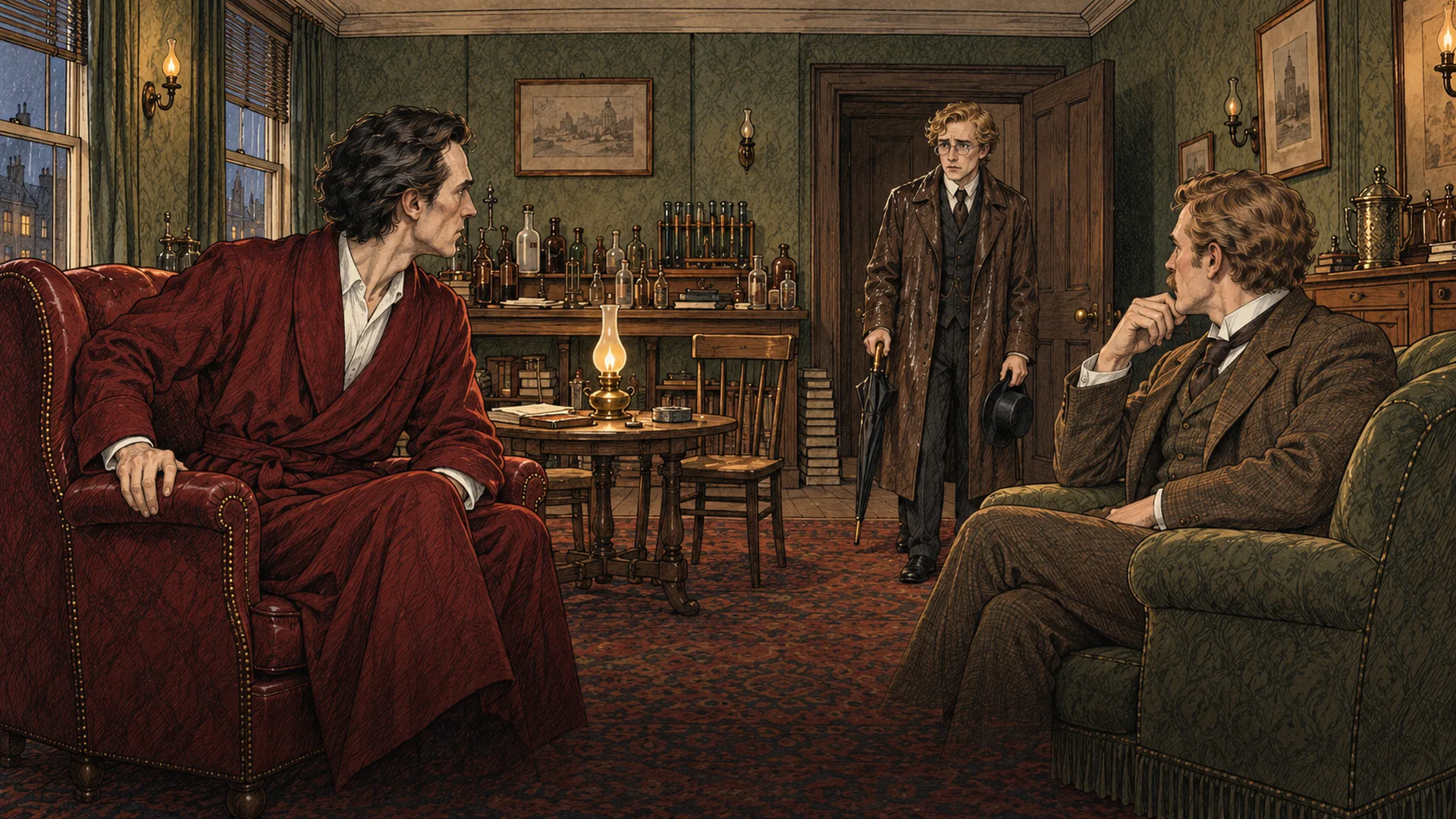
A worried young man enters, soaked by the storm despite his umbrella and waterproof coat. Holmes welcomes him, takes his wet things, and immediately identifies the clay on his shoes as evidence that he has traveled from the Horsham area.
Japanese in this scene
- ている
- The 〜ている form can show an action in progress, a continuing state, or the result of a completed action. The surrounding sentence decides which meaning applies.
- ように
- ように can express a goal, a desired result, or the manner in which something is done. It often follows a plain-form verb.
- ついている
- ついている is the continuing-result form of 付く, “to stick or be attached.” Here it describes clay adhering to the coat.
- のですが
- のですが combines the explanatory のです with が. It politely presents a situation and leaves room for a response or qualification.
Full text: original English and Japanese translation
The man who entered was young, some two-and-twenty at the outside, well-groomed and trimly clad, with something of refinement and delicacy in his bearing. The streaming umbrella which he held in his hand, and his long shining waterproof told of the fierce weather through which he had come. He looked about him anxiously in the glare of the lamp, and I could see that his face was pale and his eyes heavy, like those of a man who is weighed down with some great anxiety.
入ってきたのは若い男で、せいぜい二十二歳ほどだった。身だしなみがよく、服装もきちんとしており、物腰にはどこか上品で繊細なところがあった。手にした傘から滴る水と、長く光る防水外套が、彼の通ってきた荒天を物語っていた。ランプの光の中で彼は不安そうに辺りを見回したが、大きな心配事に押しつぶされそうな人のように顔色が青白く、目に疲れがあるのが分かった。
"I owe you an apology," he said, raising his golden pince-nez to his eyes. "I trust that I am not intruding. I fear that I have brought some traces of the storm and rain into your snug chamber."
「おわびしなければなりません」と彼は金縁の鼻眼鏡を目に当てて言った。「お邪魔でなければよいのですが。この居心地のよいお部屋に、嵐や雨の跡を少し持ち込んでしまったようで」
"Give me your coat and umbrella," said Holmes. "They may rest here on the hook and will be dry presently. You have come up from the south-west, I see."
「外套と傘をお預かりしましょう」とホームズは言った。「この鉤に掛けておけば、じきに乾きます。南西の方からいらしたようですね」
"Yes, from Horsham."
「ええ、ホーシャムからです」
"That clay and chalk mixture which I see upon your toe caps is quite distinctive."
「靴のつま先の覆いについている粘土と白亜の混ざった土は、実に特徴的ですから」