 よみうち英語Read the classics by typing
Notes Scene 9: The Boyhood Years
You've finished this scene
Notes on this scene
As a boy, John became his uncle’s trusted companion and was given responsibility for the house and its keys. One attic room, however, remained locked and forbidden. John could only look through its keyhole and see boxes and bundles inside.
Japanese in this scene
- ので
- ので gives a reason in a comparatively explanatory or gentle way: “because; since.”
- こと
- こと is used here as noun. In this context it means “thing.”
- 嫌がりませんでした
- 嫌がりませんでした is the polite negative past of 嫌がる: “did not dislike it” or “show no reluctance.”
Full text: original English and Japanese translation
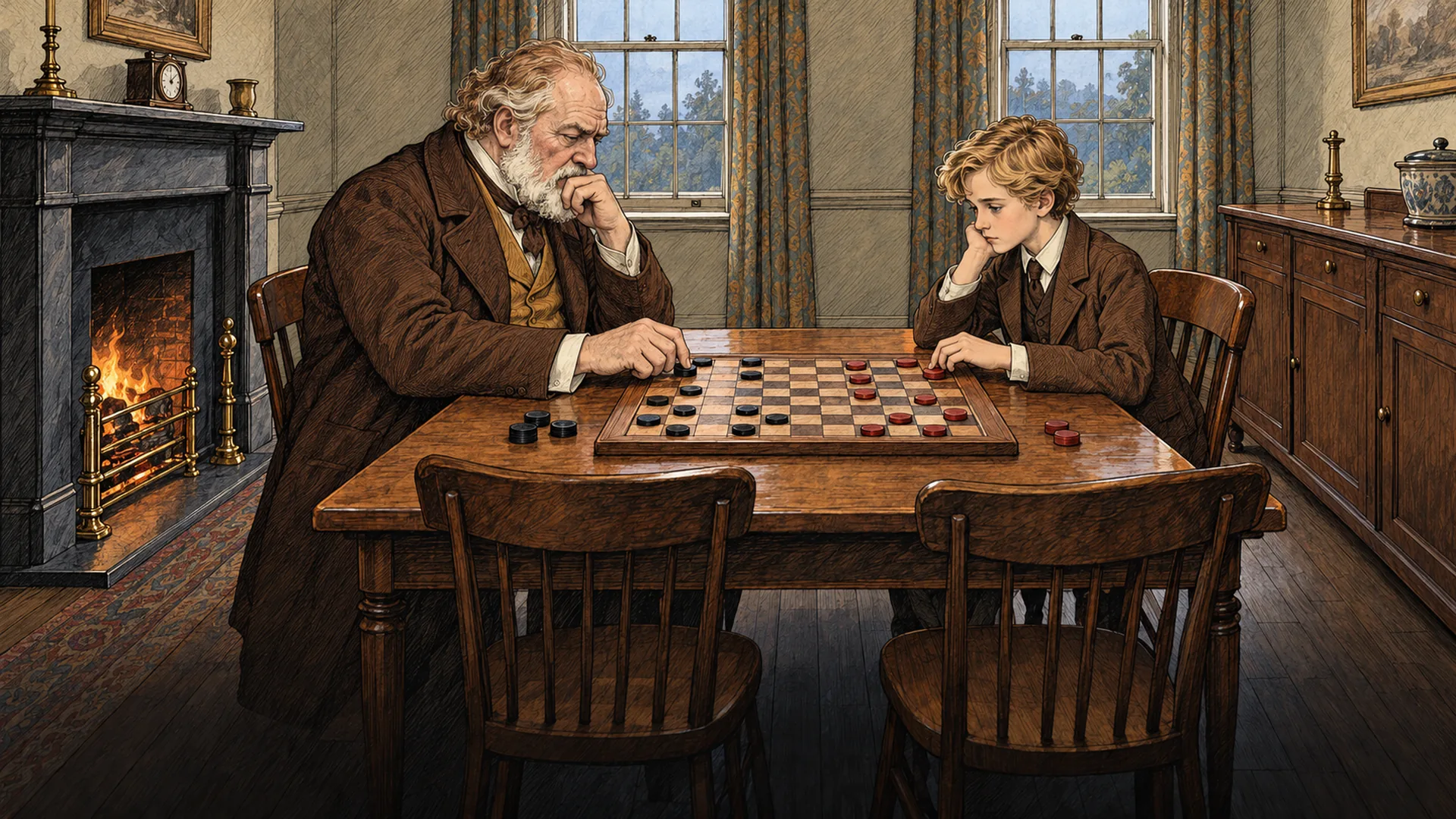
"He didn't mind me; in fact, he took a fancy to me, for at the time when he saw me first I was a youngster of twelve or so. This would be in the year 1878, after he had been eight or nine years in England. He begged my father to let me live with him and he was very kind to me in his way. When he was sober he used to be fond of playing backgammon and draughts with me, and he would make me his representative both with the servants and with the tradespeople, so that by the time that I was sixteen I was quite master of the house. I kept all the keys and could go where I liked and do what I liked, so long as I did not disturb him in his privacy. There was one singular exception, however, for he had a single room, a lumber-room up among the attics, which was invariably locked, and which he would never permit either me or anyone else to enter. With a boy's curiosity I have peeped through the keyhole, but I was never able to see more than such a collection of old trunks and bundles as would be expected in such a room.
「私のことは嫌がりませんでした。それどころか、初めて会ったとき十二歳ほどの子どもだった私を、気に入ってくれたのです。一八七八年のことで、おじがイングランドに来てから八、九年たったころだったと思います。父に頼んで私を一緒に住まわせ、自分なりにとても親切にしてくれました。しらふのときには、私とバックギャモンやチェッカーをするのが好きで、使用人にも商人にも私を代理として立てたので、十六歳になるころには、家のことはすっかり私が取り仕切っていました。鍵は全部預かっており、おじの一人の時間を邪魔しない限り、好きな場所へ行き、好きなことができました。ただ、一つ妙な例外があって、屋根裏の部屋の一つである物置だけは、いつも鍵が掛かっていて、私もほかの誰も決して入れてもらえませんでした。子どもらしい好奇心で鍵穴からのぞいたこともありますが、あのような部屋にありそうな古い旅行かばんや包みの山以外、何も見えませんでした。