 よみうち英語Read the classics by typing
Notes Scene 38: A Newspaper Column
You've finished this scene
Notes on this scene
Watson reads a newspaper report stating that John Openshaw was found dead near Waterloo Bridge. The article treats the death as an accident caused by darkness and bad weather. Holmes remains outwardly calm but is visibly shaken by the news.
Japanese in this scene
- にもかかわらず
- にもかかわらず means “despite; although.” It follows a fact and introduces a result that runs against what that fact would normally suggest.
- ている
- The 〜ている form can show an action in progress, a continuing state, or the result of a completed action. The surrounding sentence decides which meaning applies.
- という
- という links a quoted name, statement, or idea to the noun that follows. It can be translated as “called,” “that,” or “the idea that.”
- のではないか
- のではないか presents a tentative explanatory judgment: “might it be that…?” It invites consideration rather than giving a reason.
Full text: original English and Japanese translation
"Holmes," I cried, "you are too late."
「ホームズ」と私は叫んだ。「遅すぎたんだ」
"Ah!" said he, laying down his cup, "I feared as much. How was it done?" He spoke calmly, but I could see that he was deeply moved.
「ああ」と彼はカップを置いて言った。「やはり、恐れていたとおりか。どうやってやられた」口調は穏やかだったが、ひどく心を動かされているのが分かった。
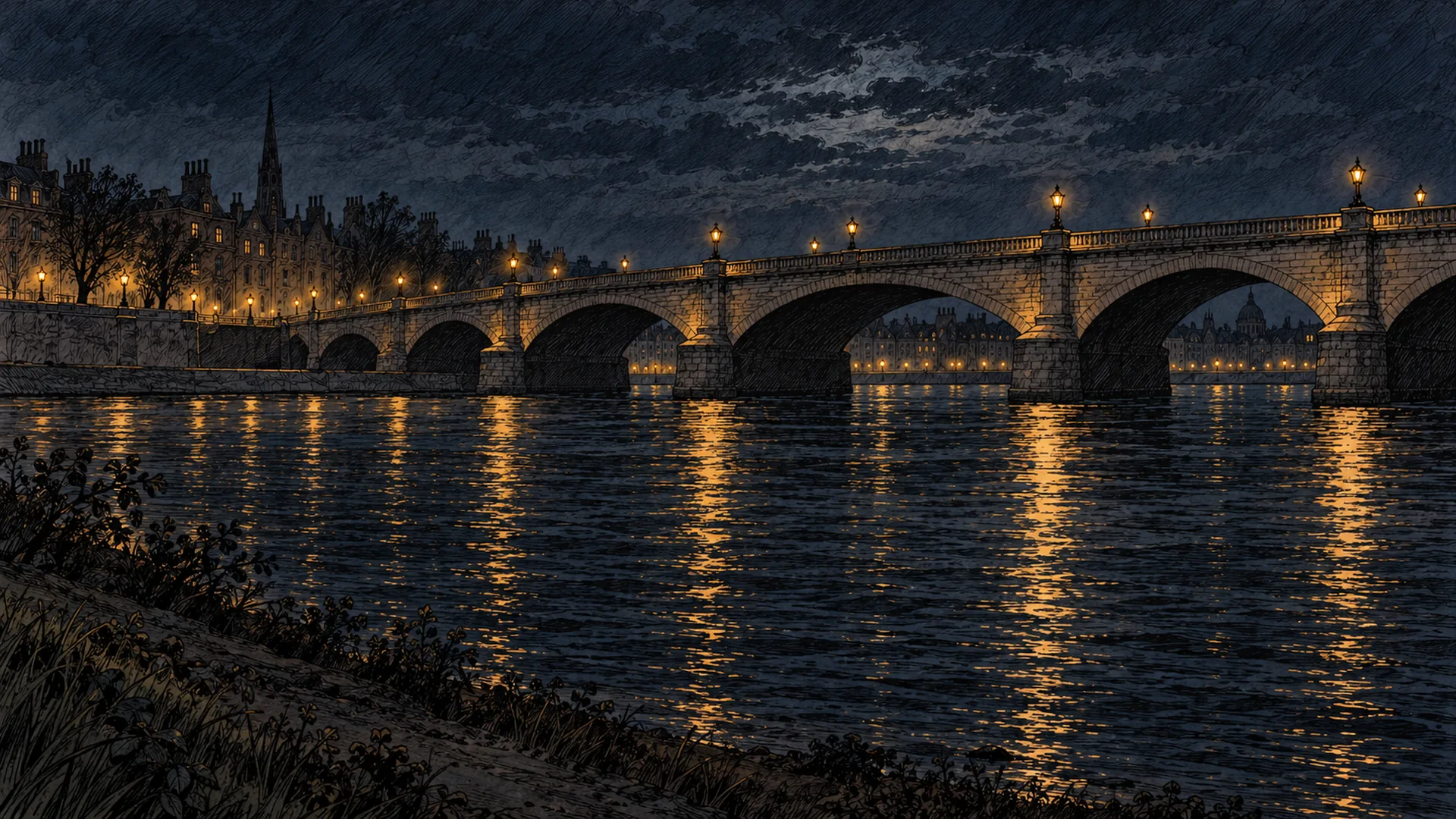
"My eye caught the name of Openshaw, and the heading 'Tragedy Near Waterloo Bridge.' Here is the account:
「オープンショーの名と、『ウォータールー橋付近の悲劇』という見出しが目に入ったんだ。記事はこうだ。
"'Between nine and ten last night Police-Constable Cook, of the H Division, on duty near Waterloo Bridge, heard a cry for help and a splash in the water. The night, however, was extremely dark and stormy, so that, in spite of the help of several passers-by, it was quite impossible to effect a rescue. The alarm, however, was given, and, by the aid of the water-police, the body was eventually recovered. It proved to be that of a young gentleman whose name, as it appears from an envelope which was found in his pocket, was John Openshaw, and whose residence is near Horsham. It is conjectured that he may have been hurrying down to catch the last train from Waterloo Station, and that in his haste and the extreme darkness he missed his path and walked over the edge of one of the small landing-places for river steamboats. The body exhibited no traces of violence, and there can be no doubt that the deceased had been the victim of an unfortunate accident, which should have the effect of calling the attention of the authorities to the condition of the riverside landing-stages.'"
「『昨夜九時から十時の間、ウォータールー橋付近で勤務中だったH地区所属のクック巡査が、助けを求める声と、水へ落ちる音を聞いた。しかし、夜は極めて暗く、嵐でもあったため、通行人が数人助けたにもかかわらず、救助は全く不可能だった。それでも通報は行われ、水上警察の助力により、やがて遺体が収容された。遺体は若い紳士のもので、ポケットにあった封筒から、氏名はジョン・オープンショー、住まいはホーシャム近郊と判明した。ウォータールー駅発の最終列車に間に合おうと急ぎ、焦りと深い暗闇のため道を誤り、川の蒸気船用の小さな船着き場の一つから踏み外したのではないかと推測される。遺体に暴行の痕跡はなく、不幸な事故の犠牲になったことは疑いない。この事故を機に、当局は川沿いの船着き場の状態へ注意を向けるべきであろう』」