 よみうち英語Read the classics by typing
Notes Scene 45: Waiting for News
You've finished this scene
Notes on this scene
Holmes and Watson wait for news, but the warning never reaches the men they are pursuing. The only later report concerns wreckage marked with the ship’s initials, seen far out in the Atlantic. Nothing more is learned of the Lone Star’s fate.
Japanese in this scene
- ている
- The 〜ている form can show an action in progress, a continuing state, or the result of a completed action. The surrounding sentence decides which meaning applies.
- について
- について means “about; concerning.” It attaches to the topic being discussed or investigated.
- という
- という links a quoted name, statement, or idea to the noun that follows. It can be translated as “called,” “that,” or “the idea that.”
- なのである
- なのである adds a formal explanatory conclusion after a noun or na-expression: “that is all that is known.”
Full text: original English and Japanese translation
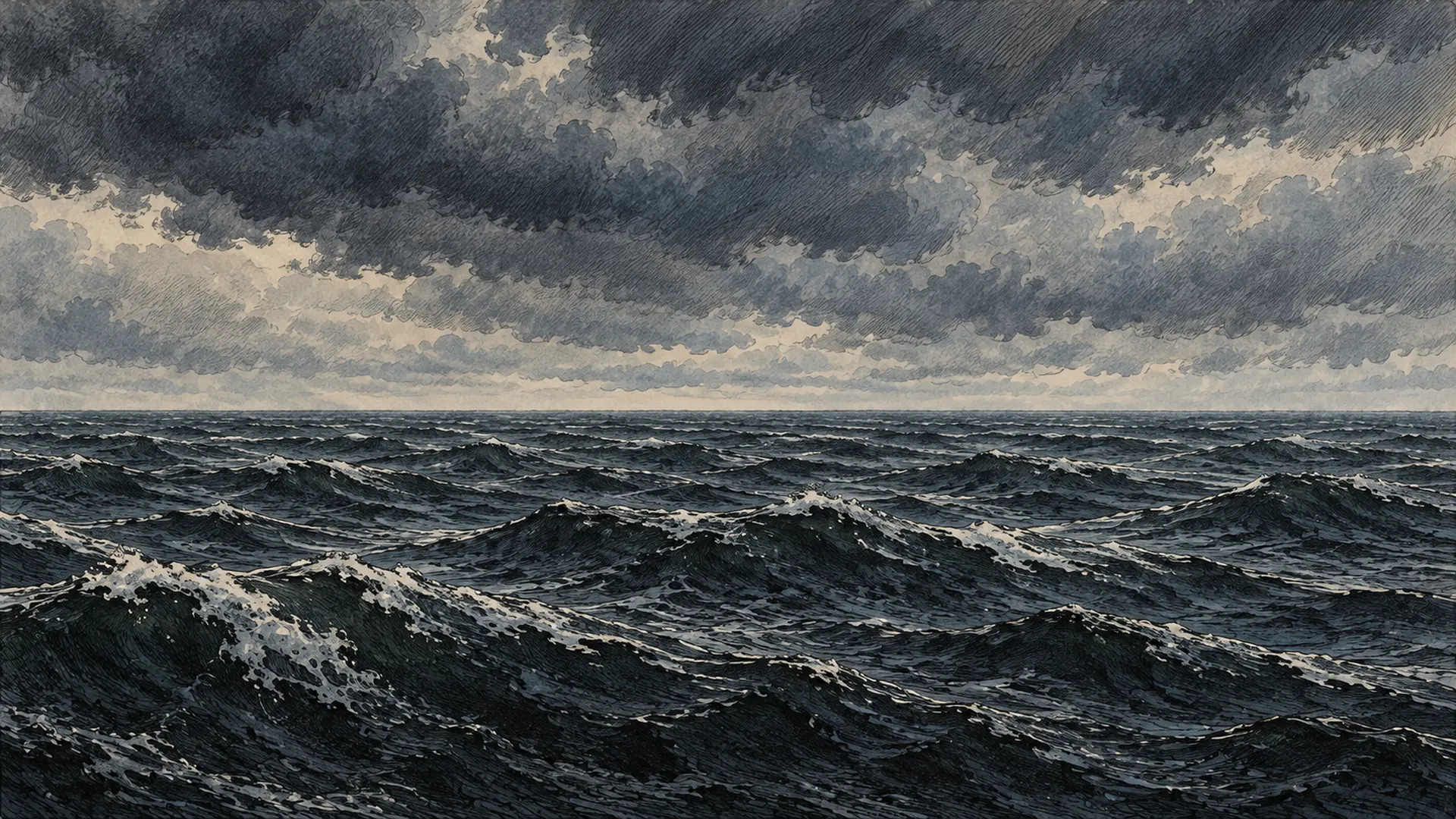
There is ever a flaw, however, in the best laid of human plans, and the murderers of John Openshaw were never to receive the orange pips which would show them that another, as cunning and as resolute as themselves, was upon their track. Very long and very severe were the equinoctial gales that year. We waited long for news of the Lone Star of Savannah, but none ever reached us. We did at last hear that somewhere far out in the Atlantic a shattered stern-post of a boat was seen swinging in the trough of a wave, with the letters "L. S." carved upon it, and that is all which we shall ever know of the fate of the Lone Star.
しかし、人間がどれほど念入りに立てた計画にも必ず欠陥はある。ジョン・オープンショーを殺した者たちは、自分たちに劣らず狡猾で断固とした人物が追っていると知らせる、そのオレンジの種を受け取ることは決してなかった。その年の秋分の暴風は、実に長く、激しかった。私たちはサヴァンナのローン・スター号の知らせを長く待ったが、何も届かなかった。ついに聞いたのは、大西洋のはるか沖で、砕けた船の船尾材が波の谷間に揺れ、「L・S」の文字が刻まれているのが見つかったという話だった。ローン・スター号の運命について、私たちに分かるのは、これがすべてなのである。