 よみうち英語Read the classics by typing
Notes Scene 10: Beside the Brazier
You've finished this scene
Notes on this scene
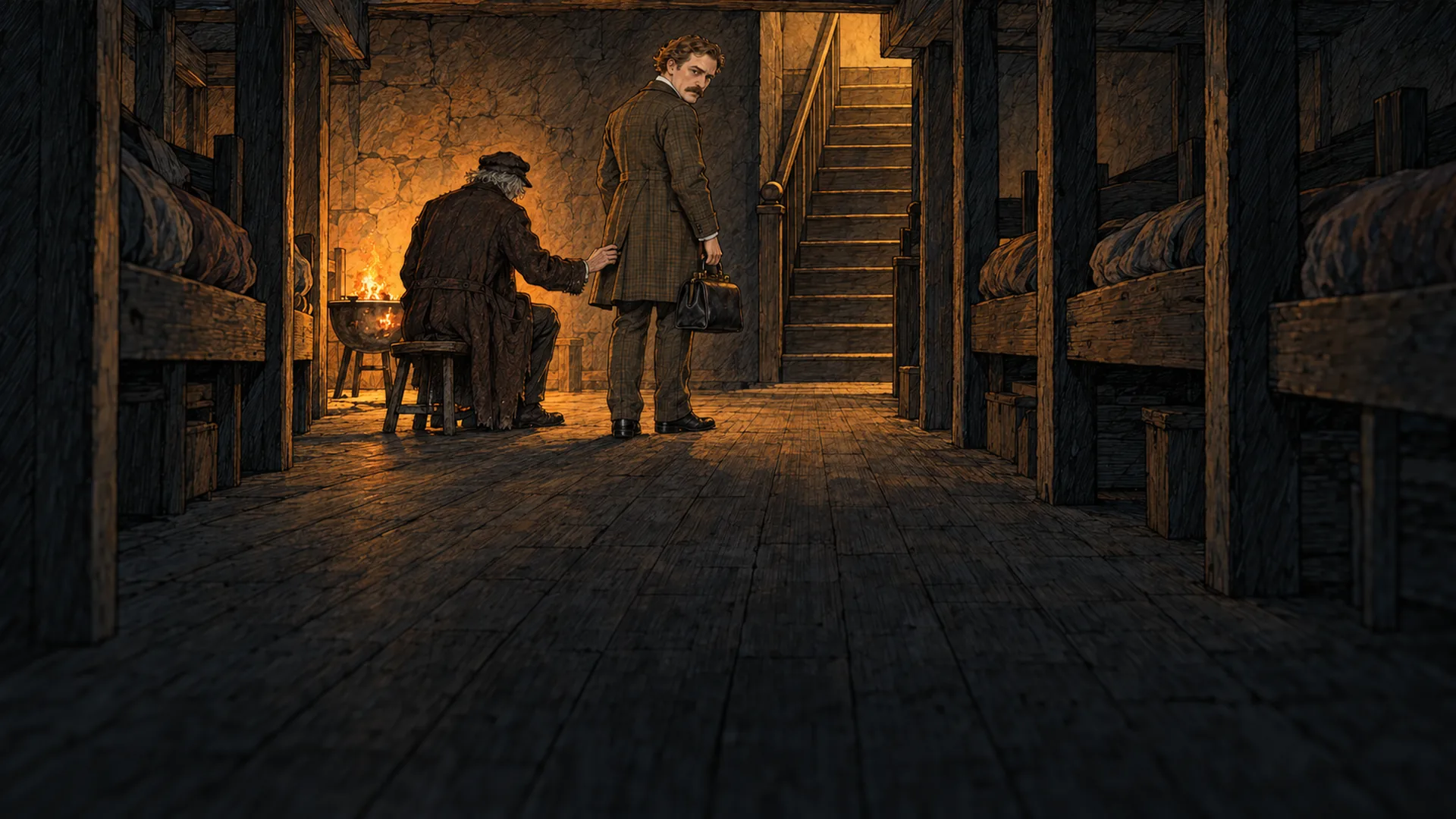
Holding his breath against the drug fumes, Watson passes between two rows of sleepers while looking for the manager. As he goes by the tall old man near the brazier, someone tugs his coat and quietly tells him to walk on, then look back.
Japanese in this scene
- 通り過ぎてから、振り返ってくれ
- 〜てから fixes the order: Watson must pass first and only then look back. 〜てくれ makes it a quiet direct request.
- 老人以外にあり得なかった
- 以外にあり得ない means no other possibility exists. Watson concludes that only the old man could have spoken.
- 自分を抑えねばならなかった
- 〜ねばならなかった is a formal past obligation: Watson had to restrain himself from crying out.
- 笑みを浮かべていた
- 笑みを浮かべる literally means to bring a smile to one's face. Holmes is smiling at Watson's surprise.
Full text: original English and Japanese translation
I walked down the narrow passage between the double row of sleepers, holding my breath to keep out the vile, stupefying fumes of the drug, and looking about for the manager. As I passed the tall man who sat by the brazier I felt a sudden pluck at my skirt, and a low voice whispered, "Walk past me, and then look back at me." The words fell quite distinctly upon my ear. I glanced down. They could only have come from the old man at my side, and yet he sat now as absorbed as ever, very thin, very wrinkled, bent with age, an opium pipe dangling down from between his knees, as though it had dropped in sheer lassitude from his fingers. I took two steps forward and looked back. It took all my self-control to prevent me from breaking out into a cry of astonishment. He had turned his back so that none could see him but I. His form had filled out, his wrinkles were gone, the dull eyes had regained their fire, and there, sitting by the fire and grinning at my surprise, was none other than Sherlock Holmes. He made a slight motion to me to approach him, and instantly, as he turned his face half round to the company once more, subsided into a doddering, loose-lipped senility.
私は薬物の嫌な、頭をしびれさせる煙を吸わないよう息を止め、両側に眠る人々の間の狭い通路を、店主を探しながら歩いた。火鉢のそばの背の高い男を通り過ぎたとき、突然上着の裾を引かれ、低い声がささやいた。「通り過ぎてから、振り返ってくれ」その言葉は、はっきりと耳に届いた。私は目を落とした。声を出したのは隣の老人以外にあり得なかったが、今はまた、痩せきってしわだらけの、年老いた背を曲げて、我を忘れたように座っていた。力が抜けて指から落ちたかのように、膝の間からアヘンのパイプが垂れていた。二歩進んでから振り返った。驚きの声を上げないようにするには、全力で自分を抑えねばならなかった。彼は私以外からは見えないように、背を向けていた。体には張りが戻り、しわは消え、鈍い目には輝きが戻っていた。火のそばに座り、私の驚きに笑みを浮かべていたのは、ほかならぬシャーロック・ホームズだった。彼はわずかな身ぶりで近くへ来るように示すと、皆の方へ再び顔を半ば向けた途端、よぼよぼで口元の締まりのない老人に戻った。