 よみうち英語Read the classics by typing
Notes Scene 22: Examining the Rooms
You've finished this scene
Notes on this scene
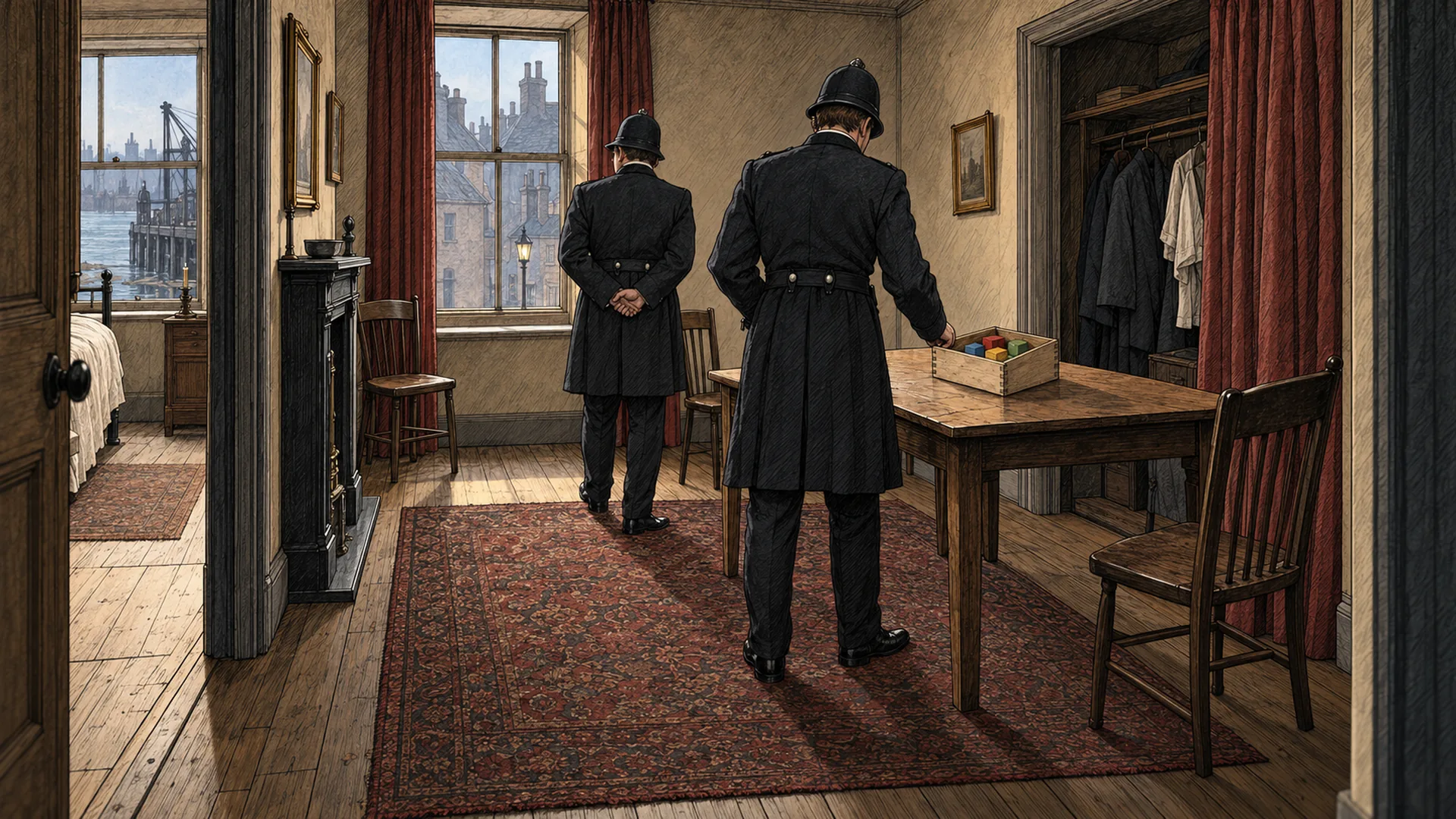
The inspector notices the crippled occupant's confusion and orders a thorough search. The front sitting room leads to a small riverside bedroom. Behind a curtain officers find all of St. Clair's clothes except his coat, while blood marks appear near the window.
Japanese in this scene
- 恐ろしい犯罪を指し示していた
- 指し示していた means the combined findings appeared to point toward a terrible crime, not that they proved one.
- ほかに出口が見つからない以上
- Here 以上 means 'given that' or 'since.' With no other exit found, the window becomes the necessary inference.
- 簡素な居間になっていて
- 〜になっている describes the room's resulting use or arrangement: the front room serves as a simple sitting room.
- 干潮時には乾いている
- The contrastive には marks low tide as the condition under which the strip of ground is dry, unlike at high tide.
Full text: original English and Japanese translation
"This discovery, and the evident confusion which the cripple showed, made the inspector realise that the matter was serious. The rooms were carefully examined, and results all pointed to an abominable crime. The front room was plainly furnished as a sitting-room and led into a small bedroom, which looked out upon the back of one of the wharves. Between the wharf and the bedroom window is a narrow strip, which is dry at low tide but is covered at high tide with at least four and a half feet of water. The bedroom window was a broad one and opened from below. On examination traces of blood were to be seen upon the windowsill, and several scattered drops were visible upon the wooden floor of the bedroom. Thrust away behind a curtain in the front room were all the clothes of Mr. Neville St. Clair, with the exception of his coat. His boots, his socks, his hat, and his watch—all were there. There were no signs of violence upon any of these garments, and there were no other traces of Mr. Neville St. Clair. Out of the window he must apparently have gone for no other exit could be discovered, and the ominous bloodstains upon the sill gave little promise that he could save himself by swimming, for the tide was at its very highest at the moment of the tragedy.
「この発見と、足の不自由な男の明らかなうろたえ方から、警部はただ事ではないと悟った。部屋を念入りに調べると、結果はどれも恐ろしい犯罪を指し示していた。手前の部屋は簡素な居間になっていて、その先に小さな寝室があり、窓は波止場の裏に面していた。波止場と寝室の窓の間には細長い地面があり、干潮時には乾いているが、満潮時には少なくとも四フィート半の水に覆われる。寝室の窓は幅が広く、下から上へ開くものだった。調べると窓台に血の跡があり、寝室の板張りの床にも数滴散っていた。手前の部屋のカーテンの陰には、外套を除くネヴィル・セントクレア氏の衣服が全部押し込まれていた。ブーツ、靴下、帽子、時計も、すべてそこにあった。衣服にはどれも争った形跡がなく、氏に関するほかの痕跡はなかった。ほかに出口が見つからない以上、どうやら窓から出たはずだった。しかし窓台の不吉な血痕からは、泳いで助かった望みは薄かった。出来事の時刻には潮が最も高かったからだ。