 よみうち英語Read the classics by typing
Notes Scene 26: The Police Inquiry
You've finished this scene
Notes on this scene
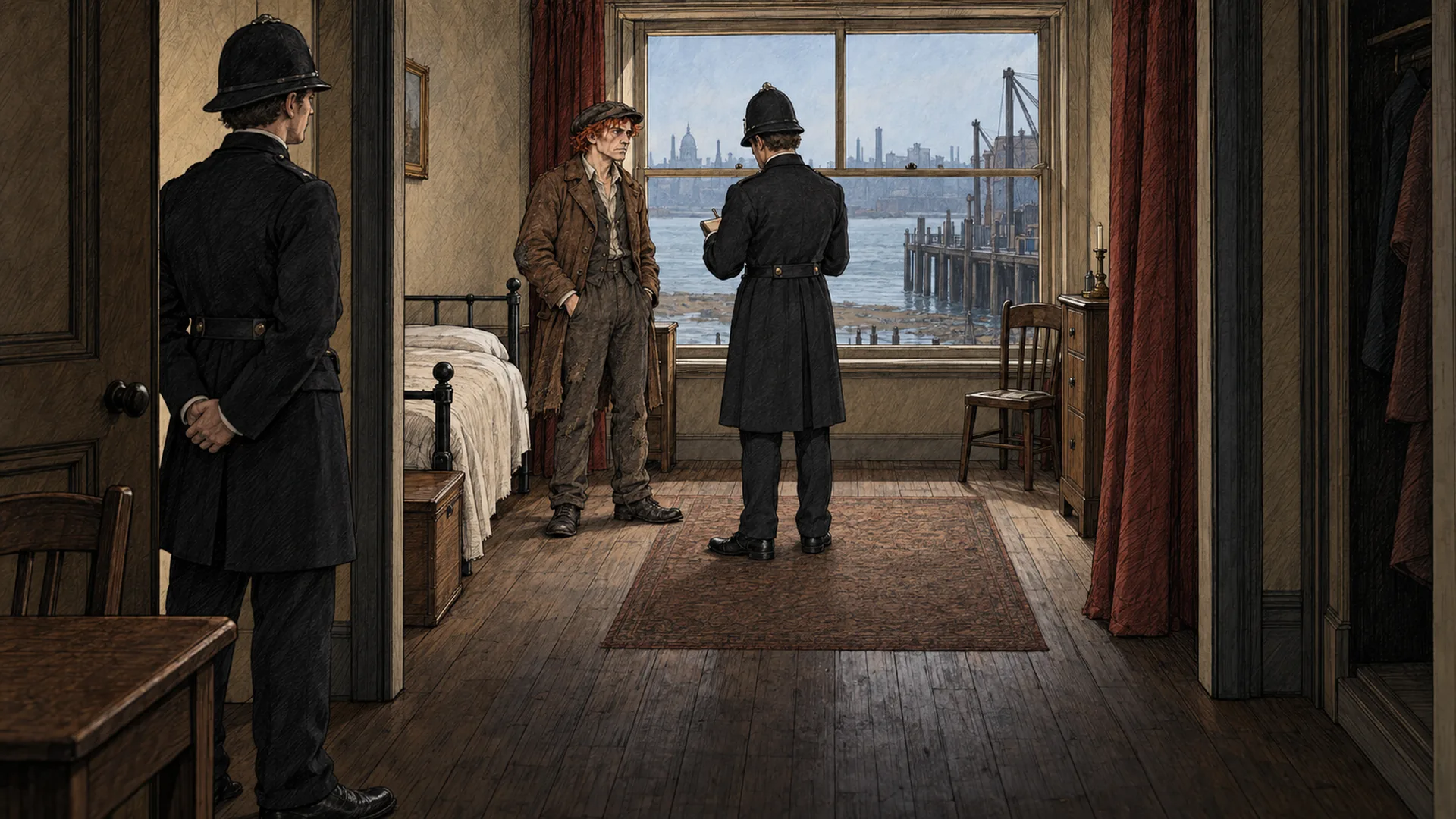
The sight of blood at the window causes Mrs. St. Clair to faint, and police send her home because she can no longer assist. Inspector Barton then searches the premises closely, but initially finds nothing that explains what happened to her husband.
Japanese in this scene
- 何も見つからなかった
- 何も with a negative means 'nothing.' The inspector's careful search initially produced no explanatory evidence.
- 気がおかしかったか、夢でも見たに違いない
- 〜に違いない expresses Boone's insistence that Mrs. St. Clair was either deranged or dreaming.
- 馬車で家へ送り届けた
- 送り届けた means the police ensured that the fainting Mrs. St. Clair was taken safely all the way home.
- 男は取り押さえられて
- The passive 取り押さえられて presents Boone as being seized and restrained by the police before the search.
Full text: original English and Japanese translation
"Mrs. St. Clair had fainted at the sight of the blood upon the window, and she was escorted home in a cab by the police, as her presence could be of no help to them in their investigations. Inspector Barton, who had charge of the case, made a very careful examination of the premises, but without finding anything which threw any light upon the matter. One mistake had been made in not arresting Boone instantly, as he was allowed some few minutes during which he might have communicated with his friend the Lascar, but this fault was soon remedied, and he was seized and searched, without anything being found which could incriminate him. There were, it is true, some blood-stains upon his right shirt-sleeve, but he pointed to his ring-finger, which had been cut near the nail, and explained that the bleeding came from there, adding that he had been to the window not long before, and that the stains which had been observed there came doubtless from the same source. He denied strenuously having ever seen Mr. Neville St. Clair and swore that the presence of the clothes in his room was as much a mystery to him as to the police. As to Mrs. St. Clair's assertion that she had actually seen her husband at the window, he declared that she must have been either mad or dreaming. He was removed, loudly protesting, to the police-station, while the inspector remained upon the premises in the hope that the ebbing tide might afford some fresh clue.
「夫人は窓の血を見て気を失い、現場にいても捜査の助けにはならないので、警察が馬車で家へ送り届けた。事件を担当するバートン警部は建物を注意深く調べたが、事情を明らかにするものは何も見つからなかった。ブーンを直ちに逮捕せず、仲間の店主と話せる数分間を与えたのは失敗だったが、すぐに改められ、男は取り押さえられて所持品を調べられた。しかし罪を裏づけるものはなかった。確かに右のシャツの袖には血痕があったが、本人は爪の近くを切った薬指を示し、そこから出た血だと説明した。少し前に窓に寄ったので、窓の血も同じ所からついたのだろうと付け加えた。ネヴィル・セントクレア氏に会ったことはないと強く否定し、自分の部屋に氏の衣服があるのは、警察と同じく自分にも謎だと誓った。夫人が実際に窓で夫を見たという主張については、気がおかしかったか、夢でも見たに違いないと言い放った。男は大声で抗議しながら警察署へ連れられ、警部は引き潮で新たな手掛かりが出ることを期待して現場に残った。