 よみうち英語Read the classics by typing
Notes Scene 43: The Unsettled Night
You've finished this scene
Notes on this scene
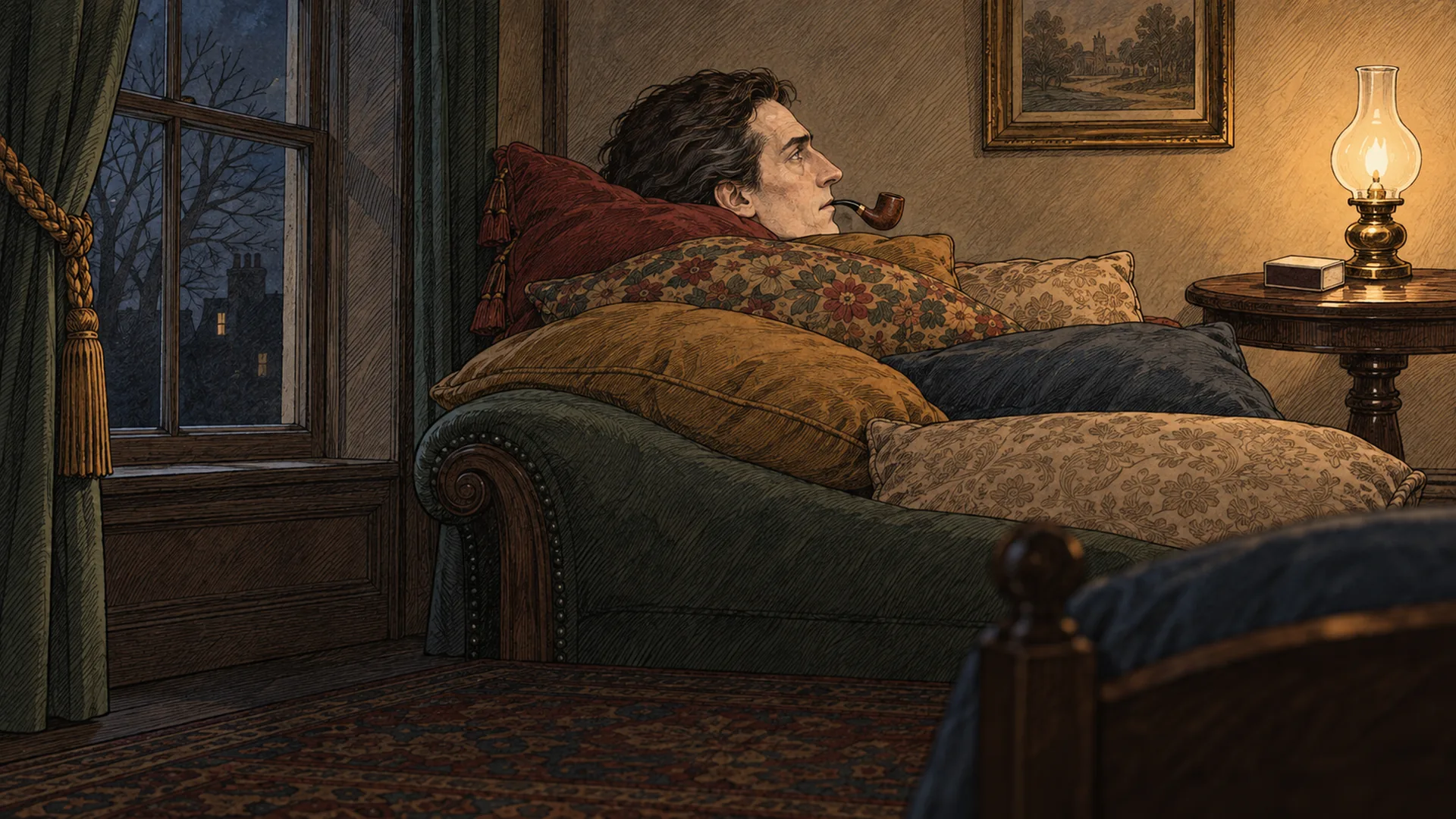
Watson quickly goes to bed in the large, comfortable room. Holmes cannot rest while a problem remains unresolved; he turns facts over from every angle, sometimes for days, until he finds an answer or concludes that the evidence is insufficient.
Japanese in this scene
- もう少しも残っていなかった
- 少しも with a negative means not the slightest amount. Holmes has consumed the entire pile of tobacco overnight.
- 夏の太陽が部屋へ差し込んでいた
- 差し込んでいた describes sunlight already streaming into the room when Watson wakes.
- 解き明かすか、資料が足りないと納得するまでは、やめなかった
- The 〜か、〜までは structure gives two endpoints: Holmes persists until he solves the problem or accepts that evidence is insufficient.
- 鷲のような顔立ちに光が当たっていた
- 〜のような makes 'eagle-like' a simile modifying his features; 光が当たる describes illumination falling on them.
Full text: original English and Japanese translation
A large and comfortable double-bedded room had been placed at our disposal, and I was quickly between the sheets, for I was weary after my night of adventure. Sherlock Holmes was a man, however, who, when he had an unsolved problem upon his mind, would go for days, and even for a week, without rest, turning it over, rearranging his facts, looking at it from every point of view until he had either fathomed it or convinced himself that his data were insufficient. It was soon evident to me that he was now preparing for an all-night sitting. He took off his coat and waistcoat, put on a large blue dressing-gown, and then wandered about the room collecting pillows from his bed and cushions from the sofa and armchairs. With these he constructed a sort of Eastern divan, upon which he perched himself cross-legged, with an ounce of shag tobacco and a box of matches laid out in front of him. In the dim light of the lamp I saw him sitting there, an old briar pipe between his lips, his eyes fixed vacantly upon the corner of the ceiling, the blue smoke curling up from him, silent, motionless, with the light shining upon his strong-set aquiline features. So he sat as I dropped off to sleep, and so he sat when a sudden ejaculation caused me to wake up, and I found the summer sun shining into the apartment. The pipe was still between his lips, the smoke still curled upward, and the room was full of a dense tobacco haze, but nothing remained of the heap of shag which I had seen upon the previous night.
大きく快適な、寝台が二つある部屋を使わせてもらい、夜の冒険に疲れた私はすぐに寝床へ入った。だがシャーロック・ホームズは、解けない問題を抱えると何日も、時には一週間も休まず、考えを巡らせ、事実を並べ直し、あらゆる角度から眺める男だった。解き明かすか、資料が足りないと納得するまでは、やめなかった。今夜も徹夜で考える支度をしているのだと、すぐに分かった。上着とチョッキを脱ぎ、大きな青いガウンを着ると、部屋を歩き回り、寝台の枕と、長椅子や肘掛け椅子のクッションを集めた。それで東洋風の寝椅子のようなものをこしらえ、あぐらをかいて載り、前には一オンスの刻みたばことマッチの箱を置いた。薄暗い灯りの中、古いブライヤーのパイプをくわえ、天井の隅をぼんやり見つめて座る彼が見えた。青い煙が立ち上り、黙って身動きもせず、くっきりした鷲のような顔立ちに光が当たっていた。私が眠りに落ちるときもその姿で、突然の声に起こされたときも同じ姿だった。そのときには、夏の太陽が部屋へ差し込んでいた。パイプはまだ口にあり、煙も上へ巻いていた。部屋は濃いたばこの煙で満ちていたが、昨夜見た山のような刻みたばこは、もう少しも残っていなかった。