 よみうち英語Read the classics by typing
Notes Scene 53: The Beginning of the Story
You've finished this scene
Notes on this scene
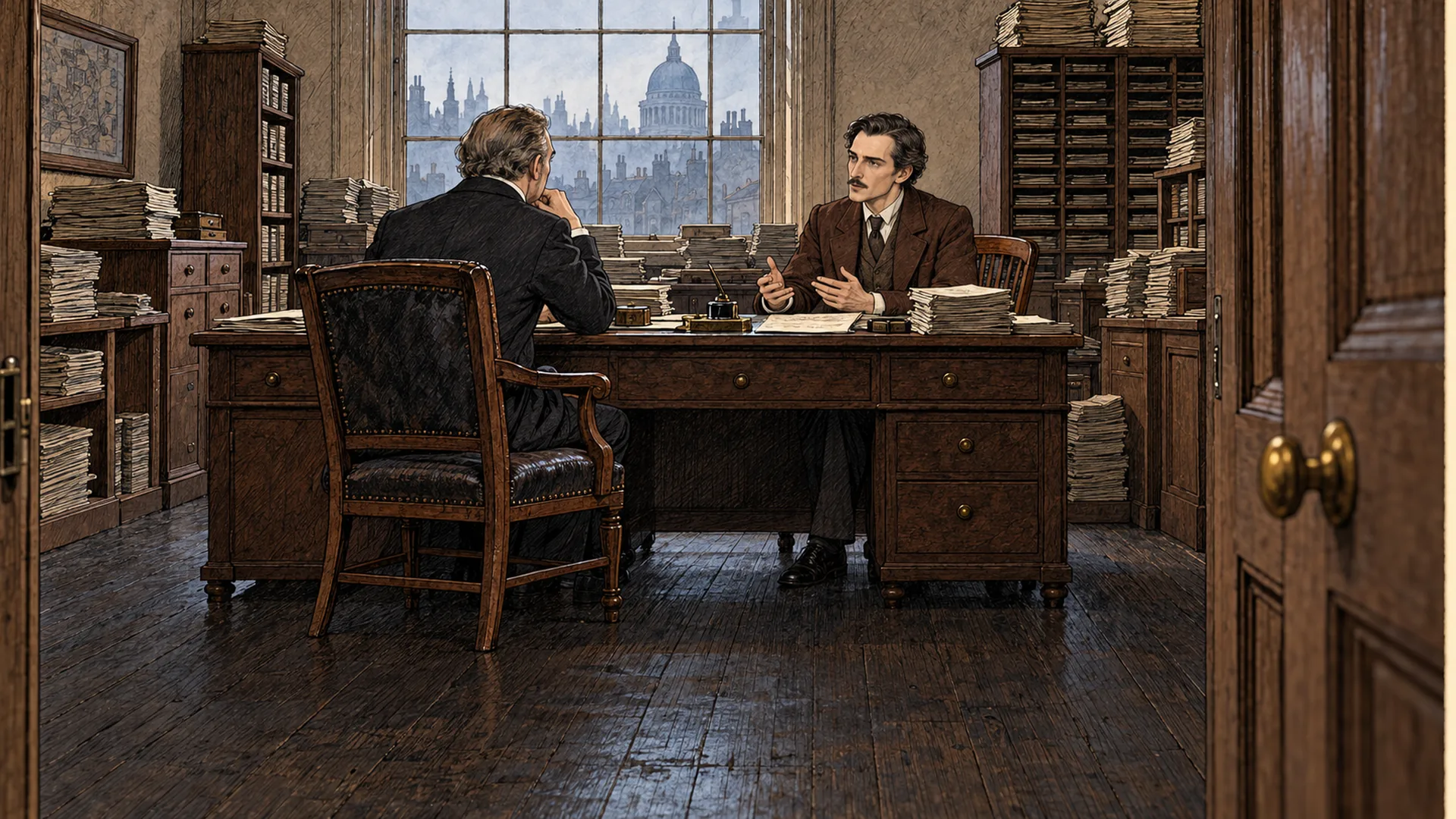
St. Clair says no one has heard his story before. He describes an educated childhood in Chesterfield, youthful travel, work on the stage, and later employment as a London newspaper reporter. An assignment about metropolitan begging led to his first disguise.
Japanese in this scene
- 私が自分から引き受けました
- 自分から means on one's own initiative, and 引き受けた means St. Clair volunteered to take responsibility for the assignment.
- 楽屋でも腕のよさで知られていました
- The passive 知られていました says his skill was recognized by others even backstage.
- その技量を生かしました
- 〜を生かす means putting an existing ability to effective use; he applies his theatrical makeup skill to the disguise.
- 私はそこでよい教育を受けました
- 教育を受ける is the standard expression for being educated; そこ refers back to his father's school.
Full text: original English and Japanese translation
"You are the first who have ever heard my story. My father was a schoolmaster in Chesterfield, where I received an excellent education. I travelled in my youth, took to the stage, and finally became a reporter on an evening paper in London. One day my editor wished to have a series of articles upon begging in the metropolis, and I volunteered to supply them. There was the point from which all my adventures started. It was only by trying begging as an amateur that I could get the facts upon which to base my articles. When an actor I had, of course, learned all the secrets of making up, and had been famous in the green-room for my skill. I took advantage now of my attainments. I painted my face, and to make myself as pitiable as possible I made a good scar and fixed one side of my lip in a twist by the aid of a small slip of flesh-coloured plaster. Then with a red head of hair, and an appropriate dress, I took my station in the business part of the city, ostensibly as a match-seller but really as a beggar. For seven hours I plied my trade, and when I returned home in the evening I found to my surprise that I had received no less than 26s. 4d.
「私の話を聞くのは、皆さんが初めてです。父はチェスターフィールドの学校の教師で、私はそこでよい教育を受けました。若い頃は旅をし、舞台に立ち、最後にはロンドンの夕刊紙の記者になりました。ある日、編集長が大都会の物乞いについて連載を載せたいと言い、私が自分から引き受けました。すべての出来事は、そこから始まったのです。記事の根拠となる事実を得るには、素人ながら自分で物乞いを試すしかありませんでした。役者をしていた頃、当然ながら化粧の秘訣はすべて学んでおり、楽屋でも腕のよさで知られていました。そこで、その技量を生かしました。顔に色を塗り、できるだけ哀れに見せるために傷跡をうまく作り、小さな肌色の絆創膏で唇の片側をねじれた形に留めました。それから赤毛とふさわしい服を着け、シティの商業地区に場所を取り、表向きはマッチ売り、実際は物乞いとして座りました。七時間その商売をして夕方帰ると、驚いたことに、二十六シリング四ペンスも得ていたのです。