 よみうち英語Read the classics by typing
Notes Scene 54: Work and a Choice
You've finished this scene
Notes on this scene
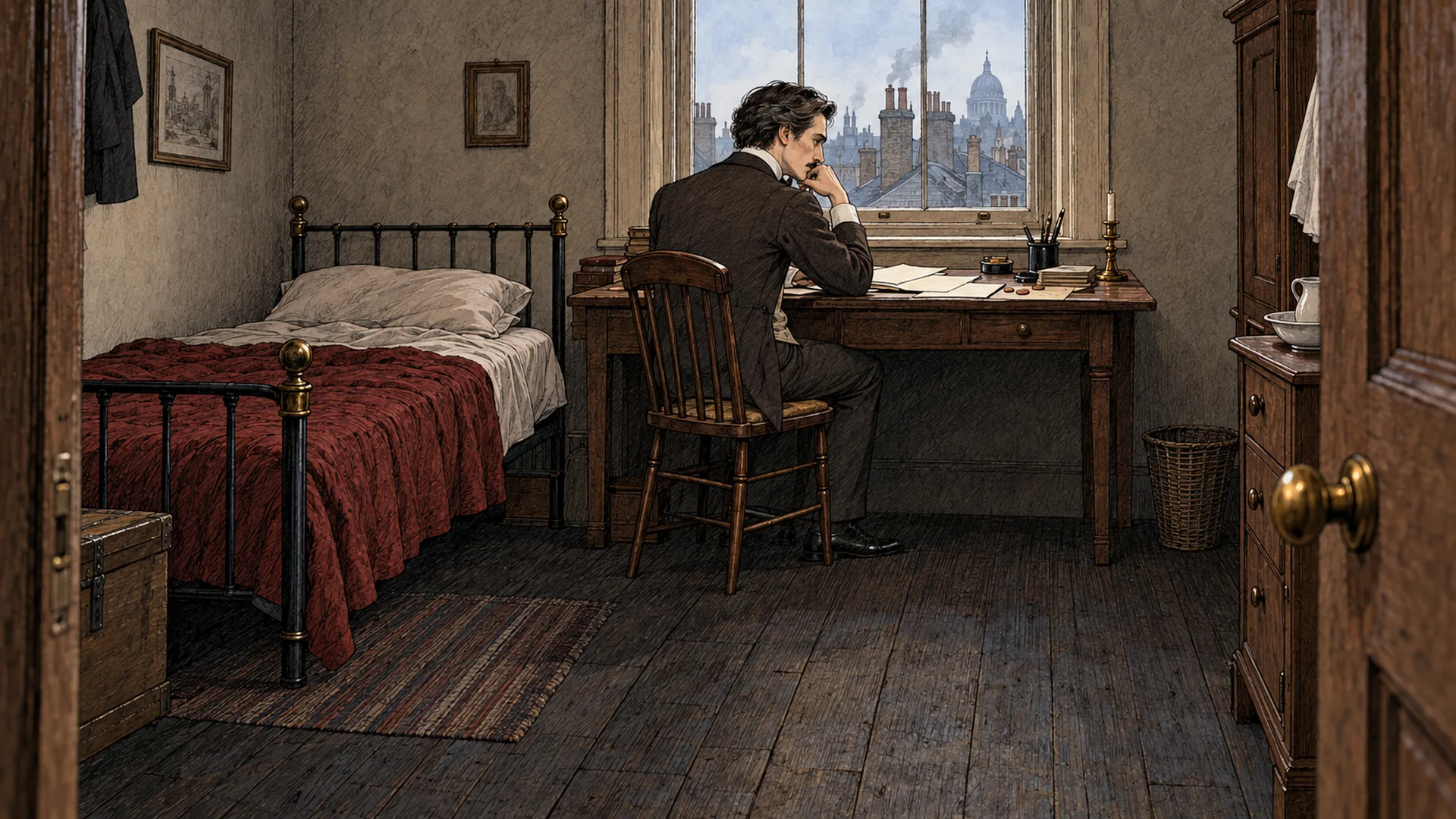
St. Clair later became liable for a friend's twenty-five-pound bill and could not see how to pay it. He secured two weeks' grace and took leave from the newspaper, then used his disguise to beg in the City. Within ten days he had earned enough to clear the debt, revealing how much more lucrative begging was than reporting.
Japanese in this scene
- 金をどう工面するか困り果てました
- 工面する means finding or raising necessary funds, while 困り果てる expresses reaching the end of one's resources.
- どれほど難しいか、お分かりでしょう
- どれほど〜か embeds the degree of difficulty, and お分かりでしょう politely expects the listeners to understand.
- 昔スワンダム横丁で下宿していた
- 下宿していた describes his earlier arrangement of lodging in Swandam Lane, establishing how he knew the den keeper.
- 二十五ポンドの支払いを求める令状を受けました
- 令状を受ける means being served with a writ; the preceding clause specifies the payment it demanded.
Full text: original English and Japanese translation
"I wrote my articles and thought little more of the matter until, some time later, I backed a bill for a friend and had a writ served upon me for £ 25. I was at my wit's end where to get the money, but a sudden idea came to me. I begged a fortnight's grace from the creditor, asked for a holiday from my employers, and spent the time in begging in the City under my disguise. In ten days I had the money and had paid the debt.
「記事を書き、それ以上あまり考えずにいましたが、しばらく後、友人の手形の裏書人になり、二十五ポンドの支払いを求める令状を受けました。金をどう工面するか困り果てましたが、不意に思いついたのです。債権者に二週間の猶予を頼み、勤め先に休暇を願い出て、その間は姿を変え、シティで物乞いをしました。十日で金がたまり、借金を返しました。
"Well, you can imagine how hard it was to settle down to arduous work at £ 2 a week when I knew that I could earn as much in a day by smearing my face with a little paint, laying my cap on the ground, and sitting still. It was a long fight between my pride and the money, but the dollars won at last, and I threw up reporting and sat day after day in the corner which I had first chosen, inspiring pity by my ghastly face and filling my pockets with coppers. Only one man knew my secret. He was the keeper of a low den in which I used to lodge in Swandam Lane, where I could every morning emerge as a squalid beggar and in the evenings transform myself into a well-dressed man about town. This fellow, a Lascar, was well paid by me for his rooms, so that I knew that my secret was safe in his possession.
「顔に少し色を塗り、帽子を地面に置いて座るだけで、一日に二ポンド稼げると知ってしまえば、週二ポンドのきつい仕事に落ち着くのがどれほど難しいか、お分かりでしょう。誇りと金との長い争いになりましたが、最後は金が勝ち、私は記者を辞めました。最初に選んだ街角で毎日座り、恐ろしい顔で同情を誘い、ポケットを銅貨で満たしたのです。秘密を知る者は一人だけでした。昔スワンダム横丁で下宿していた、いかがわしい店の主人です。そこで毎朝、みすぼらしい物乞いになって外へ出て、晩には立派な服の都会の紳士に戻ることができました。船員出身のその男には部屋代を十分払っていたので、彼が秘密を漏らす心配はないと分かっていました。