 よみうち英語Read the classics by typing
Notes Scene 56: The Room on Monday
You've finished this scene
Notes on this scene
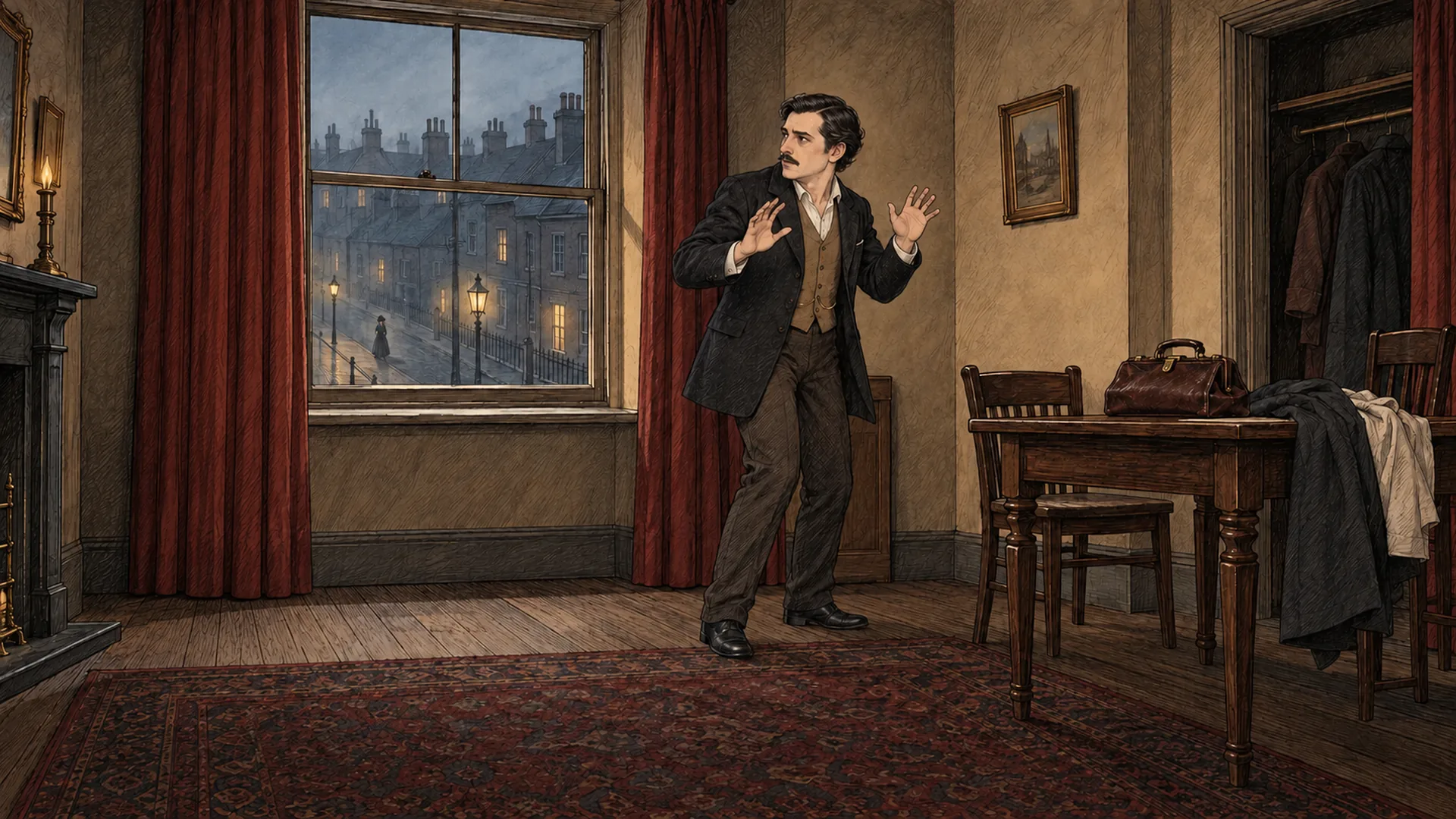
While changing clothes above the den after finishing work, St. Clair looks down and sees his wife staring directly at him. In panic he cries out, covers his face with both arms, and begs the Lascar to stop anyone from coming upstairs.
Japanese in this scene
- まっすぐ私を見つめていました
- まっすぐ intensifies the fixed gaze described by 見つめていました: his wife was looking directly at him.
- 誰も上へ来させないでくれ
- The causative negative 来させない means not allowing anyone to come up; 〜でくれ makes it his urgent request to the keeper.
- 上へは来られないと分かっていました
- 来られない is the negative potential: St. Clair knew the keeper would prevent his wife from reaching the upper room.
- これほど完璧な変装を見抜くことはできませんでした
- 見抜く means seeing through a deception, and 〜ことはできない states that even his wife could not do so.
Full text: original English and Japanese translation
"Last Monday I had finished for the day and was dressing in my room above the opium den when I looked out of my window and saw, to my horror and astonishment, that my wife was standing in the street, with her eyes fixed full upon me. I gave a cry of surprise, threw up my arms to cover my face, and, rushing to my confidant, the Lascar, entreated him to prevent anyone from coming up to me. I heard her voice downstairs, but I knew that she could not ascend. Swiftly I threw off my clothes, pulled on those of a beggar, and put on my pigments and wig. Even a wife's eyes could not pierce so complete a disguise. But then it occurred to me that there might be a search in the room, and that the clothes might betray me. I threw open the window, reopening by my violence a small cut which I had inflicted upon myself in the bedroom that morning. Then I seized my coat, which was weighted by the coppers which I had just transferred to it from the leather bag in which I carried my takings. I hurled it out of the window, and it disappeared into the Thames. The other clothes would have followed, but at that moment there was a rush of constables up the stair, and a few minutes after I found, rather, I confess, to my relief, that instead of being identified as Mr. Neville St. Clair, I was arrested as his murderer.
「先週の月曜、一日の仕事を終えてアヘン窟の上の部屋で着替えていたとき、窓から外を見ると、驚いたことに、妻が通りに立ち、まっすぐ私を見つめていました。驚きの声を上げ、両腕で顔を隠し、秘密を知る店主の所へ走って、誰も上へ来させないでくれと頼み込みました。階下で妻の声が聞こえましたが、上へは来られないと分かっていました。急いで服を脱ぎ、物乞いの服に着替え、顔料を塗ってかつらを着けました。妻の目でも、これほど完璧な変装を見抜くことはできませんでした。だが、部屋を捜索されたら、衣服から気づかれるかもしれないと思いつきました。窓を勢いよく開けると、その朝寝室でつけた小さな切り傷が、その乱暴な動きでまた開きました。それから外套をつかみました。稼ぎを入れていた革袋から銅貨を移したばかりで、その外套は重くなっていました。窓から投げ捨てると、外套はテムズ川へ消えました。ほかの衣服も捨てるはずでしたが、ちょうどそのとき警官が階段を駆け上がってきました。数分後、私はネヴィル・セントクレアと見破られる代わりに、その殺人犯として逮捕されました。正直に言えば、むしろほっとしたのです。