 よみうち英語Read the classics by typing
Notes Scene 1: A Visit After Christmas
You've finished this scene
Notes on this scene
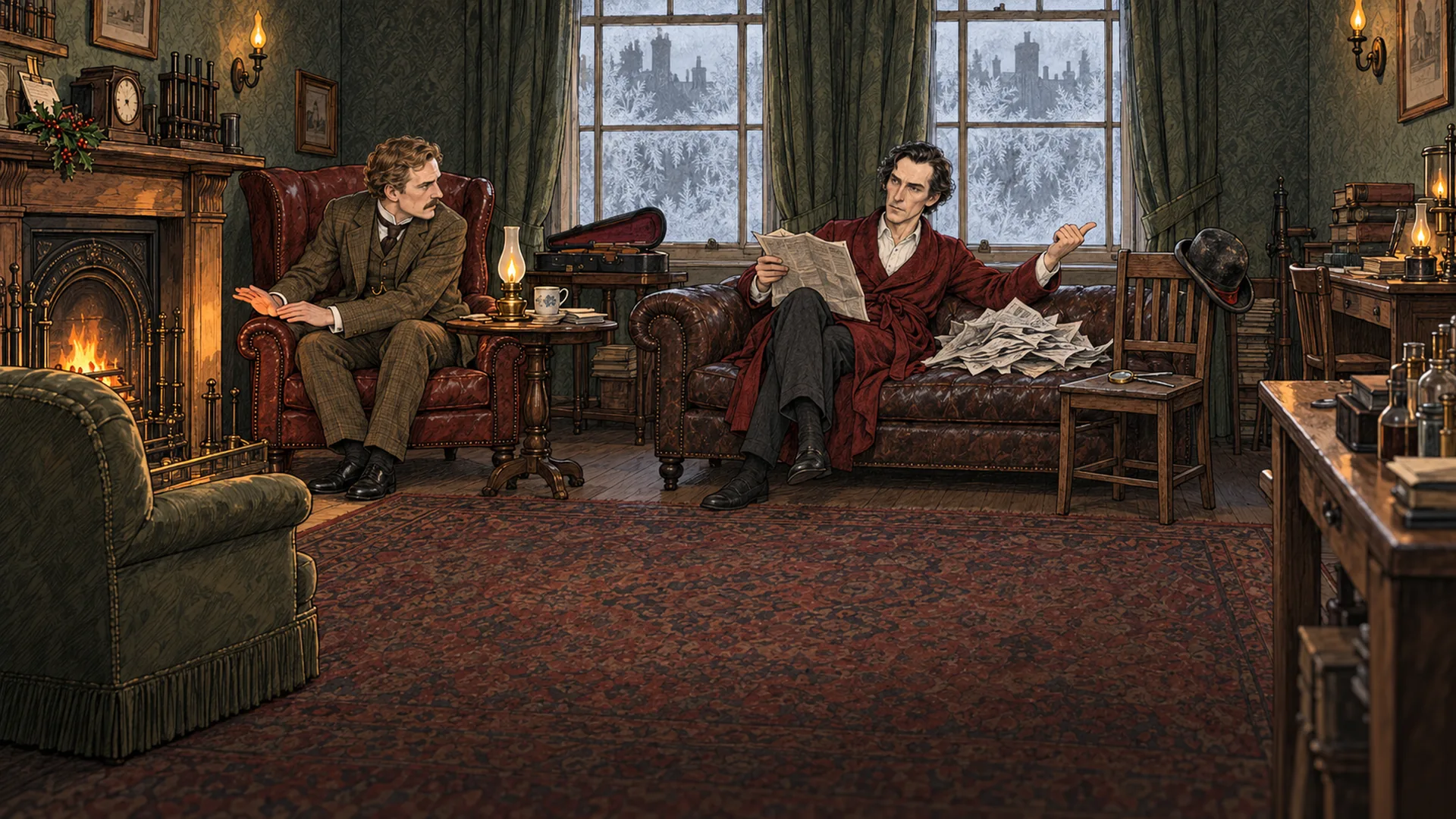
Watson visits Holmes two mornings after Christmas and finds him examining a battered felt hat beside the fire. The scene establishes this development clearly and closes before the next step begins, preserving the original passage's order and the limits of what the characters know at this point.
Japanese in this scene
- 事件としてはまったくつまらないものなんだが
- In 事件としてはまったくつまらない, 事件として means ‘as a case’: Holmes is judging it in its capacity as a detective case.
- 帽子は調べるためにこうして掛けてあるらしかった
- In 帽子は調べるためにこうして掛けてあるらしかった, verb + ために marks purpose: the hat has been hung there in order to examine it.
- ためにさえなる点がいくつかあってね
- In ためにさえなる, さえ adds ‘even’: Holmes says the case has points that are not merely interesting but even instructive.
- 読み終えたばかりらしいしわくちゃの朝刊が山になっていた
- In 読み終えたばかりらしい, past-form verb + ばかり means ‘apparently just finished’: the newspapers seem to have been read very recently.
Background
- dressing-gown
- A dressing gown was a long, loose indoor robe worn by Victorian gentlemen instead of a coat while relaxing at home. Holmes often reads newspapers or smokes in one when he has no case.
Full text: original English and Japanese translation
I had called upon my friend Sherlock Holmes upon the second morning after Christmas, with the intention of wishing him the compliments of the season. He was lounging upon the sofa in a purple dressing-gown, a pipe-rack within his reach upon the right, and a pile of crumpled morning papers, evidently newly studied, near at hand. Beside the couch was a wooden chair, and on the angle of the back hung a very seedy and disreputable hard-felt hat, much the worse for wear, and cracked in several places. A lens and a forceps lying upon the seat of the chair suggested that the hat had been suspended in this manner for the purpose of examination.
クリスマスから二日後の朝、私は季節の挨拶を述べようと、友人シャーロック・ホームズを訪ねた。彼は紫のガウン姿でソファに寝そべってくつろいでいた。右手の届くところにはパイプ掛けがあり、すぐそばには、読み終えたばかりらしいしわくちゃの朝刊が山になっていた。ソファの脇には木の椅子があり、その背もたれの角に、ひどくくたびれてみすぼらしい固いフェルトの帽子が掛かっていた。すっかり傷んで、何か所もひびが入っている。椅子の座面にレンズとピンセットが置いてあるところを見ると、帽子は調べるためにこうして掛けてあるらしかった。
"You are engaged," said I; "perhaps I interrupt you."
「取り込み中だね」と私は言った。「邪魔をしたかな」
"Not at all. I am glad to have a friend with whom I can discuss my results. The matter is a perfectly trivial one"—he jerked his thumb in the direction of the old hat—"but there are points in connection with it which are not entirely devoid of interest and even of instruction."
「いや、ちっとも。調べた結果を話し合える友人が来てくれて、うれしいよ。事件としてはまったくつまらないものなんだが」——彼は親指で古い帽子のほうをぐいと指した——「これには、なかなかおもしろく、ためにさえなる点がいくつかあってね」