 よみうち英語Read the classics by typing
Notes Scene 10: Lining and Dust
You've finished this scene
Notes on this scene
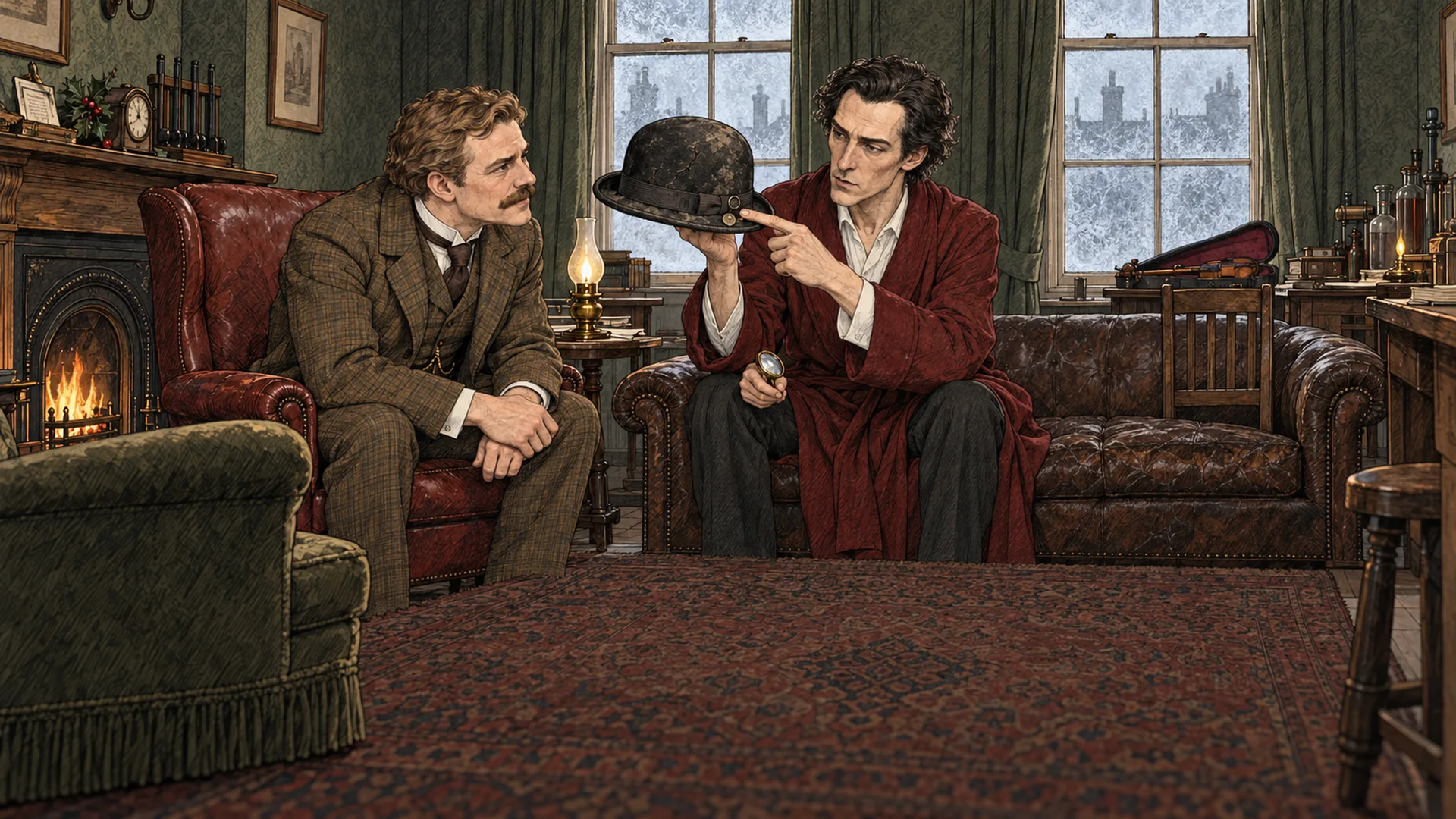
Hair clippings, scent, dust, moisture, and neglect allow Holmes to reconstruct the owner's appearance and domestic circumstances. The scene establishes this development clearly and closes before the next step begins, preserving the original passage's order and the limits of what the characters know at this point.
Japanese in this scene
- 奥さんへの仲直りのしるしとして家へ持ち帰るところだったのだ
- In 奥さんへの仲直りのしるしとして家へ持ち帰るところだったのだ, として marks the preceding noun as the role or capacity being considered.
- 家へ持ち帰るところだった
- This means “was about to take it home.” The dictionary form 持ち帰る followed by ところだった places the action just before it would happen.
- したがって体がよく鍛えられているとはとても言えないのだ
- In したがって体がよく鍛えられているとはとても言えないのだ, したがって introduces the logical consequence of the preceding facts.
- つまり中年であること
- In つまり中年であること, つまり restates the preceding point more directly.
Background
- lime-cream
- Lime-cream was a lime-scented hair dressing used to smooth and arrange the hair. Holmes detects it from the sticky clippings and scent inside the hat.
Full text: original English and Japanese translation
"The further points, that he is middle-aged, that his hair is grizzled, that it has been recently cut, and that he uses lime-cream, are all to be gathered from a close examination of the lower part of the lining. The lens discloses a large number of hair-ends, clean cut by the scissors of the barber. They all appear to be adhesive, and there is a distinct odour of lime-cream. This dust, you will observe, is not the gritty, grey dust of the street but the fluffy brown dust of the house, showing that it has been hung up indoors most of the time, while the marks of moisture upon the inside are proof positive that the wearer perspired very freely, and could therefore, hardly be in the best of training."
「ほかの点、つまり中年であること、髪が白髪まじりであること、最近散髪したこと、ライム・クリームを使っていることは、どれも裏地の下のほうをよく調べれば読み取れる。レンズで見ると、床屋のはさみできれいに切られた髪の切れ端がたくさんある。どれもべたついているようだし、ライム・クリームのにおいがはっきりする。この埃は、見れば分かるとおり、通りのざらざらした灰色の埃ではなく、家の中のふわふわした茶色の埃で、帽子がたいてい屋内に掛けてあったことを示しているし、内側の湿り気の跡は、かぶっていた男がひどく汗をかいた確かな証拠で、したがって体がよく鍛えられているとはとても言えないのだ」
"But his wife—you said that she had ceased to love him."
「でも、奥さんのことは——奥さんの愛情が冷めた、ときみは言ったね」
"This hat has not been brushed for weeks. When I see you, my dear Watson, with a week's accumulation of dust upon your hat, and when your wife allows you to go out in such a state, I shall fear that you also have been unfortunate enough to lose your wife's affection."
「この帽子は何週間もブラシをかけられていない。ねえワトソン、もしきみが帽子に一週間分の埃をためていて、奥さんがそんな格好のままきみを外へ出すようになったら、きみもまた不幸にして奥さんの愛情を失ったのではないかと、私は心配になるだろうね」
"But he might be a bachelor."
「でも、独身かもしれないじゃないか」
"Nay, he was bringing home the goose as a peace-offering to his wife. Remember the card upon the bird's leg."
「いや、彼はあのガチョウを、奥さんへの仲直りのしるしとして家へ持ち帰るところだったのだ。鳥の脚についていた札を思い出したまえ」