 よみうち英語Read the classics by typing
Notes Scene 11: Tallow Stains
You've finished this scene
Notes on this scene
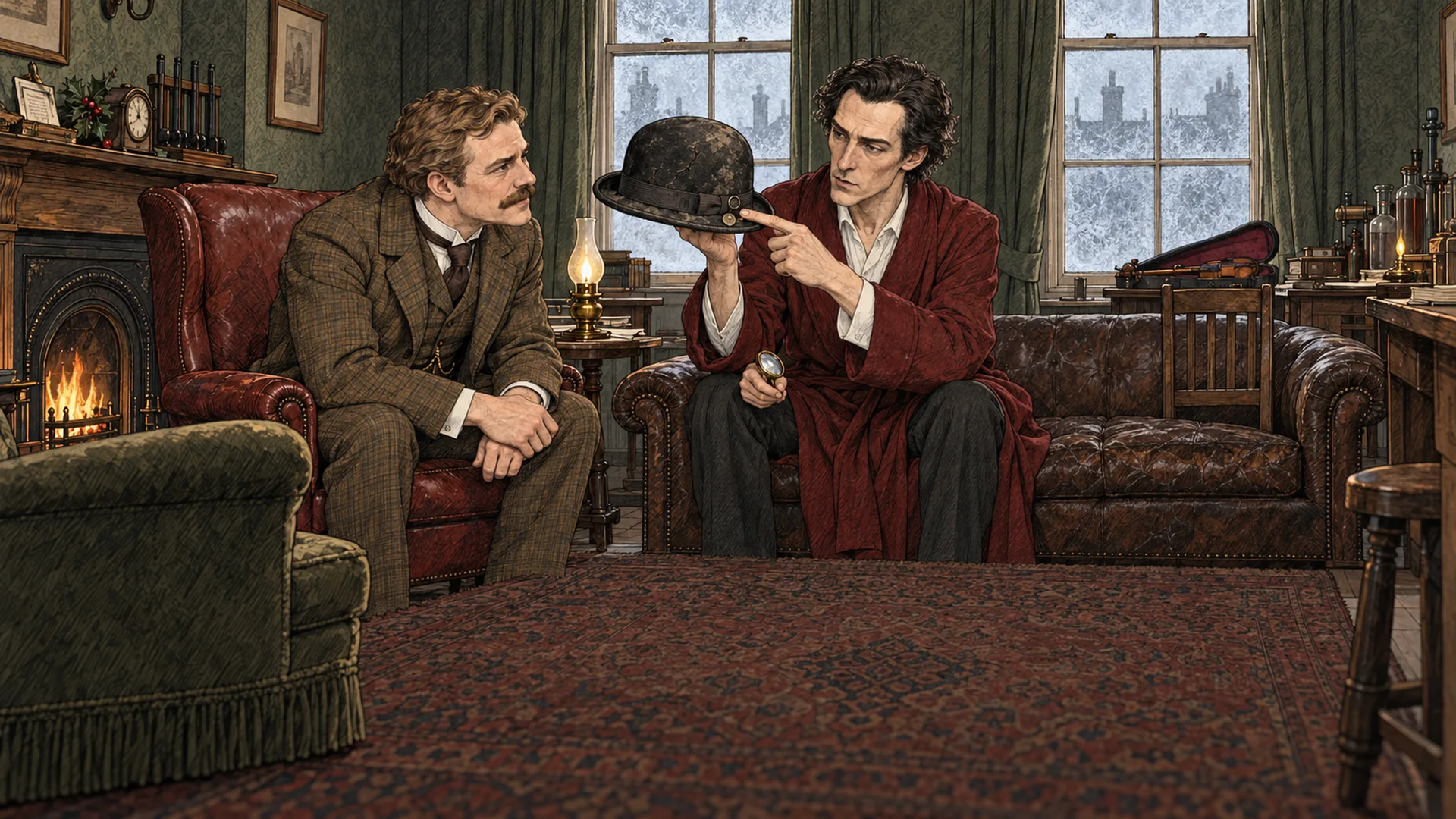
Five tallow stains lead Holmes to conclude that the owner carries a candle upstairs because his home lacks gas lighting. The scene establishes this development clearly and closes before the next step begins, preserving the original passage's order and the limits of what the characters know at this point.
Japanese in this scene
- と私は笑いながら言った
- In と私は笑いながら言った, ながら links the action before it with the action or state that follows.
- ちょっとした力の無駄づかいのように思えるよ
- In ちょっとした力の無駄づかいのように思えるよ, ちょっとした modifies the following noun as small but noteworthy rather than completely trivial.
- 彼の家にガスが引かれていないなんて推理したんだい
- In 彼の家にガスが引かれていないなんて推理したんだい, なんて picks up the surrounding expression informally, with the speaker's surprise or emphasis.
- いや二つくらいなら
- In 一つ、いや二つくらいなら, くらい makes the number approximate: ‘one, or perhaps two or so.’
Background
- tallow candle
- Cheap tallow candles were made from animal fat. They smoked, smelled, and dripped easily, leaving the kind of grease marks Holmes finds on the hat.
Full text: original English and Japanese translation
"You have an answer to everything. But how on earth do you deduce that the gas is not laid on in his house?"
「きみには何にでも答えがあるんだね。でも、いったいどうやって、彼の家にガスが引かれていないなんて推理したんだい?」
"One tallow stain, or even two, might come by chance; but when I see no less than five, I think that there can be little doubt that the individual must be brought into frequent contact with burning tallow—walks upstairs at night probably with his hat in one hand and a guttering candle in the other. Anyhow, he never got tallow-stains from a gas-jet. Are you satisfied?"
「獣脂の染みが一つ、いや二つくらいなら、たまたま付くこともあるだろう。だが五つもあるのを見れば、この人物がしょっちゅう燃える獣脂に触れているのはまず疑いないと思う——おそらく夜、片手に帽子を、もう片方の手に蝋の垂れるろうそくを持って、階段を上っていくのだ。いずれにしても、ガス灯の炎から獣脂の染みがつくことはない。納得したかね?」
"Well, it is very ingenious," said I, laughing; "but since, as you said just now, there has been no crime committed, and no harm done save the loss of a goose, all this seems to be rather a waste of energy."
「いや、実に巧妙だね」と私は笑いながら言った。「でも、きみがさっき言ったように、罪は何も犯されていないし、ガチョウ一羽をなくしたほかには何の害も出ていないのだから、こんなことはみんな、ちょっとした力の無駄づかいのように思えるよ」