 よみうち英語Read the classics by typing
Notes Scene 17: The Advertisement
You've finished this scene
Notes on this scene
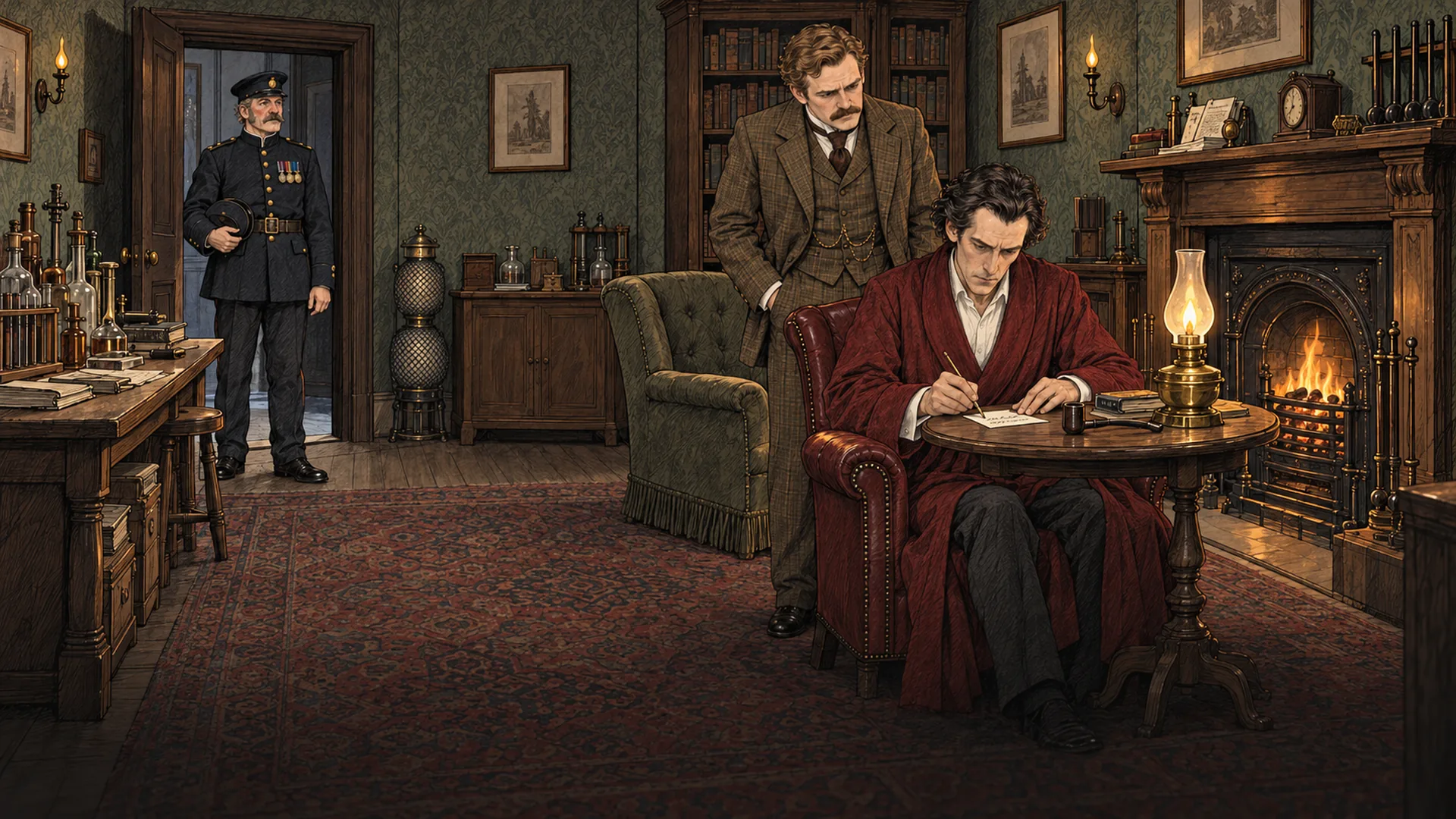
Holmes writes a newspaper advertisement offering to return the lost hat and goose to Henry Baker that evening. The scene establishes this development clearly and closes before the next step begins, preserving the original passage's order and the limits of what the characters know at this point.
Japanese in this scene
- 逃げることしか頭になかったのは明らかだが
- In 逃げることしか頭になかったのは明らかだが, しか works with the negative predicate to limit the statement to the preceding item.
- 貧しい男にとっては痛い損失だったのだからね
- In 貧しい男にとっては痛い損失だったのだからね, にとって sets the preceding person as the viewpoint from which the judgment is made.
- 貧しい男にとっては痛い損失だったのだからね
- In 貧しい男にとっては痛い損失だったのだからね, だった is the plain past copula and identifies what the preceding noun or description was.
- それにまた
- In それにまた, それに adds another supporting fact to the preceding statement.
Background
- advertisement
- Victorian newspapers carried many short notices about lost property and missing people. Holmes repeatedly uses these columns as a practical investigative tool.
Full text: original English and Japanese translation
"Give me a pencil and that slip of paper. Now, then: 'Found at the corner of Goodge Street, a goose and a black felt hat. Mr. Henry Baker can have the same by applying at 6:30 this evening at 221B, Baker Street.' That is clear and concise."
「鉛筆と、その紙切れを取ってくれたまえ。さて、と。『グッジ街の角にて、ガチョウ一羽と黒いフェルト帽を拾得。ヘンリー・ベイカー氏は、今晩六時半にベイカー街 221B にお申し出あれば、お返しする』これなら明快で簡潔だ」
"Very. But will he see it?"
「まったくだ。でも、本人がそれを見るかい?」
"Well, he is sure to keep an eye on the papers, since, to a poor man, the loss was a heavy one. He was clearly so scared by his mischance in breaking the window and by the approach of Peterson that he thought of nothing but flight, but since then he must have bitterly regretted the impulse which caused him to drop his bird. Then, again, the introduction of his name will cause him to see it, for everyone who knows him will direct his attention to it. Here you are, Peterson, run down to the advertising agency and have this put in the evening papers."
「なに、きっと新聞に目を光らせているさ、貧しい男にとっては痛い損失だったのだからね。窓を割ってしまった災難と、ピーターソンが近づいてきたことにすっかりおびえて、逃げることしか頭になかったのは明らかだが、あれからきっと、鳥を落としてしまったあのとっさの行いをひどく悔やんでいるはずだ。それにまた、名前を出しておけば本人の目に入る、彼を知っている者は誰でも、それに彼の注意を向けさせるだろうからね。さあ、ピーターソン、広告取次所へひとっ走りして、これを夕刊に載せてもらってくれたまえ」