 よみうち英語Read the classics by typing
Notes Scene 20: Until the Evening
You've finished this scene
Notes on this scene
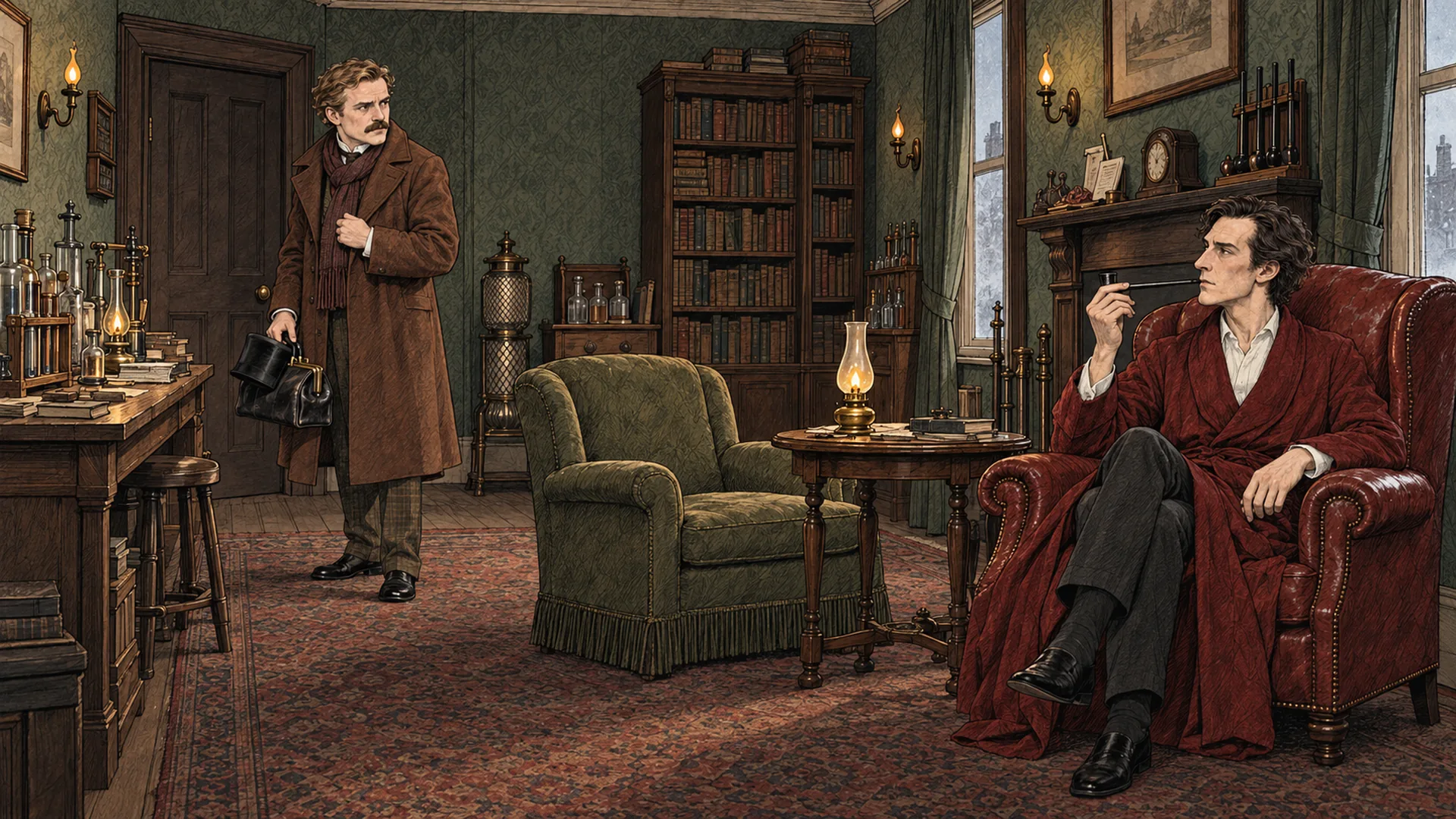
Holmes reserves judgment on Horner and plans a simple test to discover whether Henry Baker knew about the jewel. The scene establishes this development clearly and closes before the next step begins, preserving the original passage's order and the limits of what the characters know at this point.
Japanese in this scene
- 純金でできていたとしても
- This means “even if it had been made of solid gold.” The hypothetical form 〜たとしても concedes an imagined condition while saying that the conclusion would still remain unchanged.
- 純金でできていたとしてもかなわないほどの値打ちものだとは
- In 純金でできていたとしてもかなわないほどの値打ちものだとは, ほど sets the degree or extent expressed by the surrounding description.
- それまでは何もできないのかい
- In それまでは何もできないのかい, まで marks the preceding item as the endpoint or outer limit reached in this statement.
- もっとも、それは広告
- In もっとも、それは広告, もっとも adds a qualification or reservation to the preceding statement.
Background
- professional round
- A professional round was a doctor's circuit of visits to patients in their homes. Watson is a practising physician and fits Baker Street between these calls.
- woodcock
- The woodcock is a long-billed wild bird traditionally hunted in winter and served at the table.
Full text: original English and Japanese translation
"Do you think that this man Horner is innocent?"
「このホーナーという男は無実だと思うかい?」
"I cannot tell."
「なんとも言えないね」
"Well, then, do you imagine that this other one, Henry Baker, had anything to do with the matter?"
「じゃあ、もう一人のほう、ヘンリー・ベイカーは、この件に何か関わっていると思うかい?」
"It is, I think, much more likely that Henry Baker is an absolutely innocent man, who had no idea that the bird which he was carrying was of considerably more value than if it were made of solid gold. That, however, I shall determine by a very simple test if we have an answer to our advertisement."
「私の考えでは、ヘンリー・ベイカーはまったく潔白な男で、自分の運んでいた鳥が、純金でできていたとしてもかなわないほどの値打ちものだとは、夢にも思っていなかった、という見込みのほうがずっと大きい。もっとも、それは広告に返事があれば、ごく簡単な試しで確かめるつもりだ」
"And you can do nothing until then?"
「それまでは何もできないのかい?」
"Nothing."
「何も」
"In that case I shall continue my professional round. But I shall come back in the evening at the hour you have mentioned, for I should like to see the solution of so tangled a business."
「それなら、私は往診の続きに回るとしよう。でも夕方、きみの言った時刻にはまた来るよ、こんなに込み入った事件がどう解けるのか見届けたいからね」
"Very glad to see you. I dine at seven. There is a woodcock, I believe. By the way, in view of recent occurrences, perhaps I ought to ask Mrs. Hudson to examine its crop."
「喜んで迎えるよ。夕食は七時だ。たしか、ヤマシギが出るはずだ。ところで、近ごろの出来事を考えると、ハドソン夫人にその餌袋を調べてもらったほうがいいかもしれないね」