 よみうち英語Read the classics by typing
Notes Scene 22: Mr. Henry Baker
You've finished this scene
Notes on this scene
Baker's appearance confirms Holmes's deductions, and he explains why poverty kept him from advertising for his lost property. The scene establishes this development clearly and closes before the next step begins, preserving the original passage's order and the limits of what the characters know at this point.
Japanese in this scene
- 全体として
- In 全体として, として marks the preceding noun as the role or capacity being considered.
- 彼の習慣についてのホームズの推測を思い出した
- In 彼の習慣についてのホームズの推測を思い出した, について marks the preceding noun as the topic being discussed.
- 以前ほどシリングが手もとにありませんでしてな
- In 以前ほどシリングが手もとにありませんでしてな, ほど sets the degree or extent expressed by the surrounding description.
- 彼は言葉を慎重に選びながら
- In 彼は言葉を慎重に選びながら, ながら links the action before it with the action or state that follows.
Background
- shilling
- In Britain's old currency, twenty shillings made one pound and twelve pence made one shilling.
Full text: original English and Japanese translation
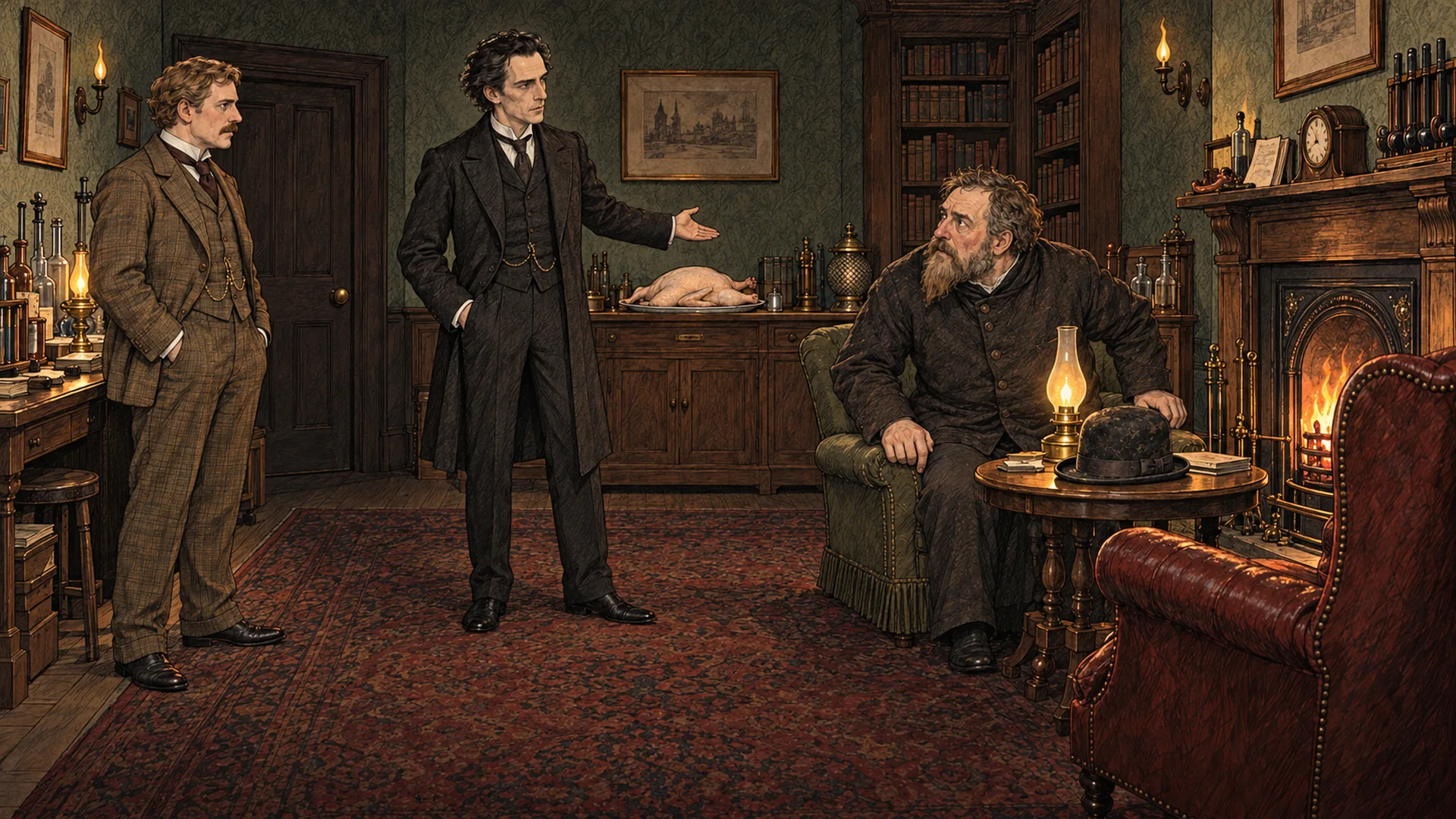
He was a large man with rounded shoulders, a massive head, and a broad, intelligent face, sloping down to a pointed beard of grizzled brown. A touch of red in nose and cheeks, with a slight tremor of his extended hand, recalled Holmes' surmise as to his habits. His rusty black frock-coat was buttoned right up in front, with the collar turned up, and his lank wrists protruded from his sleeves without a sign of cuff or shirt. He spoke in a slow staccato fashion, choosing his words with care, and gave the impression generally of a man of learning and letters who had had ill-usage at the hands of fortune.
彼は肩の丸い大柄な男で、頭は大きく、幅の広い知的な顔は、白髪まじりの茶色のとがったあごひげへと細まっていた。鼻と頬にほんのり赤みがさし、差し出した手がかすかに震えているのを見て、私は、彼の習慣についてのホームズの推測を思い出した。色あせた黒のフロックコートは前をきっちりボタンで留めて襟を立て、細い手首が、カフスもシャツものぞかせずに袖から突き出ていた。彼は言葉を慎重に選びながら、ゆっくりと区切るように話し、全体として、運命にひどい仕打ちを受けた、学問と教養のある人という印象を与えた。
"We have retained these things for some days," said Holmes, "because we expected to see an advertisement from you giving your address. I am at a loss to know now why you did not advertise."
「これらの品は数日のあいだお預かりしていました」とホームズは言った。「あなたのほうから、住所を書いた広告が出るものと思っていたものですから。なぜ広告をお出しにならなかったのか、いまだに見当がつきません」
Our visitor gave a rather shamefaced laugh. "Shillings have not been so plentiful with me as they once were," he remarked. "I had no doubt that the gang of roughs who assaulted me had carried off both my hat and the bird. I did not care to spend more money in a hopeless attempt at recovering them."
客は少しきまり悪そうに笑った。「近ごろは、以前ほどシリングが手もとにありませんでしてな」と彼は言った。「私を襲ったごろつきの一団が、帽子も鳥も持ち去ったものとばかり思っておりました。見込みのない取り戻しのために、これ以上金を使う気にはなれませんでしてな」
"Very naturally. By the way, about the bird, we were compelled to eat it."
「ごもっともです。ところで、鳥のことですが、私たちはあれを食べざるをえませんでした」