 よみうち英語Read the classics by typing
Notes Scene 23: The Fate of the Goose
You've finished this scene
Notes on this scene
Baker accepts a replacement goose but laughs away the offer of the original bird's feathers, legs, and crop. The scene establishes this development clearly and closes before the next step begins, preserving the original passage's order and the limits of what the characters know at this point.
Japanese in this scene
- 私の冒険の記念品としてなら
- In 私の冒険の記念品としてなら, として marks the preceding noun as the role or capacity being considered.
- シャーロック・ホームズは軽く肩をすくめながら
- In シャーロック・ホームズは軽く肩をすくめながら, ながら links the action before it with the action or state that follows.
- 亡き知人のばらばらの亡骸が私にとって何の役に立つのか
- In 亡き知人のばらばらの亡骸が私にとって何の役に立つのか, にとって sets the preceding person as the viewpoint from which the judgment is made.
- ですが、サイドボードの上
- In ですが、サイドボードの上, ですが politely contrasts the following statement with what precedes it.
Background
- sideboard
- A sideboard was a low dining-room cabinet whose top held dishes and food for serving. The replacement goose is waiting on it here.
Full text: original English and Japanese translation
"To eat it!" Our visitor half rose from his chair in his excitement.
「食べてしまわれたと!」客は興奮のあまり、椅子から腰を半ば浮かせた。
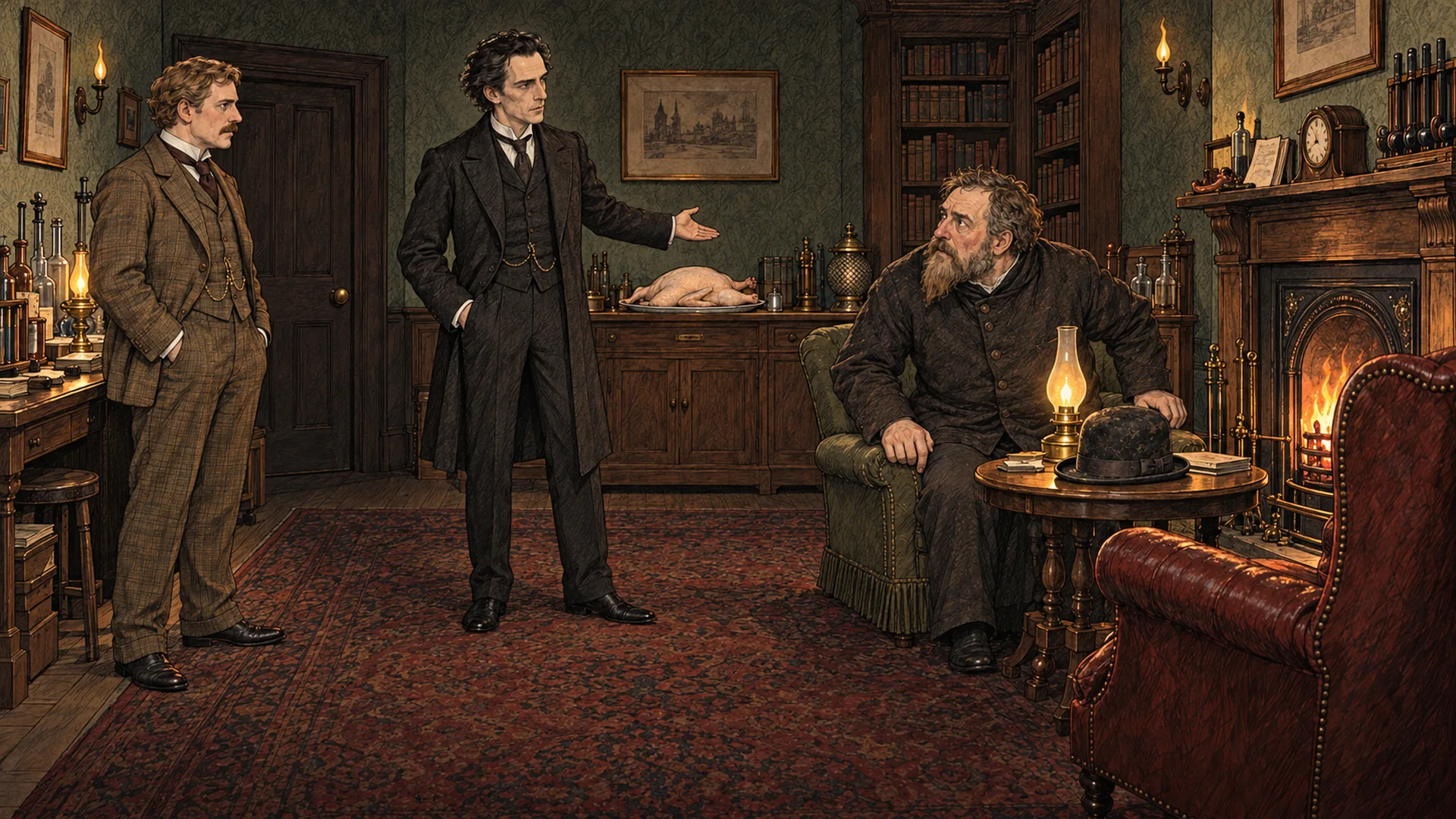
"Yes, it would have been of no use to anyone had we not done so. But I presume that this other goose upon the sideboard, which is about the same weight and perfectly fresh, will answer your purpose equally well?"
「ええ、そうしなければ、誰の役にも立たなかったでしょうからね。ですが、サイドボードの上にあるこちらの別のガチョウなら、重さもほぼ同じで申し分なく新鮮ですから、同じくらいお役に立つと思いますが、いかがです?」
"Oh, certainly, certainly," answered Mr. Baker with a sigh of relief.
「ええ、もちろん、もちろんですとも」とベイカー氏はほっと息をついて答えた。
"Of course, we still have the feathers, legs, crop, and so on of your own bird, so if you wish—"
「もちろん、あなたご自身の鳥の羽や脚、餌袋なども、まだ取ってありますから、もしお望みなら——」
The man burst into a hearty laugh. "They might be useful to me as relics of my adventure," said he, "but beyond that I can hardly see what use the disjecta membra of my late acquaintance are going to be to me. No, sir, I think that, with your permission, I will confine my attentions to the excellent bird which I perceive upon the sideboard."
男は急に、腹の底から笑い出した。「私の冒険の記念品としてなら、役に立つかもしれませんな」と彼は言った。「しかしそれ以上となると、亡き知人のばらばらの亡骸が私にとって何の役に立つのか、とんと見当がつきませんな。いや、よろしければ、サイドボードの上に見えている、あの見事な鳥のほうだけを頂戴するとしましょう」
Sherlock Holmes glanced sharply across at me with a slight shrug of his shoulders.
シャーロック・ホームズは軽く肩をすくめながら、鋭い目つきで私のほうをちらりと見た。