 よみうち英語Read the classics by typing
Notes Scene 30: A Bet on a Bird
You've finished this scene
Notes on this scene
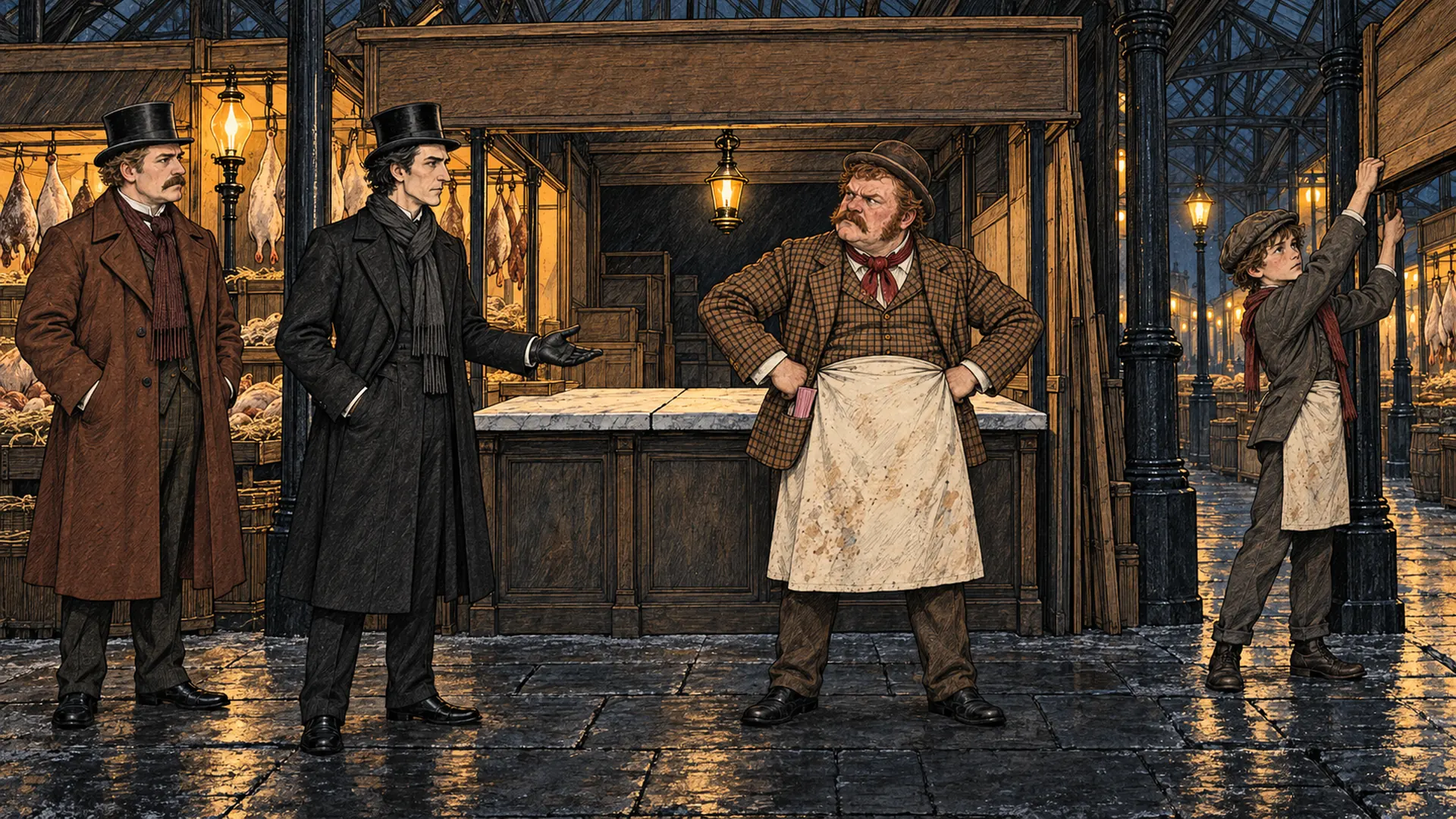
Holmes turns the dealer's irritation into a wager by insisting that the disputed geese were country-bred. The scene establishes this development clearly and closes before the next step begins, preserving the original passage's order and the limits of what the characters know at this point.
Japanese in this scene
- 5 ポンド賭けているのでね
- In 5 ポンド賭けているのでね, ので presents the preceding clause as the reason for what follows.
- 世の中にガチョウはあれしかいないのかと思っちまうよ
- In 世の中にガチョウはあれしかいないのかと思っちまうよ, しか works with the negative predicate to limit the statement to the preceding item.
- だって
- Here だって is colloquial and emphatic. It brings up the preceding item as an example or justification, much like ‘even’ or ‘after all.’
- 俺くらいしつこく付きまとわれりゃ
- In 俺くらいしつこく付きまとわれりゃ, くらい sets the dealer himself as the comparison: ‘if you were pestered as persistently as I am.’
Background
- fiver
- Fiver is informal British English for five pounds. It was a large sum for an argument about one goose, deliberately chosen to provoke the dealer's pride.
Full text: original English and Japanese translation
"Warm! You'd be as warm, maybe, if you were as pestered as I am. When I pay good money for a good article there should be an end of the business; but it's 'Where are the geese?' and 'Who did you sell the geese to?' and 'What will you take for the geese?' One would think they were the only geese in the world, to hear the fuss that is made over them."
「むきになる、だと!あんただって、俺くらいしつこく付きまとわれりゃ、同じくらい熱くなるだろうよ。いい品物にまっとうな金を払ったら、取引はそれで終わりのはずだろうが、それが『ガチョウはどこだ?』だの『ガチョウを誰に売った?』だの『ガチョウをいくらで譲る?』だのと来やがる。あの騒ぎようを聞いてりゃ、世の中にガチョウはあれしかいないのかと思っちまうよ」
"Well, I have no connection with any other people who have been making inquiries," said Holmes carelessly. "If you won't tell us the bet is off, that is all. But I'm always ready to back my opinion on a matter of fowls, and I have a fiver on it that the bird I ate is country bred."
「まあ、ほかに問い合わせてきた人たちと私は、なんの関係もありませんがね」とホームズは気のない様子で言った。「教えてくれないのなら賭けはなし、それだけのことです。ですが、鳥のことなら私はいつでも自分の見立てに賭けますよ。私が食べた鳥は田舎育ちだというほうに、5 ポンド賭けているのでね」
"Well, then, you've lost your fiver, for it's town bred," snapped the salesman.
「なら、あんたの 5 ポンドは負けだ。あれは町育ちだからな」と商人はかみつくように言った。
"It's nothing of the kind."
「そんなはずはありませんよ」
"I say it is."
「町育ちだと言ってるだろうが」
"I don't believe it."
「信じませんね」