 よみうち英語Read the classics by typing
Notes Scene 34: Settling the Bet
You've finished this scene
Notes on this scene
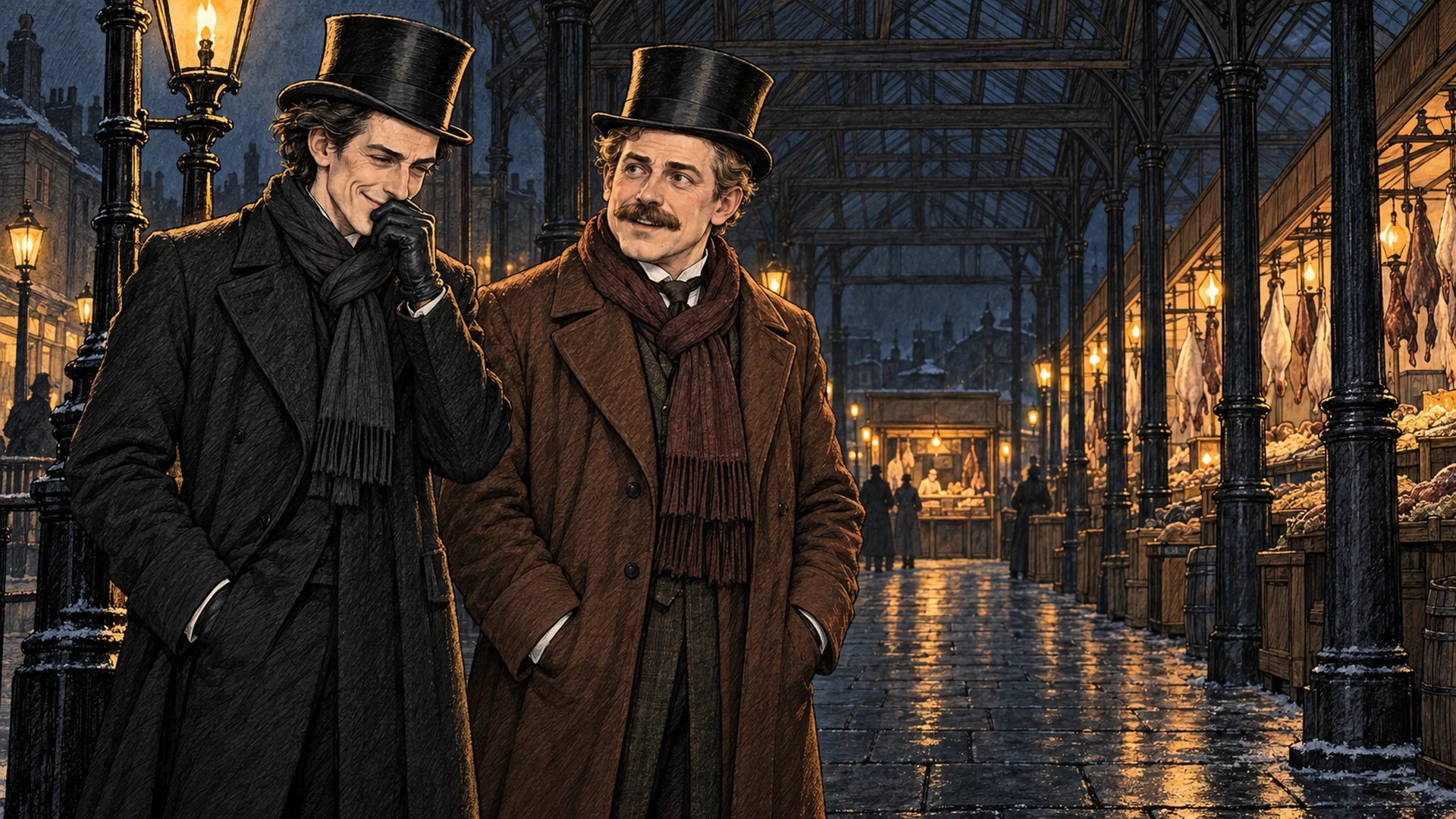
Holmes pays the lost sovereign, then laughs beneath a streetlamp because the wager obtained the information he needed. The scene establishes this development clearly and closes before the next step begins, preserving the original passage's order and the limits of what the characters know at this point.
Japanese in this scene
- だから私としては――
- In だから私としては――, として marks the preceding noun as the role or capacity being considered.
- 言葉も出ないほど嫌気がさした男といった様子で背を向けた
- In 言葉も出ないほど嫌気がさした男といった様子で背を向けた, ほど sets the degree or extent expressed by the surrounding description.
- たとえ 100 ポンドを目の前に積んでみせたところで
- This means “even if I had piled one hundred pounds before him.” With たとえ, the pattern 〜たところで presents a hypothetical action whose result would still not change.
- 嫌気がさした男といった様子
- This describes him as “looking like a man utterly disgusted.” Here といった characterizes the kind of appearance he presented; it does not introduce examples.
Background
- the 'Pink 'un'
- The Pink 'Un was a nickname for a sporting and racing newspaper printed on pink paper. Carrying it suggests an interest in betting, which Holmes exploits.
Full text: original English and Japanese translation
Sherlock Holmes looked deeply chagrined. He drew a sovereign from his pocket and threw it down upon the slab, turning away with the air of a man whose disgust is too deep for words. A few yards off he stopped under a lamp-post and laughed in the hearty, noiseless fashion which was peculiar to him.
シャーロック・ホームズは、ひどく悔しそうな顔をした。彼はポケットから 1 ポンド金貨を取り出して売り台の上に放り出し、言葉も出ないほど嫌気がさした男といった様子で背を向けた。数ヤード離れると、彼は街灯の下で立ち止まり、彼独特の、声を立てずに腹の底から笑うやり方で笑った。
"When you see a man with whiskers of that cut and the 'Pink 'un' protruding out of his pocket, you can always draw him by a bet," said he. "I daresay that if I had put £ 100 down in front of him, that man would not have given me such complete information as was drawn from him by the idea that he was doing me on a wager. Well, Watson, we are, I fancy, nearing the end of our quest, and the only point which remains to be determined is whether we should go on to this Mrs. Oakshott to-night, or whether we should reserve it for to-morrow. It is clear from what that surly fellow said that there are others besides ourselves who are anxious about the matter, and I should—"
「ああいう形に頬ひげを刈り込んで、ポケットから『ピンク・アン』をのぞかせている男を見たら、賭けを持ちかければいつでも話を引き出せるのさ」と彼は言った。「たとえ 100 ポンドを目の前に積んでみせたところで、あの男は、賭けで私を負かしているつもりにさせて引き出したほど、すっかり話してはくれなかっただろうね。さて、ワトソン、私たちの探索もどうやら終わりに近づいているようだ。あと決めることといえば、このオークショット夫人のところへ今夜のうちに行くか、それとも明日に取っておくか、それだけだ。あの無愛想な男の口ぶりからすると、私たちのほかにもこの件を気にかけている者がいるのは明らかだ。だから私としては――」