 よみうち英語Read the classics by typing
Notes Scene 35: A Row at the Stall
You've finished this scene
Notes on this scene
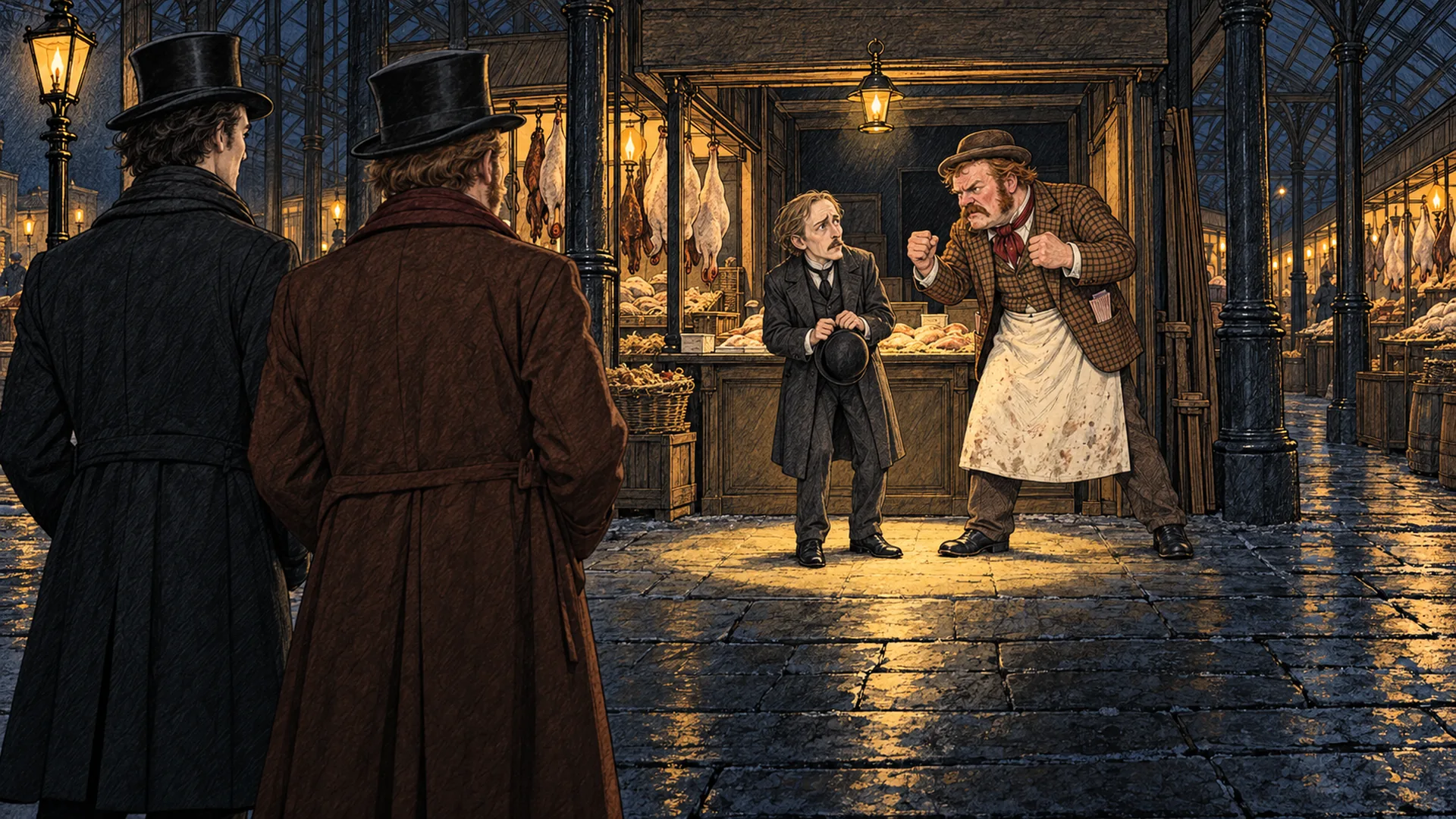
A pale little man quarrels with Breckinridge over one particular goose and is angrily driven from the stall. The scene establishes this development clearly and closes before the next step begins, preserving the original passage's order and the limits of what the characters know at this point.
Japanese in this scene
- 私たちがいま離れたばかりの屋台で起こった大きな騒ぎに
- In 私たちがいま離れたばかりの屋台で起こった大きな騒ぎに, ばかり limits the timing or amount to the ‘just’ sense shown by the surrounding verb.
- それでも私のものだったんです
- In それでも私のものだったんです, それでも introduces a result that still holds despite the preceding fact.
- 私たちがいま離れたばかりの屋台で起こった大きな騒ぎに
- In 私たちがいま離れたばかりの屋台で起こった大きな騒ぎに, 大きな modifies the following noun as large or important; it is used only before a noun.
- いいえ。でも、そのうち
- In いいえ。でも、そのうち, いいえ directly rejects the preceding question or assumption.
Background
- Prussia
- Prussia was a kingdom in northern Germany. The dealer's reference to its king is a joking way of saying that he refuses to answer.
Full text: original English and Japanese translation
His remarks were suddenly cut short by a loud hubbub which broke out from the stall which we had just left. Turning round we saw a little rat-faced fellow standing in the centre of the circle of yellow light which was thrown by the swinging lamp, while Breckinridge, the salesman, framed in the door of his stall, was shaking his fists fiercely at the cringing figure.
彼の言葉は、私たちがいま離れたばかりの屋台で起こった大きな騒ぎに、不意にさえぎられた。振り返ると、揺れるランプが投げかける黄色い光の輪の真ん中に、ネズミのような顔をした小柄な男が立っていた。商人のブレッキンリッジは自分の屋台の戸口に立ちはだかり、縮こまるその姿に向かって激しくこぶしを振り回していた。
"I've had enough of you and your geese," he shouted. "I wish you were all at the devil together. If you come pestering me any more with your silly talk I'll set the dog at you. You bring Mrs. Oakshott here and I'll answer her, but what have you to do with it? Did I buy the geese off you?"
「あんたにも、あんたのガチョウにも、もううんざりだ」と彼はどなった。「あんたら、まとめてくたばっちまえばいいんだ。これ以上くだらねえ話でしつこく付きまとうなら、犬をけしかけるぞ。オークショット夫人をここへ連れてくりゃ相手をしてやるが、あんたになんの関わりがあるってんだ?俺があんたからガチョウを買ったか?」
"No; but one of them was mine all the same," whined the little man.
「いいえ。でも、そのうちの 一羽は、それでも私のものだったんです」と小男は泣きつくように言った。
"Well, then, ask Mrs. Oakshott for it."
「なら、オークショット夫人に頼め」
"She told me to ask you."
「あの人が、あなたに聞けと言ったんです」
"Well, you can ask the King of Proosia, for all I care. I've had enough of it. Get out of this!" He rushed fiercely forward, and the inquirer flitted away into the darkness.
「知ったことか、プロシャの王様にでも聞きやがれ。もうたくさんだ。とっとと失せろ!」商人が猛然と飛び出してくると、尋ねていた男はひらりと身をかわして闇の中へ消えた。