 よみうち英語Read the classics by typing
Notes Scene 47: Geese in the Yard
You've finished this scene
Notes on this scene
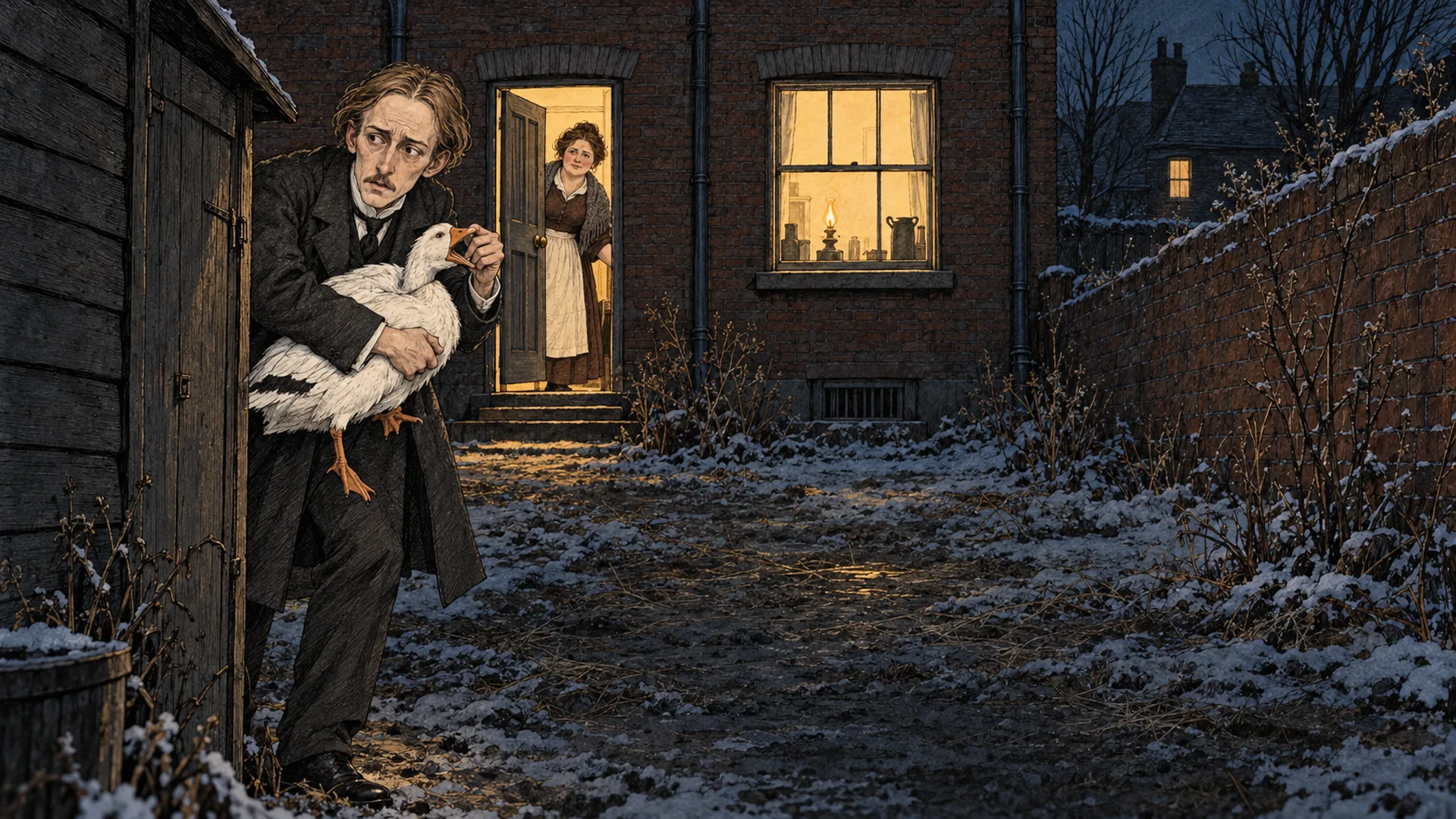
Ryder forces the stone down a white goose's throat, but the struggling bird escapes back into the flock. The scene establishes this development clearly and closes before the next step begins, preserving the original passage's order and the limits of what the characters know at this point.
Japanese in this scene
- クリスマスの贈り物として
- In クリスマスの贈り物として, として marks the preceding noun as the role or capacity being considered.
- その中に石を入れてキルバーンまで運べばいい
- In その中に石を入れてキルバーンまで運べばいい, まで marks the preceding item as the endpoint or outer limit reached in this statement.
- ところがそいつが羽をばたつかせて暴れたものですから
- In ところがそいつが羽をばたつかせて暴れたものですから, ところが introduces an unexpected contrast with what came before.
- 姉が必ず約束を守る人だということも
- In 姉が必ず約束を守る人だということも, clause + ということ turns ‘his sister always keeps her promises’ into a fact Ryder already knows. He therefore trusts her promise that he may choose a goose.
Background
- Christmas goose
- Roast goose was a common centrepiece of a Victorian British Christmas meal, so a well-fattened bird made a valuable holiday gift or purchase.
Full text: original English and Japanese translation
"My sister had told me some weeks before that I might have the pick of her geese for a Christmas present, and I knew that she was always as good as her word. I would take my goose now, and in it I would carry my stone to Kilburn. There was a little shed in the yard, and behind this I drove one of the birds—a fine big one, white, with a barred tail. I caught it, and prying its bill open, I thrust the stone down its throat as far as my finger could reach. The bird gave a gulp, and I felt the stone pass along its gullet and down into its crop. But the creature flapped and struggled, and out came my sister to know what was the matter. As I turned to speak to her the brute broke loose and fluttered off among the others.
「姉は何週間か前に、クリスマスの贈り物として、うちのガチョウから好きなのを一羽選んでいいと言ってくれていました。姉が必ず約束を守る人だということも、私は知っていました。そのガチョウを今もらって、その中に石を入れてキルバーンまで運べばいい、と考えたのです。庭には小さな物置があり、私はその裏へ鳥を一羽追い込みました。尾に縞のある、白くて大きな立派なやつです。私はそれを捕まえ、くちばしをこじ開けて、指の届くかぎり奥まで石をのどに押し込みました。鳥はごくりと飲み込み、石が食道を通って餌袋へ下りていくのが分かりました。ところがそいつが羽をばたつかせて暴れたものですから、何事かと姉が出てきました。私が姉のほうを振り向いて話しかけようとしたすきに、そいつは手を振りほどき、ばたばたとほかの鳥の中へ紛れ込んでしまいました。
"'Whatever were you doing with that bird, Jem?' says she.
「『ジェム、いったいその鳥に何をしてたのよ?』と姉は言いました。
"'Well,' said I, 'you said you'd give me one for Christmas, and I was feeling which was the fattest.'
「『いや』と私は言いました。『クリスマスに一羽くれるって言ってただろう。どれがいちばん太ってるか、触って確かめてたんだよ』