 よみうち英語Read the classics by typing
Notes Scene 16: The Visitor's Name
You've finished this scene
Notes on this scene
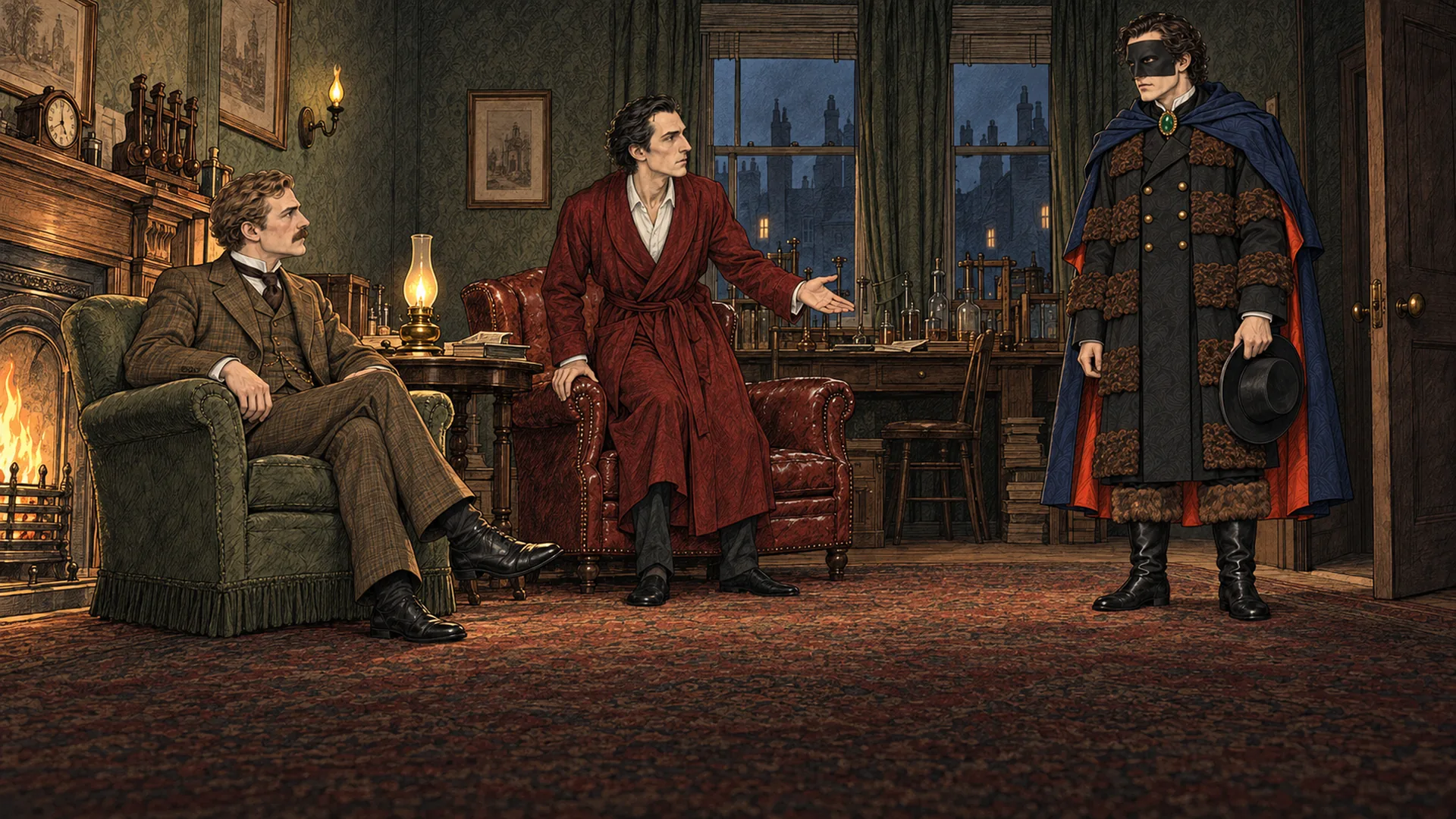
The visitor asks about his letter, uncertain which man to address. Holmes introduces Watson as a doctor and trusted colleague who helps with his cases. The man asks to be called Count von Kramm of Bohemia and seeks assurance of Watson’s discretion, otherwise requesting a private conversation with Holmes.
Japanese in this scene
- 知らせておいた
- Verb て-form + おく means doing something in preparation. The past おいた indicates that the notice was given beforehand.
- でいらっしゃいますか
- でいらっしゃる is an honorific equivalent of です. Combined with どなた, it makes Holmes’s question about identity particularly respectful.
- 口の堅い
- 口が堅い means able to keep a secret. Before a noun, が may become の: 口の堅い人物 is a discreet person.
Background
- Calling himself a count
- The man only asks to be addressed as Count von Kramm; he does not claim this is his real name. “You may address me as” specifies a form of address. Like the mask, his wording conceals his identity.
Full text: original English and Japanese translation
"You had my note?" he asked with a deep harsh voice and a strongly marked German accent. "I told you that I would call." He looked from one to the other of us, as if uncertain which to address.
「私の手紙は届いたか」と彼は、低くしわがれた声と、ひどく目立つドイツなまりで尋ねた。「訪ねると知らせておいたはずだ」彼はどちらに話しかけたものか迷うように、私たち二人を見比べた。
"Pray take a seat," said Holmes. "This is my friend and colleague, Dr. Watson, who is occasionally good enough to help me in my cases. Whom have I the honour to address?"
「どうぞおかけください」とホームズは言った。「こちらは友人で同僚の、医師のワトソンです。ときどき親切にも、私の事件を手伝ってくれています。失礼ですが、どなたでいらっしゃいますか」
"You may address me as the Count Von Kramm, a Bohemian nobleman. I understand that this gentleman, your friend, is a man of honour and discretion, whom I may trust with a matter of the most extreme importance. If not, I should much prefer to communicate with you alone."
「ボヘミアの貴族、フォン・クラム伯爵と呼んでもらいたい。こちらの紳士、君の友人は、名誉を重んじる口の堅い人物で、きわめて重大な用件を任せてもよい相手だと理解してよいのだろうな。そうでないなら、ぜひ君と二人きりで話したいのだが」