 よみうち英語Read the classics by typing
Notes Scene 23: A Youthful Folly
You've finished this scene
Speed (this scene)–
Accuracy–
Sentences typed–
Words read–
Notes on this scene
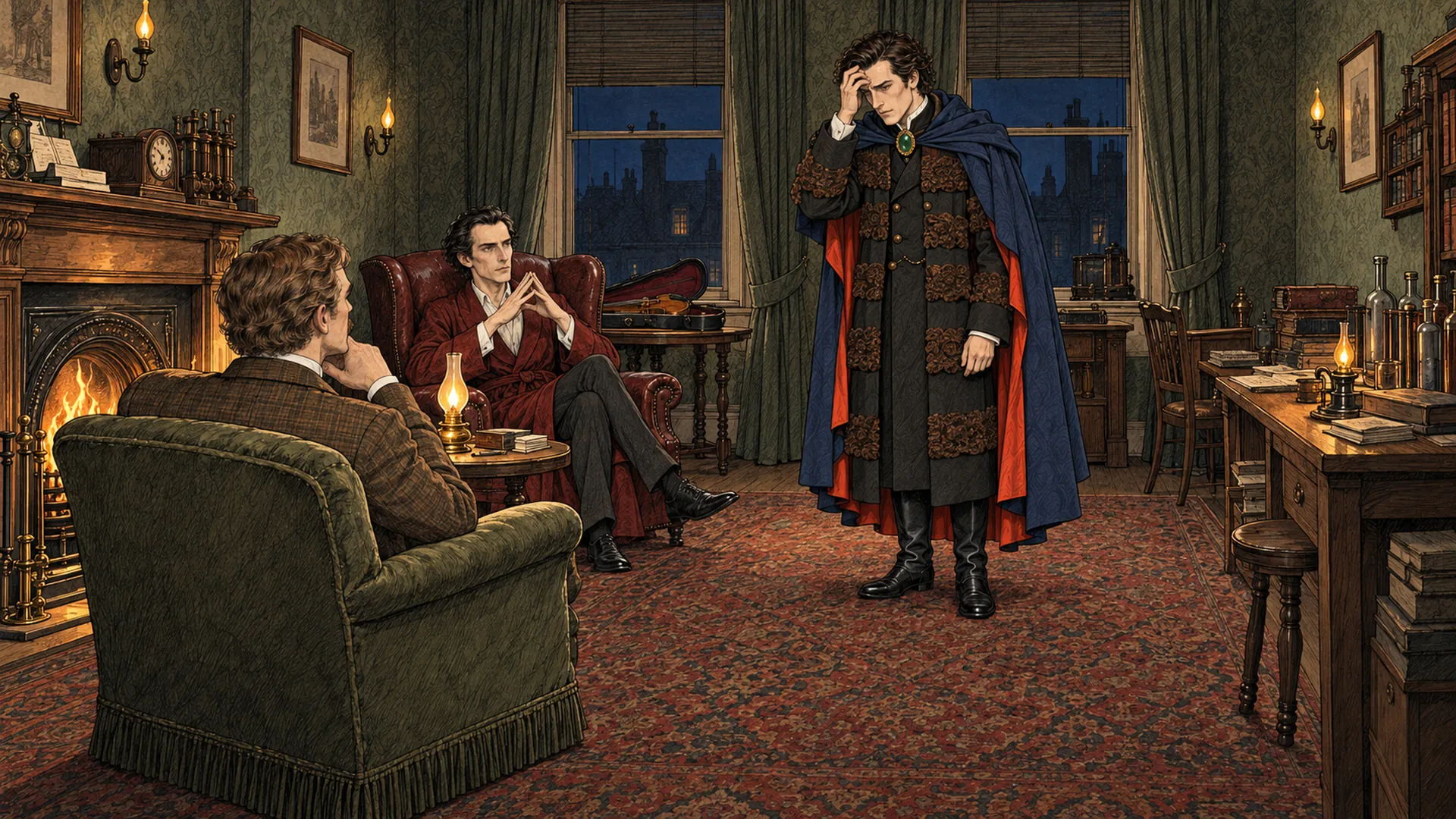
The King admits that he acted foolishly but pleads youth and his former position as crown prince. Holmes insists that the photograph must be recovered. Buying it seems the obvious option, but Adler refuses to sell. Holmes then proposes stealing it as the next way to obtain it.
Japanese in this scene
- にすぎなかった
- にすぎない means “no more than” or “merely.” Its past form minimizes the King’s rank at that time.
- ほかありません
- Verb dictionary form + ほかない means “there is no choice but to.” ありません makes the statement polite.
- 売ろうとしない
- Volitional form + としない means refusing or showing no intention to act. Adler will not agree to sell the photograph.
Full text: original English and Japanese translation
"I was mad—insane."
「私はどうかしていたのだ――正気ではなかった」
"You have compromised yourself seriously."
「ご自分のお立場をひどく危うくなさいましたね」
"I was only Crown Prince then. I was young. I am but thirty now."
「あの頃はまだ皇太子にすぎなかった。若かったのだ。今でもまだ三十なのだ」
"It must be recovered."
「取り戻さなくてはなりません」
"We have tried and failed."
「試みたが、うまくいかなかった」
"Your Majesty must pay. It must be bought."
「陛下がお支払いになるほかありません。買い取るほかありません」
"She will not sell."
「あの女は売ろうとしない」
"Stolen, then."
「では、盗み出すまでです」