 よみうち英語Read the classics by typing
Notes Scene 30: The Drunken Groom
You've finished this scene
Notes on this scene
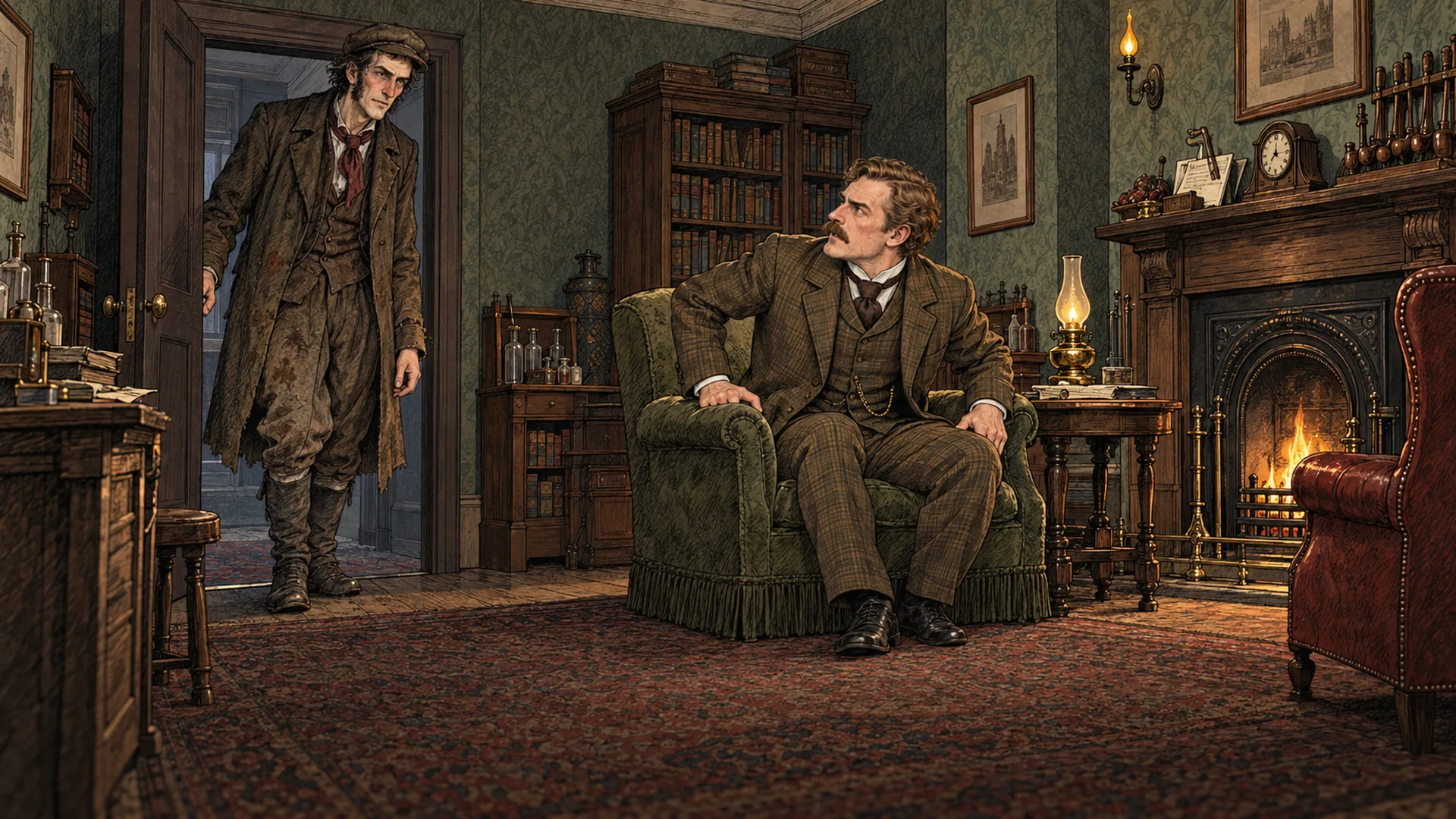
Holmes returns disguised as a disreputable groom, so convincingly that Watson must look repeatedly to recognize him. After changing into his usual suit, he laughs uncontrollably at the morning’s events. Watson cannot guess what happened but assumes that he has been watching Irene Adler’s life and perhaps her house.
Japanese in this scene
- つもりだった
- つもり can describe a belief about oneself, not only an intention. Watson thought he was accustomed to Holmes’s disguises.
- 羽目になった
- Verb + 羽目になる means ending up obliged to do something, usually unexpectedly or unwillingly.
- 見当もつかない
- 見当がつく means having an idea or making a guess. も with the negative strengthens it: “I have no idea at all.”
Background
- Groom
- A groom was a servant who cared for horses, essential to households and stables when carriages were the main transport. A poorly dressed groom could wander the streets without attracting suspicion.
Full text: original English and Japanese translation
It was close upon four before the door opened, and a drunken-looking groom, ill-kempt and side-whiskered, with an inflamed face and disreputable clothes, walked into the room. Accustomed as I was to my friend's amazing powers in the use of disguises, I had to look three times before I was certain that it was indeed he. With a nod he vanished into the bedroom, whence he emerged in five minutes tweed-suited and respectable, as of old. Putting his hands into his pockets, he stretched out his legs in front of the fire and laughed heartily for some minutes.
四時近くになってようやく扉が開き、酔っ払いのような馬丁が部屋に入ってきた。髪はぼさぼさで頬ひげを生やし、顔は赤く火照り、みすぼらしい服を着ている。友人の驚くべき変装の腕前には慣れていたつもりだったが、それが本当に彼だと確信するまでに、私は三度も見直さなければならなかった。彼はうなずいて寝室へ消え、五分後には、ツイードの背広を着た、いつもどおりのきちんとした姿で出てきた。両手をポケットに突っ込み、暖炉の前に脚を投げ出すと、彼は何分ものあいだ腹の底から笑いつづけた。
"Well, really!" he cried, and then he choked and laughed again until he was obliged to lie back, limp and helpless, in the chair.
「いやはや、まったく!」と彼は叫び、それからむせて、また笑い、とうとう椅子の背にぐったりともたれかかって動けなくなってしまった。
"What is it?"
「どうしたんだい?」
"It's quite too funny. I am sure you could never guess how I employed my morning, or what I ended by doing."
「いや、あまりに滑稽でね。私が午前中をどう過ごしたか、最後に何をする羽目になったか、きみには決して当てられないだろうよ」
"I can't imagine. I suppose that you have been watching the habits, and perhaps the house, of Miss Irene Adler."
「見当もつかないね。アイリーン・アドラー嬢の暮らしぶりや、ひょっとすると家のほうも、見張っていたんだろう」