 よみうち英語Read the classics by typing
Notes Scene 31: Briony Lodge
You've finished this scene
Notes on this scene
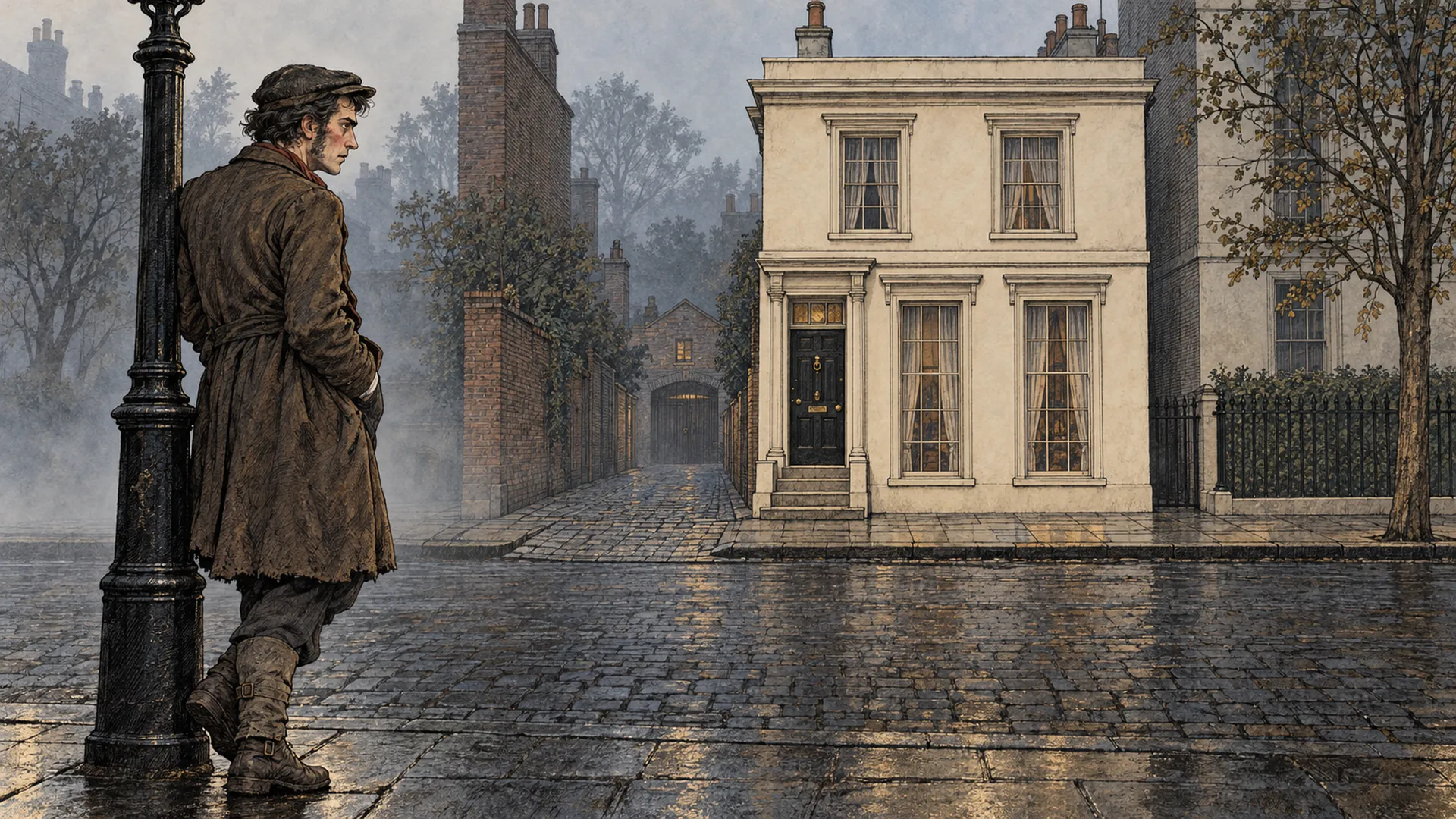
Holmes describes the house, its locks, windows, garden, and possible access from the coach-house roof. His groom disguise allows him to join the local stable workers. Helping with their horses earns him small rewards and extensive information about Adler, along with unwanted accounts of several other people’s lives.
Japanese in this scene
- なりすまして
- なりすます means passing oneself off as someone else. Holmes adopts the identity of an unemployed groom.
- なってしまえば
- てしまう followed by conditional ば means “once one has fully become.” Joining the group opens access to its knowledge.
- 聞かされる羽目になった
- The causative passive 聞かされる means being made to listen. 羽目になる stresses the unwelcome predicament.
Background
- Mews
- Mews were stables and carriage houses along lanes behind larger homes. Grooms and coachmen lived there, making them centers of local gossip. Many London mews have since been converted into residences.
- Half-and-half
- Half-and-half mixed equal quantities of two beers, such as ale and porter. It was an inexpensive drink popular with workers. Alongside twopence and cut tobacco, it forms a modest reward for helping.
Full text: original English and Japanese translation
"Quite so; but the sequel was rather unusual. I will tell you, however. I left the house a little after eight o'clock this morning in the character of a groom out of work. There is a wonderful sympathy and freemasonry among horsey men. Be one of them, and you will know all that there is to know. I soon found Briony Lodge. It is a bijou villa, with a garden at the back, but built out in front right up to the road, two stories. Chubb lock to the door. Large sitting-room on the right side, well furnished, with long windows almost to the floor, and those preposterous English window fasteners which a child could open. Behind there was nothing remarkable, save that the passage window could be reached from the top of the coach-house. I walked round it and examined it closely from every point of view, but without noting anything else of interest.
「そのとおり。だが、その先の成り行きがかなり変わっていてね。まあ、話して聞かせよう。今朝八時を少し過ぎたころ、私は職にあぶれた馬丁になりすまして家を出た。馬を扱う連中のあいだには、驚くほどの仲間意識と結束があるものだ。その一員になってしまえば、知るべきことはすべてわかる。ブライオニー荘はすぐに見つかった。こぢんまりとした瀟洒な二階建ての屋敷で、裏には庭があるが、正面は道路ぎりぎりまで張り出して建っている。扉にはチャブ錠。右手に広い居間があり、家具は上等で、床近くまで届く縦長の窓がついている。窓の留め金は、子どもでも開けられるあのばかげたイギリス式だ。裏手には、馬車置き場の屋根から廊下の窓に手が届くという点を除けば、目立ったものは何もなかった。家のまわりを歩いて、あらゆる角度からじっくり調べたが、ほかに気になる点は見当たらなかった。
"I then lounged down the street and found, as I expected, that there was a mews in a lane which runs down by one wall of the garden. I lent the ostlers a hand in rubbing down their horses, and received in exchange twopence, a glass of half-and-half, two fills of shag tobacco, and as much information as I could desire about Miss Adler, to say nothing of half a dozen other people in the neighbourhood in whom I was not in the least interested, but whose biographies I was compelled to listen to."
「それから通りをぶらぶら下っていくと、思ったとおり、庭の塀の一方に沿って走る小路に厩舎があった。馬丁たちの馬の手入れを手伝ってやると、お礼に二ペンスと、ハーフ・アンド・ハーフを一杯、刻みたばこを二服、それにアドラー嬢について知りたいことを好きなだけ教えてもらえた。おまけに、近所のほかの六人ほどについても、私はまるで興味がないのに、その身の上話を聞かされる羽目になったがね」