 よみうち英語Read the classics by typing
Notes Scene 38: At the Church Door
You've finished this scene
Notes on this scene
Holmes fears that the newlyweds may leave immediately, but they go separate ways. He hears Adler mention her usual five o’clock drive. His immediate preparation is a meal, since he has been too busy to eat. With a busier evening ahead, he asks Watson to help with the next stage.
Japanese in this scene
- そうなれば
- そうなれば means “if that happens.” It introduces the consequences of the couple leaving immediately.
- 私は私で
- Repeating a person with は and で can indicate a separate part in events: “I, for my part.”
- もらいたいのだが
- てもらいたい expresses a wish for someone’s assistance. Ending with のだが leaves room for Watson to respond to the request.
Background
- Household bell
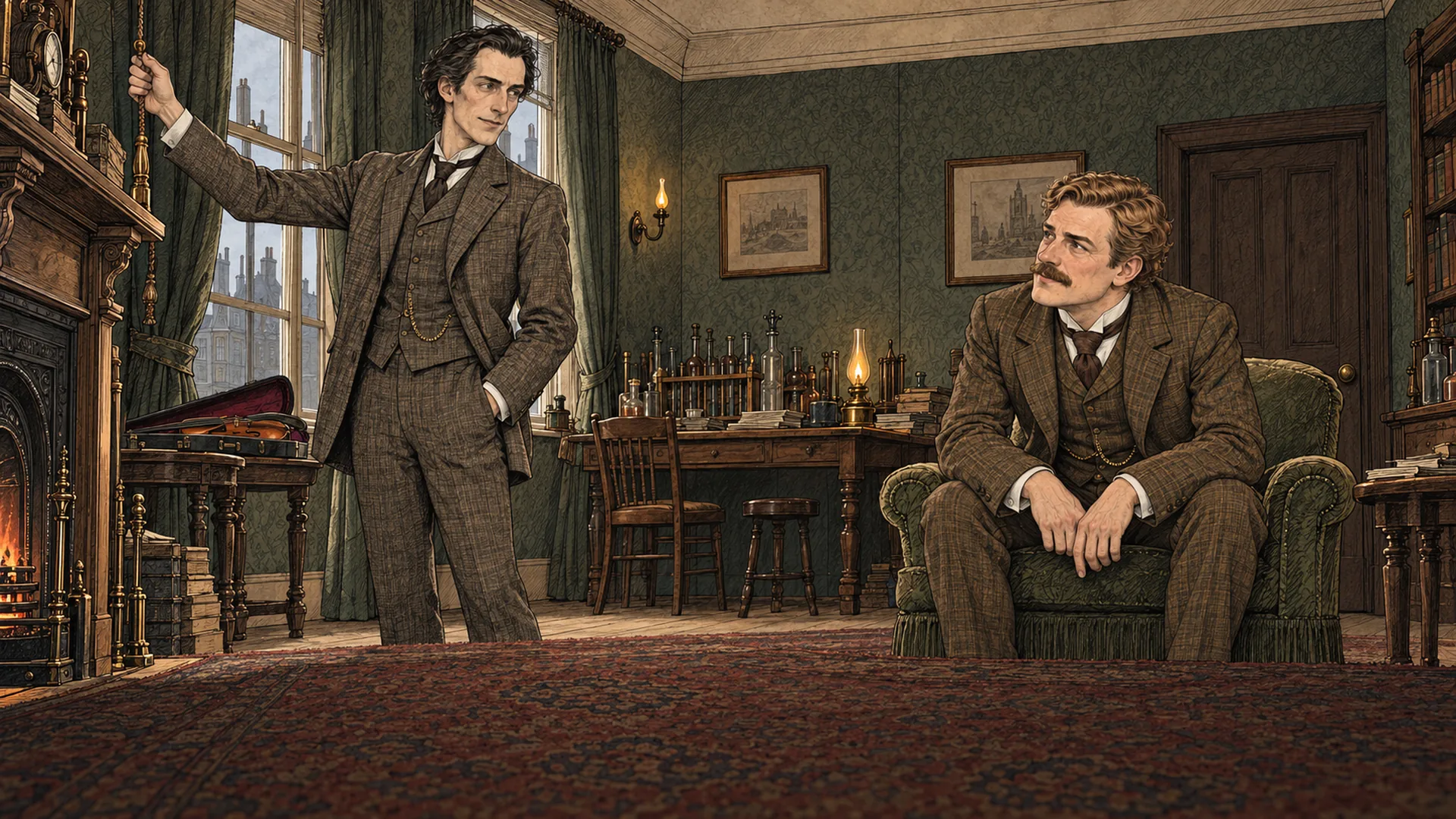
- Rooms could have cords or buttons connected to a bell in the kitchen, summoning servants or the landlady. At the Baker Street lodgings Holmes uses this system to have meals and tea brought up.
Full text: original English and Japanese translation
"Well, I found my plans very seriously menaced. It looked as if the pair might take an immediate departure, and so necessitate very prompt and energetic measures on my part. At the church door, however, they separated, he driving back to the Temple, and she to her own house. 'I shall drive out in the park at five as usual,' she said as she left him. I heard no more. They drove away in different directions, and I went off to make my own arrangements."
「さて、私の計画はひどく危うくなった。二人がすぐにでも旅立ってしまいそうに見えたし、そうなれば私のほうも、大急ぎで思い切った手を打たなければならない。ところが教会の戸口で二人は別れ、彼はテンプルへ、彼女は自宅へと馬車で戻っていった。『いつものように五時に公園へ馬車で出かけます』と、彼女は別れぎわに言った。それ以上は聞こえなかった。二人は別々の方角へ去り、私は私で手はずを整えに出かけたというわけだ」
"Which are?"
「その手はずというのは?」
"Some cold beef and a glass of beer," he answered, ringing the bell. "I have been too busy to think of food, and I am likely to be busier still this evening. By the way, Doctor, I shall want your co-operation."
「冷たい牛肉とビールを一杯さ」と彼は答え、呼び鈴を鳴らした。「忙しくて食事のことなど考える暇もなかったし、今夜はもっと忙しくなりそうだからね。ところで先生、きみに協力してもらいたいのだが」