 よみうち英語Read the classics by typing
Notes Scene 49: Resolve at the Window
You've finished this scene
Notes on this scene
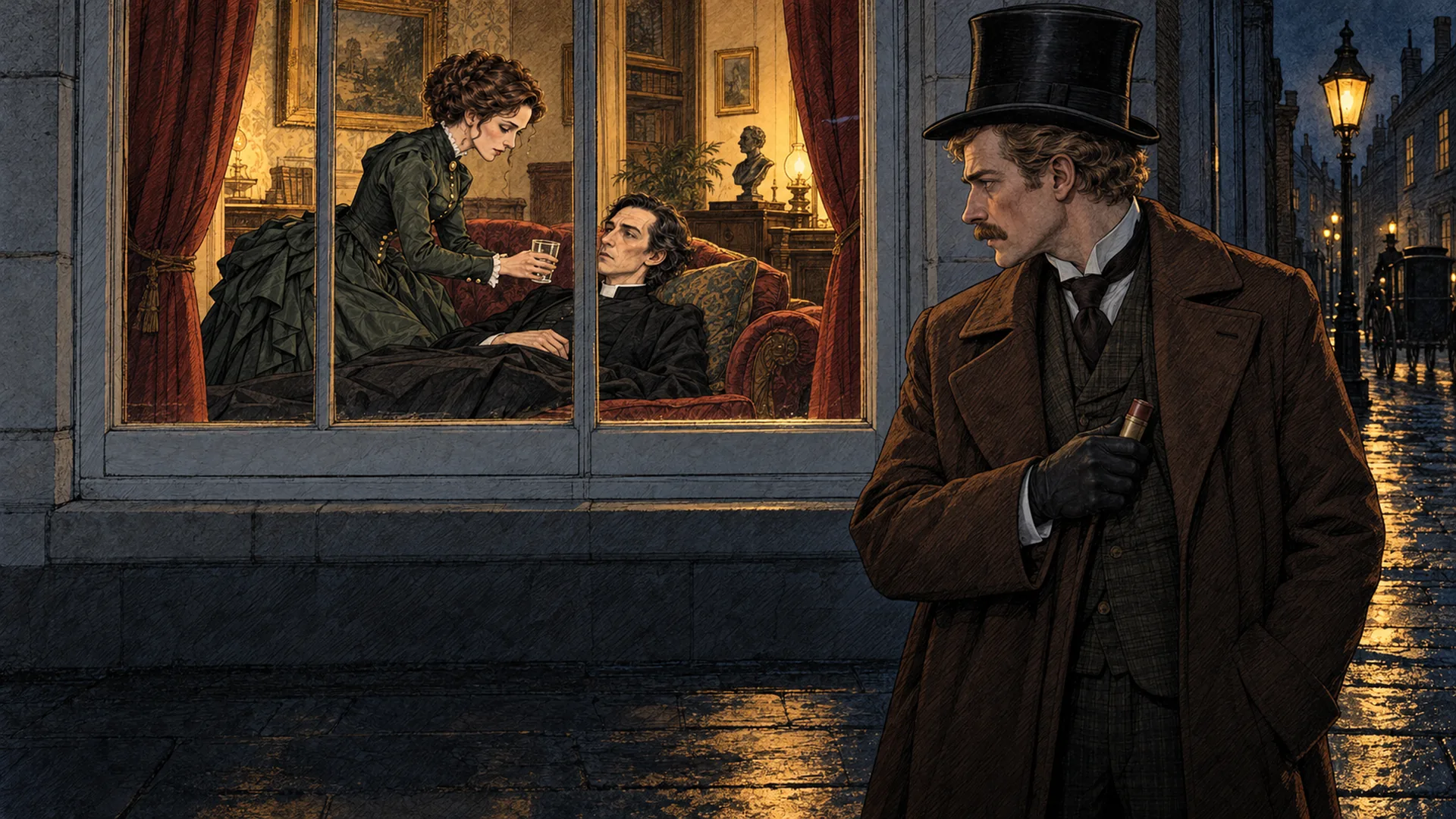
Watson watches Holmes through the unshaded window. Adler’s beauty and kindness toward the supposed casualty make him deeply ashamed of plotting against her. Yet abandoning the assigned role would betray Holmes. He steels himself, takes out the smoke device, and reasons that their purpose is to prevent harm to others.
Japanese in this scene
- かどうか
- かどうか introduces an indirect yes-or-no question: “whether.” Watson does not know whether Holmes feels guilty.
- とはいえ
- とはいえ means “even so” or “that said.” It concedes Watson’s shame before introducing his duty to Holmes.
- 心を鬼にして
- 心を鬼にする literally means making one’s heart a demon: steeling oneself to act despite sympathy or reluctance.
Background
- Briony Lodge
- Adler’s small residence is in St. John’s Wood on London’s outskirts. Lodge can mean a gatekeeper’s house or a modest residence. Holmes has already inspected this house’s layout and the positions of its windows.
Full text: original English and Japanese translation
Slowly and solemnly he was borne into Briony Lodge and laid out in the principal room, while I still observed the proceedings from my post by the window. The lamps had been lit, but the blinds had not been drawn, so that I could see Holmes as he lay upon the couch. I do not know whether he was seized with compunction at that moment for the part he was playing, but I know that I never felt more heartily ashamed of myself in my life than when I saw the beautiful creature against whom I was conspiring, or the grace and kindliness with which she waited upon the injured man. And yet it would be the blackest treachery to Holmes to draw back now from the part which he had intrusted to me. I hardened my heart, and took the smoke-rocket from under my ulster. After all, I thought, we are not injuring her. We are but preventing her from injuring another.
彼はゆっくりと厳かにブライオニー荘へ運び込まれ、居間に横たえられたが、そのあいだも私は窓のそばの持ち場から成り行きを見守っていた。ランプはともされていたが、ブラインドは下ろされていなかったので、ソファに横たわるホームズの姿が私にも見えた。そのとき彼が自分の演じている役に良心の呵責を覚えていたかどうかは知らないが、私のほうは、自分が陰謀を企てている相手の美しい女性を、そして彼女がけが人を介抱するしとやかさと優しさを目にしたときほど、心の底から自分を恥じたことは、生涯一度もなかった。とはいえ、ホームズに託された役目からいまさら手を引くのは、彼に対するこのうえない裏切りになるだろう。私は心を鬼にして、アルスター外套の下から発煙筒を取り出した。結局のところ、私たちは彼女を傷つけようとしているわけではない、と私は考えた。彼女がほかの者を傷つけるのを防ごうとしているだけなのだ。