 よみうち英語Read the classics by typing
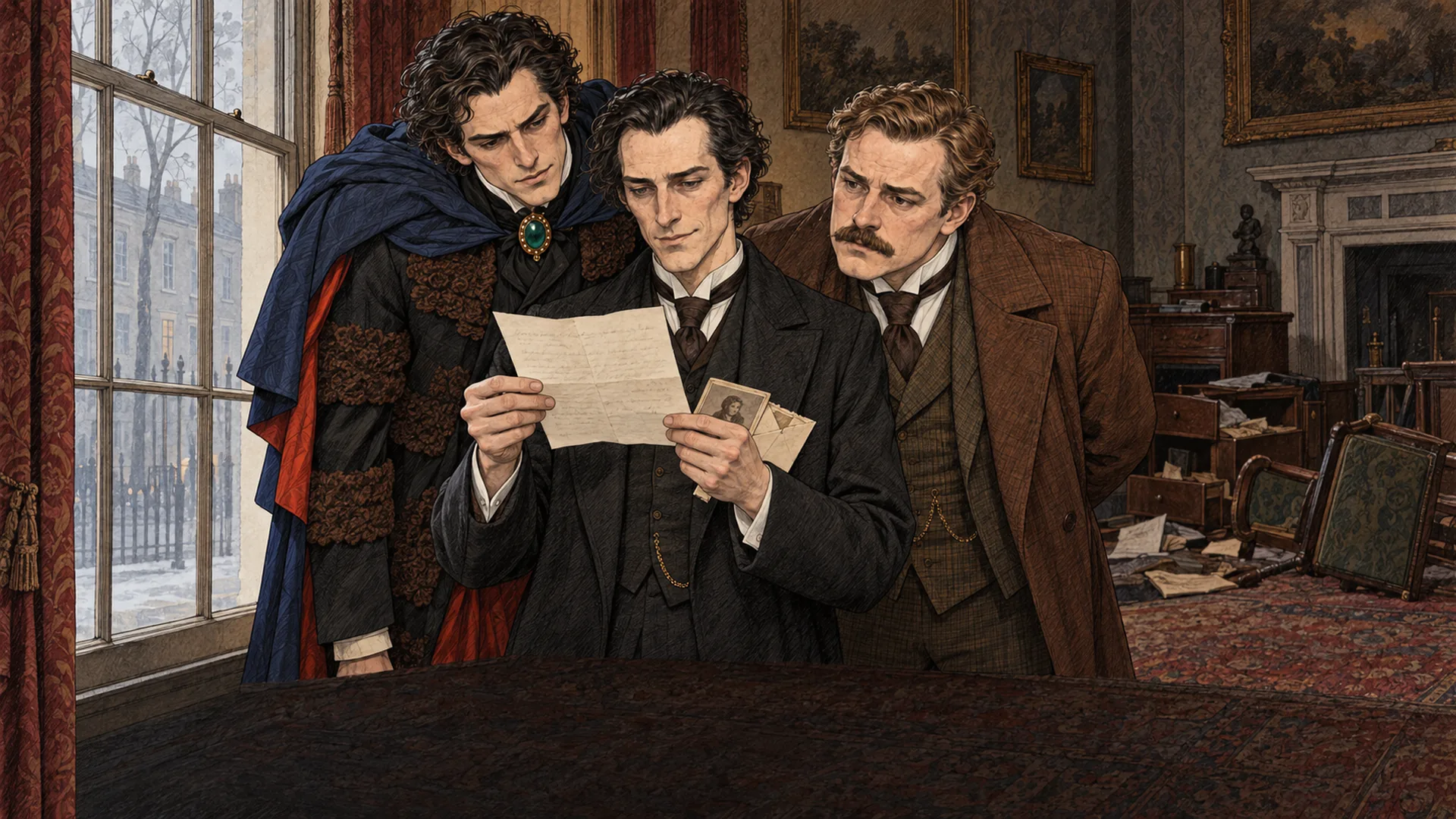
Notes Scene 60: Opening the Letter
You've finished this scene
Notes on this scene
Adler acknowledges that Holmes deceived her completely until the false fire exposed her secret. Despite previous warnings about him, she trusted the kindly minister. Her own acting experience then helped her respond: she had John watch him, changed into men’s clothes, and came downstairs just as Holmes was leaving.
Japanese in this scene
- だまされました
- だまされました is the polite past passive of だます, “to deceive.” Adler openly acknowledges that she was fooled.
- 知っていながら
- ながら can express concession rather than simultaneous action: “despite knowing.” Adler had information about Holmes yet revealed the secret.
- 見張らせ
- 見張らせる is the causative of 見張る. Adler had her coachman keep watch while she changed clothes.
Background
- Freedom in men’s clothes
- A woman of the upper classes then found it difficult to walk alone through the city at night. Experienced in disguise as an actress, Adler used men’s clothing to escape those restrictions. That is the freedom described in the letter.
Full text: original English and Japanese translation
"MY DEAR MR. SHERLOCK HOLMES,—You really did it very well. You took me in completely. Until after the alarm of fire, I had not a suspicion. But then, when I found how I had betrayed myself, I began to think. I had been warned against you months ago. I had been told that, if the King employed an agent, it would certainly be you. And your address had been given me. Yet, with all this, you made me reveal what you wanted to know. Even after I became suspicious, I found it hard to think evil of such a dear, kind old clergyman. But, you know, I have been trained as an actress myself. Male costume is nothing new to me. I often take advantage of the freedom which it gives. I sent John, the coachman, to watch you, ran upstairs, got into my walking clothes, as I call them, and came down just as you departed.
「シャーロック・ホームズ様――本当にお見事でした。私はすっかりだまされました。火事の騒ぎのあとになるまで、少しも疑っていなかったのです。けれどもそのあと、自分がどんなふうに秘密を明かしてしまったのかに気づいて、考えはじめました。あなたには気をつけるようにと、何か月も前から言われていました。国王が誰かを雇うとしたら、それはきっとあなただろうと聞かされていたのです。ご住所も教えられていました。それなのに、これだけのことを知っていながら、私はあなたの知りたかったことを明かしてしまいました。怪しいと思いはじめてからも、あんなに優しくて親切な年老いた牧師さんを悪く思うのは難しかったのです。でも、ご存じのとおり、私自身も女優として修業を積んだ身です。男の服装も、私には珍しいものではありません。男装すると自由に動けるので、よくそれを利用しているのです。私は御者のジョンにあなたを見張らせ、二階へ駆け上がって、私が散歩着と呼んでいる服に着替え、ちょうどあなたが立ち去るところで下りてきました。