 よみうち英語Read the classics by typing
Notes Scene 64: A Very Good Morning
You've finished this scene
Notes on this scene
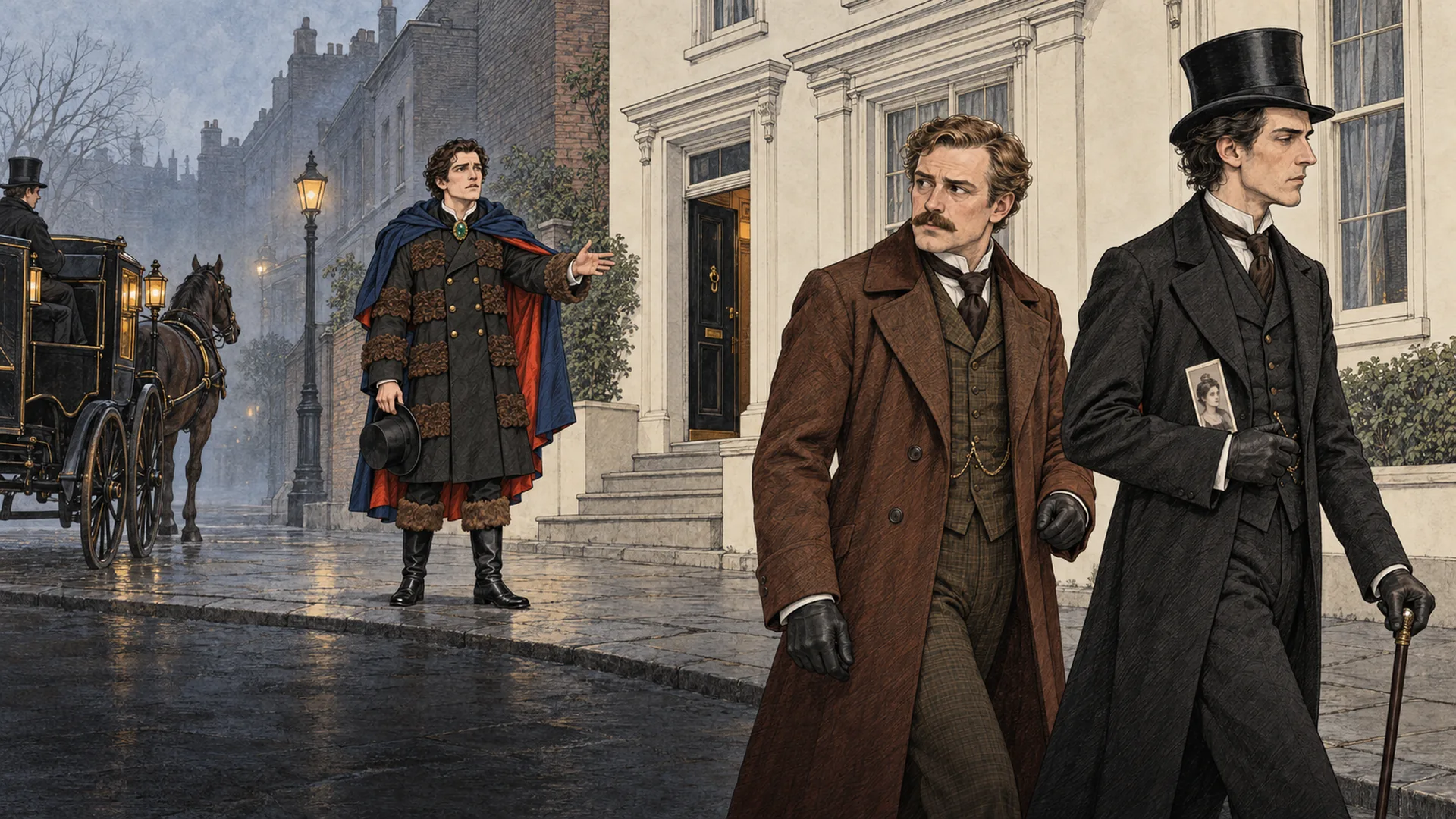
Holmes takes his leave without accepting the King’s offered hand. Watson concludes that Adler’s wit defeated Holmes’s clever plan and averted the Bohemian scandal. Holmes no longer jokes about women’s intelligence. Whenever he speaks of Adler or refers to her photograph, he respectfully calls her “the woman.”
Japanese in this scene
- 目もくれずに
- 目もくれない means not giving something even a glance. ずに links that refusal to Holmes turning away.
- 耳にしたことがない
- 耳にする means hearing something. Past form + ことがない expresses having no experience of hearing it in the relevant period.
- 敬意をこめて
- こめる means putting feeling into an action. 敬意をこめて means doing it with respect.
Background
- “The woman”
- At the opening, Watson says that to Holmes she is always “the woman.” The ending explains why, returning the account to its first sentence. It expresses respect for an opponent in wit rather than romantic love.
- Holmes’s defeat
- This is an unusual case in which the great detective is outwitted. Although the first Holmes short story, it ends with the hero’s defeat and respect for his opponent, a major part of its appeal.
Full text: original English and Japanese translation
"I thank your Majesty. Then there is no more to be done in the matter. I have the honour to wish you a very good morning." He bowed, and, turning away without observing the hand which the King had stretched out to him, he set off in my company for his chambers.
「ありがとうございます、陛下。これで、この件でなすべきことはもう何もありません。それでは、謹んでおいとまいたします」ホームズは一礼すると、国王が差し出した手には目もくれずに背を向け、私を伴って自分の部屋へ帰っていった。
And that was how a great scandal threatened to affect the kingdom of Bohemia, and how the best plans of Mr. Sherlock Holmes were beaten by a woman's wit. He used to make merry over the cleverness of women, but I have not heard him do it of late. And when he speaks of Irene Adler, or when he refers to her photograph, it is always under the honourable title of the woman.
以上が、大きな醜聞がボヘミア王国を揺るがしかけた顛末であり、シャーロック・ホームズの見事な策が一人の女性の機知に敗れた次第である。かつての彼は女性の賢さをよく笑いの種にしていたが、近ごろはそれを耳にしたことがない。そして、アイリーン・アドラーのことを話すとき、あるいは彼女の写真に触れるとき、彼はいつも敬意をこめて「あの女性」と呼ぶのである。