 よみうち英語Read the classics by typing
Notes Scene 9: An Example for Watson
You've finished this scene
Notes on this scene
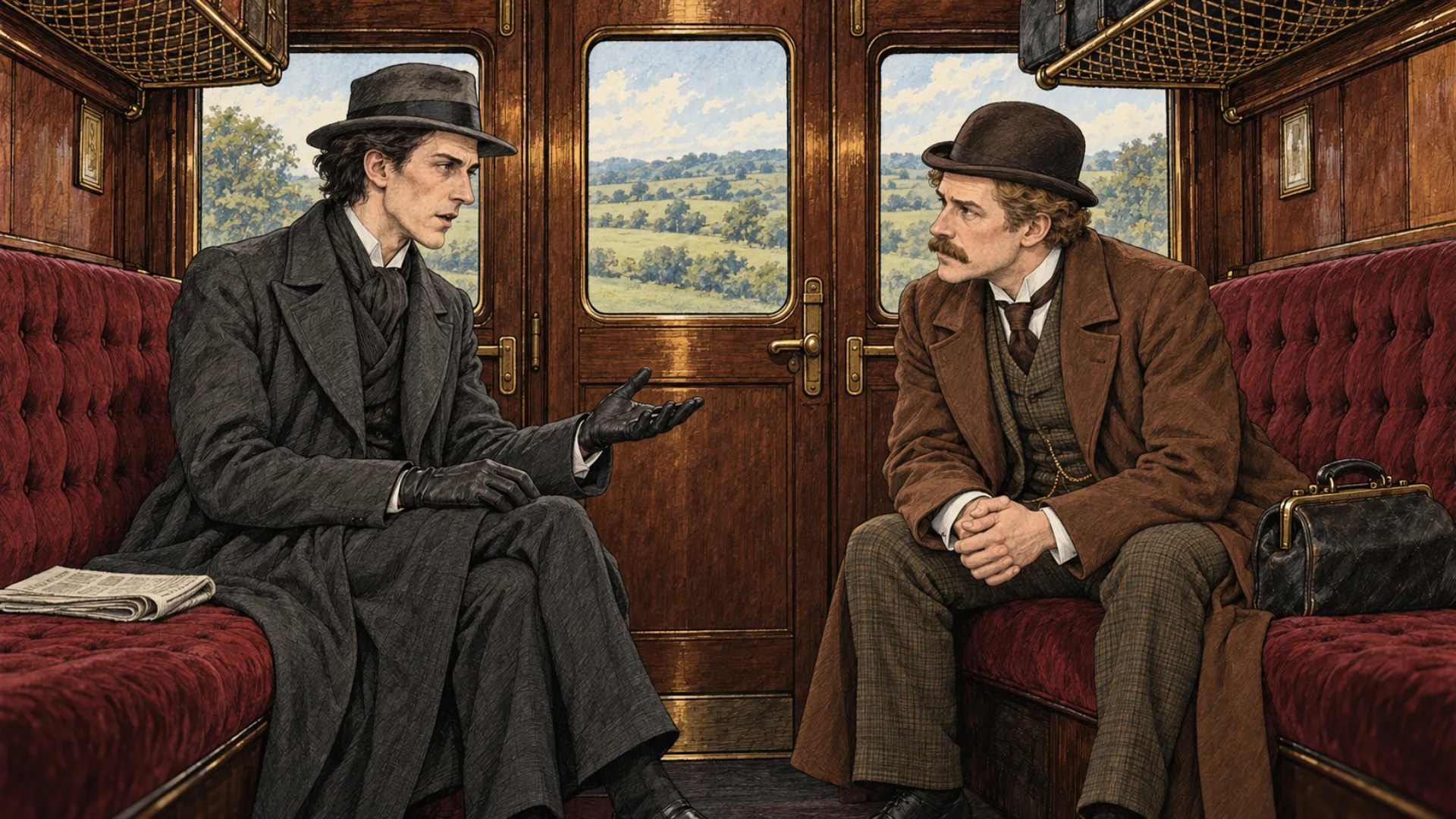
Holmes cautions that obvious facts can be deceptive and suggests that other, equally obvious facts may have escaped Lestrade. He believes his own methods could support or overturn the official theory. To illustrate the difference, he confidently states that Watson's bedroom window lies on the right. Watson begins to ask how he knows.
Japanese in this scene
- 事実ほど人を欺くものはない
- The pattern ‘noun + ほど…ものはない’ expresses an extreme comparison: nothing deceives people as much as those facts. Holmes gives the apparently obvious a surprising superlative.
- 少しも明白でなかった
- 少しも with a negative means ‘not at all.’ It does not mean ‘a little’ here. Holmes contrasts what is obvious to him with what was not obvious to Lestrade.
- かどうか
- ‘Whether or not.’ Attach this to a clause to turn a yes-or-no question into part of a larger sentence. Holmes doubts whether Lestrade would even notice the example.
Full text: original English and Japanese translation
"There is nothing more deceptive than an obvious fact," he answered, laughing. "Besides, we may chance to hit upon some other obvious facts which may have been by no means obvious to Mr. Lestrade. You know me too well to think that I am boasting when I say that I shall either confirm or destroy his theory by means which he is quite incapable of employing, or even of understanding. To take the first example to hand, I very clearly perceive that in your bedroom the window is upon the right-hand side, and yet I question whether Mr. Lestrade would have noted even so self-evident a thing as that."
「明白な事実ほど人を欺くものはない」と彼は笑って答えた。「それに、レストレードには少しも明白でなかった、別の明白な事実に、私たちは偶然ぶつかるかもしれない。彼の説を裏付けるか打ち壊すか、彼には使うことも、理解することさえまったくできない方法でそうしてみせる、と私が言っても、私をよく知るきみなら自慢だとは思わないだろう。手近な最初の例を挙げれば、きみの寝室の窓は右手にあるとはっきり分かる。それでもレストレードが、これほど自明なことにさえ気づくかどうか、私は疑っている」
"How on earth—"
「いったい、どうして……」