 よみうち英語Read the classics by typing
Notes Scene 15: The Coroner's Questions
You've finished this scene
Notes on this scene
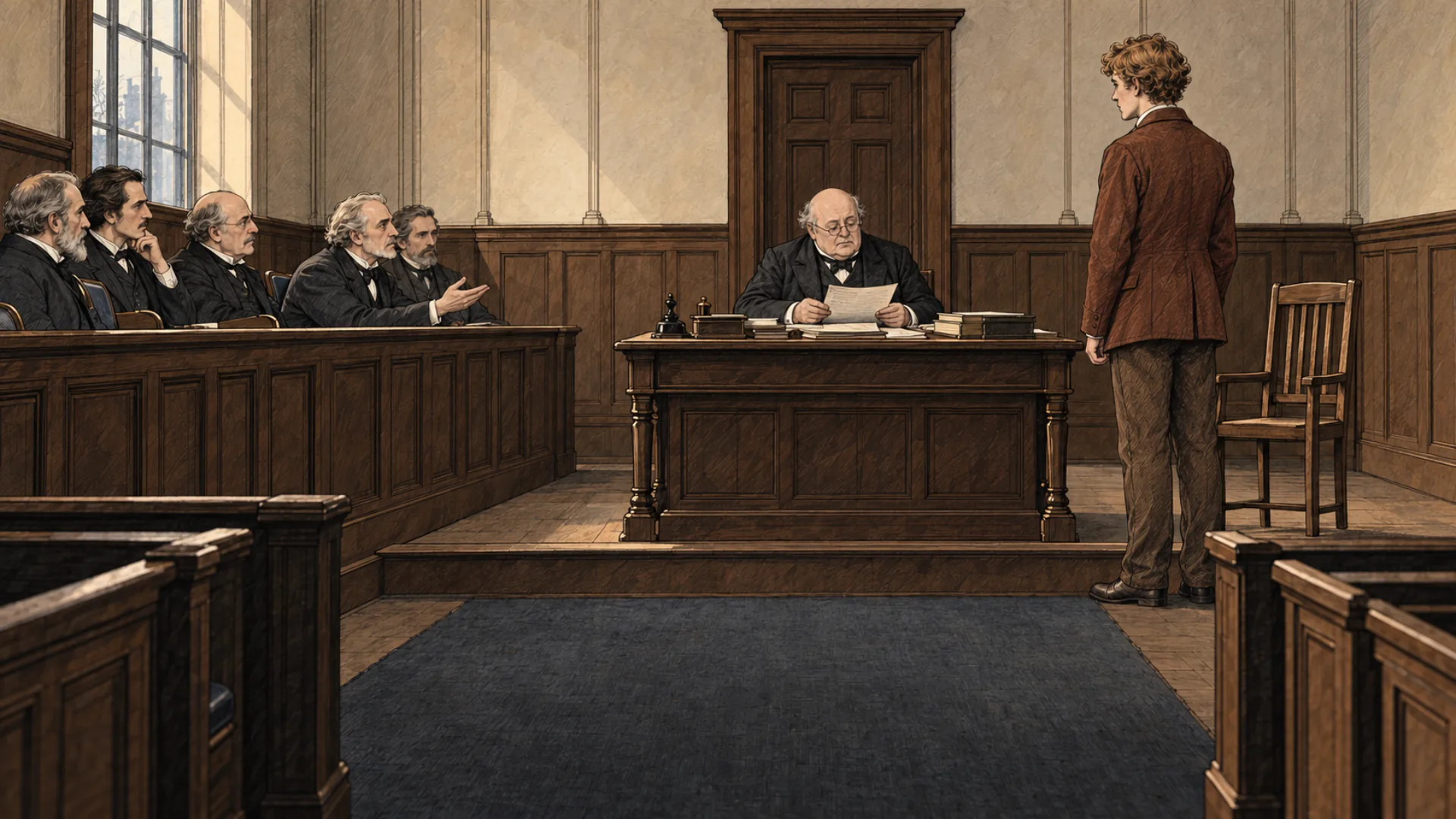
James recalls only a few dying words about a rat, which he took to be delirium. Asked what caused the quarrel, he refuses to explain, insisting that it had nothing to do with the tragedy. The coroner warns that refusal may damage his position in later proceedings, but James maintains his silence.
Japanese in this scene
- しないでおきたい
- 〜ないでおく means deliberately to leave an action undone. Adding たい expresses James's wish to refrain from answering. のですが softens the refusal without withdrawing it.
- 答えていただかなければなりません
- 〜ていただく respectfully describes receiving another person's action. Combined with なければなりません, it becomes a courteous but firm requirement: the coroner must have James answer.
- 言うまでもありません
- ‘It goes without saying.’ Literally, it is not necessary to go as far as saying it. The coroner presents the damaging consequences of refusal as something James should already understand.
Full text: original English and Japanese translation
"The Coroner: Did your father make any statement to you before he died?
検視官:『亡くなる前に、お父さんはあなたに何か話しましたか。』
"Witness: He mumbled a few words, but I could only catch some allusion to a rat.
証人:『二言三言つぶやきましたが、ネズミのことを何か言ったのだけしか聞き取れませんでした。』
"The Coroner: What did you understand by that?
検視官:『それをどういう意味だと受け取りましたか。』
"Witness: It conveyed no meaning to me. I thought that he was delirious.
証人:『私には何の意味も分かりませんでした。うわごとを言っているのだと思いました。』
"The Coroner: What was the point upon which you and your father had this final quarrel?
検視官:『お父さんとの最後の口論は、何についてだったのですか。』
"Witness: I should prefer not to answer.
証人:『お答えしないでおきたいのですが。』
"The Coroner: I am afraid that I must press it.
検視官:『残念ですが、答えていただかなければなりません。』
"Witness: It is really impossible for me to tell you. I can assure you that it has nothing to do with the sad tragedy which followed.
証人:『どうしてもお話しできません。そのあとに起きた痛ましい悲劇とは何の関係もないと、はっきり申し上げられます。』
"The Coroner: That is for the court to decide. I need not point out to you that your refusal to answer will prejudice your case considerably in any future proceedings which may arise.
検視官:『それを決めるのは法廷です。答えを拒めば、この先に起こるかもしれない法的な手続きで、あなたの立場が相当不利になるのは、言うまでもありません。』
"Witness: I must still refuse.
証人:『それでも、お答えはできません。』