 よみうち英語Read the classics by typing
Notes Scene 20: An Afternoon at the Inn
You've finished this scene
Notes on this scene
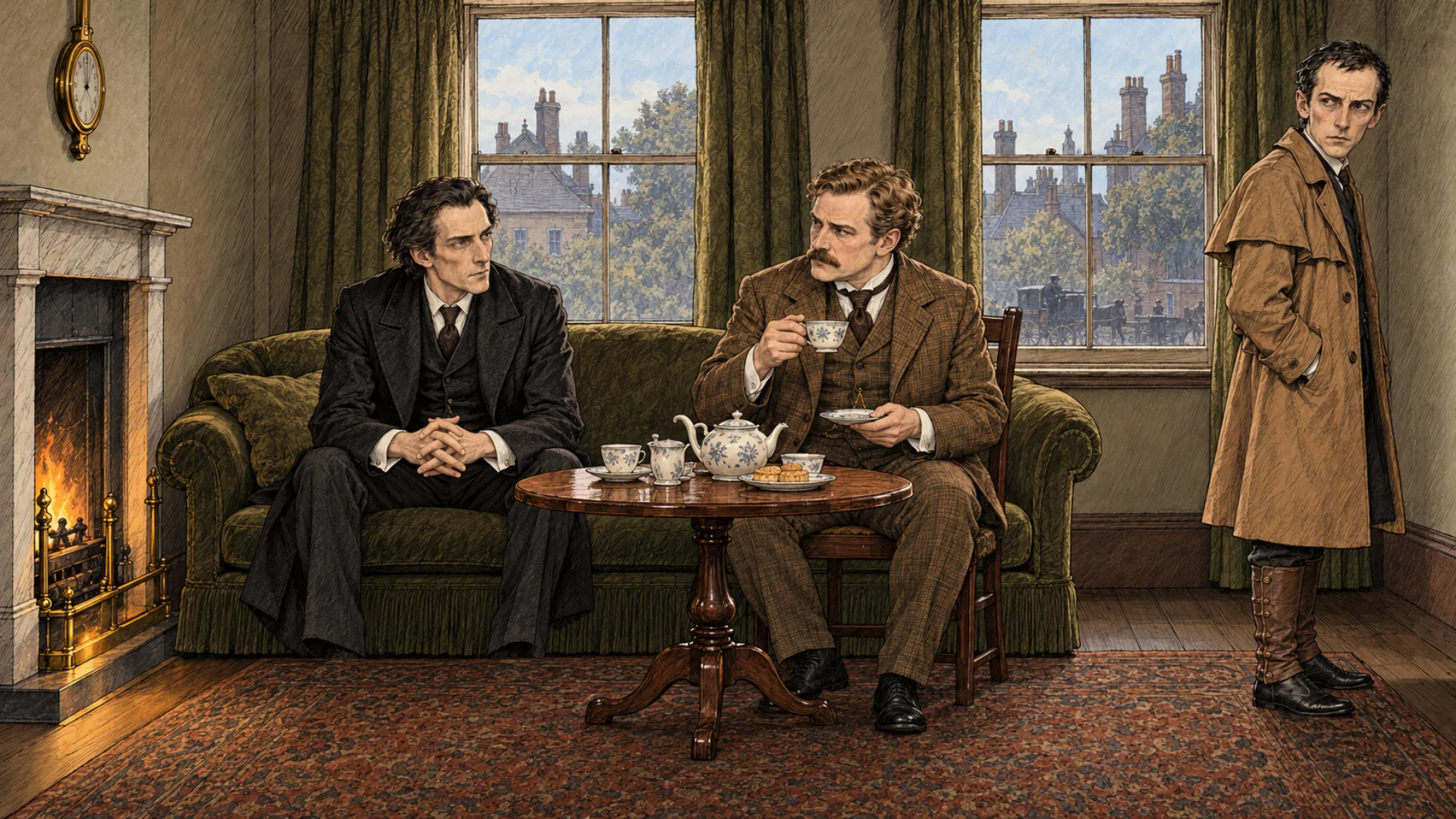
With clear skies, cigarettes, and a comfortable sofa, Holmes chooses not to use the carriage that evening. Lestrade remains confident that the case grows clearer with investigation, although the determined young woman insisted on consulting Holmes. Her carriage arrives as he speaks, and she rushes into the room, visibly excited and anxious.
Japanese in this scene
- 風もなければ
- The pattern 〜も…ば…も lists parallel conditions. Here there is neither wind nor a cloud. なければ is the conditional form of ない, but the sentence describes combined facts rather than a hypothetical bargain.
- 調べれば調べるほど
- Repeating the same verb in conditional and dictionary forms gives ‘the more one investigates, the more….’ Lestrade uses the pattern to insist that further inquiry strengthens his view.
- 言い終えるか終えないかのうちに
- 〜か〜ないかのうちに expresses almost simultaneous events: before he has quite finished speaking. Repeating the positive and negative forms emphasizes how promptly the visitor appears.
- 結論を出してしまった
- 結論を出す means to reach or form a conclusion. Here 出す does not describe physically removing anything. 〜てしまう presents the conclusion as already settled, with Lestrade implying that Holmes has decided too soon.
Full text: original English and Japanese translation
"How is the glass? Twenty-nine, I see. No wind, and not a cloud in the sky. I have a caseful of cigarettes here which need smoking, and the sofa is very much superior to the usual country hotel abomination. I do not think that it is probable that I shall use the carriage to-night."
「気圧計はどうかな。なるほど、二十九だ。風もなければ、空に雲一つない。ここにケースいっぱい、吸ってやらなければならない紙巻きたばこがあるし、このソファも、田舎の宿によくあるひどい代物より、ずっと上等だ。今夜は、馬車を使うことはなさそうだね」
Lestrade laughed indulgently. "You have, no doubt, already formed your conclusions from the newspapers," he said. "The case is as plain as a pikestaff, and the more one goes into it the plainer it becomes. Still, of course, one can't refuse a lady, and such a very positive one, too. She has heard of you, and would have your opinion, though I repeatedly told her that there was nothing which you could do which I had not already done. Why, bless my soul! here is her carriage at the door."
レストレードは大目に見るように笑った。「もう新聞だけで結論を出してしまったのだろう」と彼は言った。「この事件はまったく明白だし、調べれば調べるほど、いっそう明らかになる。とはいえ、もちろん、女性の頼みは断れない。しかも、あれほど意志の固い人とあってはね。あの人はきみの評判を聞いて、どうしても意見を聞きたいと言うのだ。きみにできて、私がまだしていないことなど何もないと、繰り返し話したのだが。おや、これは驚いた。戸口にあの人の馬車が来ているよ」
He had hardly spoken before there rushed into the room one of the most lovely young women that I have ever seen in my life. Her violet eyes shining, her lips parted, a pink flush upon her cheeks, all thought of her natural reserve lost in her overpowering excitement and concern.
彼が言い終えるか終えないかのうちに、私が生涯見た中でもひときわ美しい若い女性が、部屋へ駆け込んできた。紫色の目を輝かせ、唇をわずかに開き、頬を淡い桃色に染めていた。抗いがたい興奮と心配のために、生来の慎み深さをすっかり忘れている様子だった。