 よみうち英語Read the classics by typing
Notes Scene 28: Reading the Report
You've finished this scene
Notes on this scene
The surgeon's testimony places the skull injuries toward the back and left of the head. Watson infers a blow from behind, which might favor James because the witnesses saw him facing his father. Yet the father could have turned before the blow. Watson then returns to the puzzling dying reference to a rat.
Japanese in this scene
- に違いなかった
- 〜に違いない expresses a strong inference: ‘must be.’ The past form places Watson's conclusion within his earlier train of thought. It conveys certainty of reasoning, not direct observation.
- 大した意味はなかった
- 大した usually precedes a noun. With a negative, it means ‘not much’ or ‘not particularly significant.’ Watson immediately limits how much weight his favorable observation can carry.
- うわごとであるはずはなかった
- はず expresses an expectation based on reasoning. The negative pattern 〜はずはない strongly rejects that expectation: Watson thinks the words could not simply have been delirious speech.
Full text: original English and Japanese translation
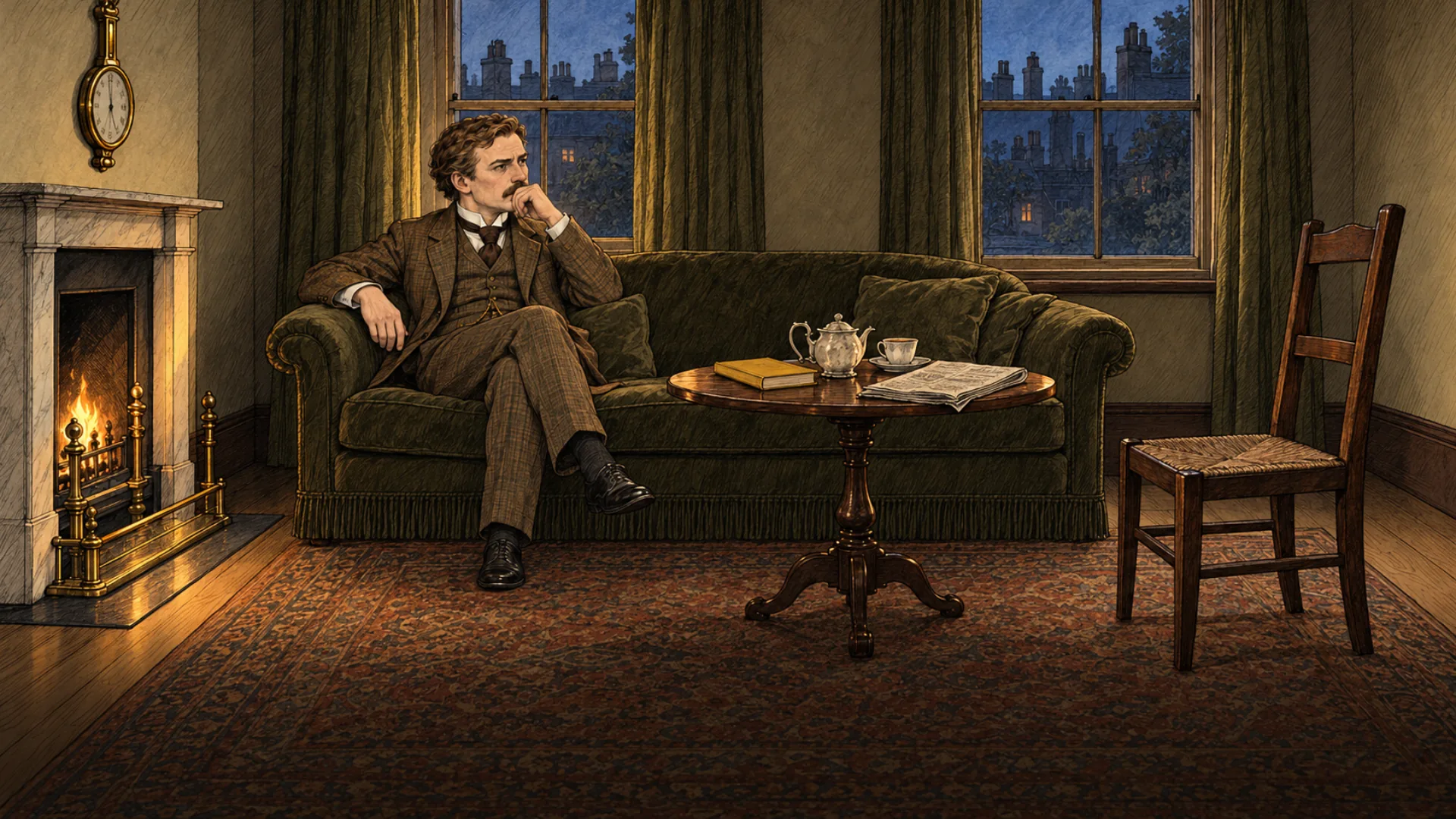
I rang the bell and called for the weekly county paper, which contained a verbatim account of the inquest. In the surgeon's deposition it was stated that the posterior third of the left parietal bone and the left half of the occipital bone had been shattered by a heavy blow from a blunt weapon. I marked the spot upon my own head. Clearly such a blow must have been struck from behind. That was to some extent in favour of the accused, as when seen quarrelling he was face to face with his father. Still, it did not go for very much, for the older man might have turned his back before the blow fell. Still, it might be worth while to call Holmes' attention to it. Then there was the peculiar dying reference to a rat. What could that mean? It could not be delirium.
私は呼び鈴を鳴らし、検視審問の記録を一言一句そのまま載せている、その地方の週刊紙を取り寄せた。外科医の証言によれば、左頭頂骨の後ろ三分の一と、後頭骨の左半分が、鈍器による重い一撃で砕かれていた。私は自分の頭で、その箇所を確かめた。明らかに、そのような一撃は背後から加えられたに違いなかった。これは、いくらか被告人に有利だった。口論しているところを見られたとき、彼は父親と向かい合っていたからだ。もっとも、大した意味はなかった。一撃が加えられる前に、父親が背を向けた可能性もあるからだ。それでも、ホームズに注意を促す価値はあるかもしれなかった。それから、死に際の、ネズミについての奇妙な言葉があった。あれは、何を意味していたのだろう。うわごとであるはずはなかった。