 よみうち英語Read the classics by typing
Notes Scene 30: A Late Return
You've finished this scene
Notes on this scene
Holmes explains that dry weather will preserve the scene and that he wanted to investigate with his senses fully rested. His interview with James clarified nothing about the crime. He now believes the young man is genuinely confused rather than shielding someone. Watson then questions James's apparent reluctance to marry the attractive Miss Turner.
Japanese in this scene
- 戻ったのは
- The pattern 〜のは…だ highlights a particular part of a statement. Here it singles out the time of Holmes's return: it was only after the night had grown late.
- 鋭くなければならない
- For an い-adjective, replace い with くなければ before ならない. This expresses a required condition: Holmes's senses must be as sharp as possible for the precise work.
- かばっているのかとも思った
- The embedded question 〜のか followed by とも思った presents one possibility the speaker considered. Holmes once wondered whether James was protecting someone, then explicitly revises that suspicion.
Full text: original English and Japanese translation
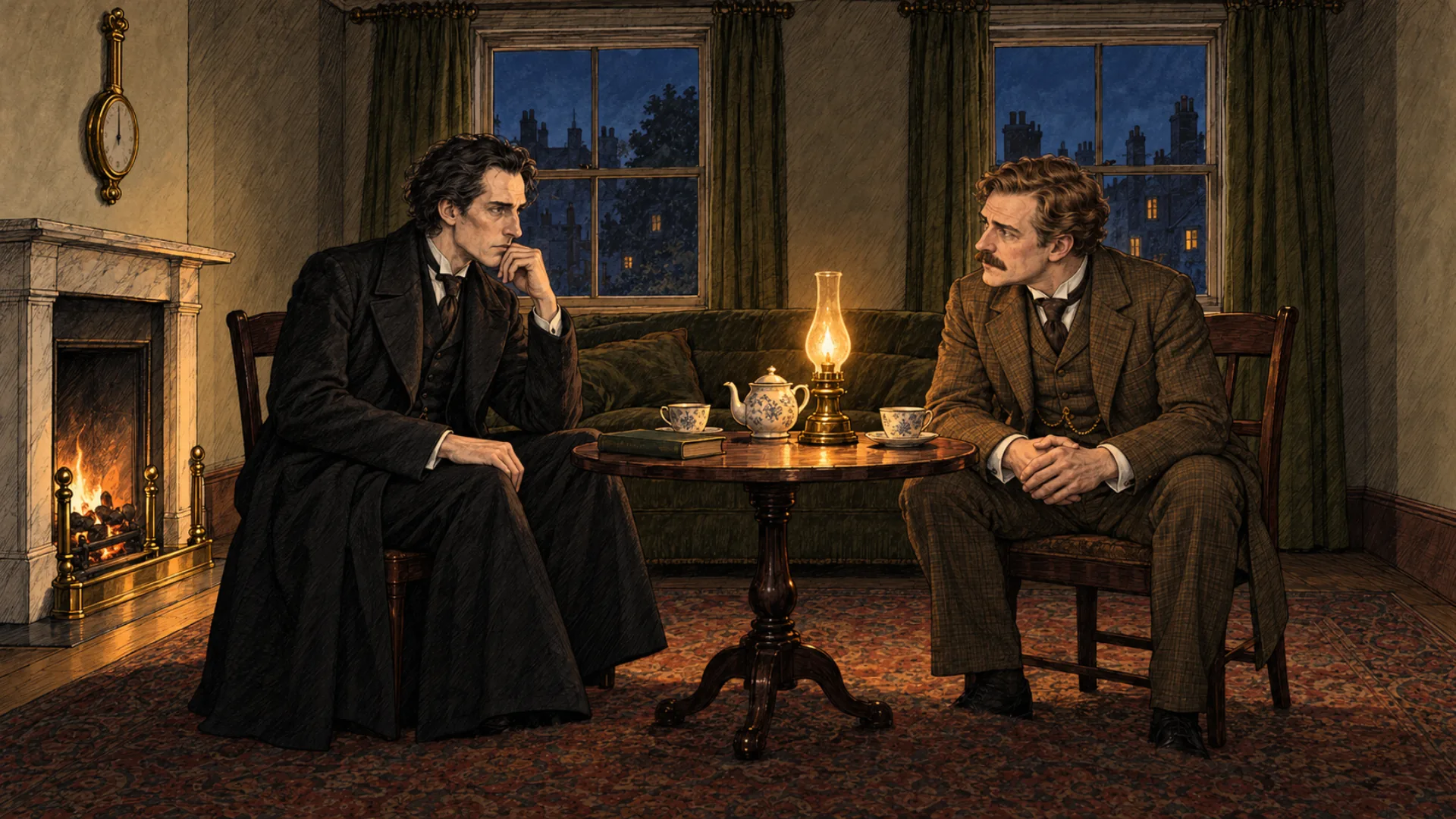
It was late before Sherlock Holmes returned. He came back alone, for Lestrade was staying in lodgings in the town.
シャーロック・ホームズが戻ったのは、夜も遅くなってからだった。レストレードは町の下宿に泊まっていたので、彼は一人で戻ってきた。
"The glass still keeps very high," he remarked as he sat down. "It is of importance that it should not rain before we are able to go over the ground. On the other hand, a man should be at his very best and keenest for such nice work as that, and I did not wish to do it when fagged by a long journey. I have seen young McCarthy."
「気圧計は、まだずいぶん高いところを指している」と彼は腰を下ろしながら言った。「現場を調べられるようになる前に、雨が降らないことが大切なのだ。一方、ああした精密な仕事では、心身ともに最高の状態で、感覚も最も鋭くなければならない。長旅で疲れ切っているときには、やりたくなかったのだ。若いマッカーシーには会ってきた」
"And what did you learn from him?"
「それで、彼から何が分かったんだい」
"Nothing."
「何も」
"Could he throw no light?"
「何も事情を明らかにできなかったのかい」
"None at all. I was inclined to think at one time that he knew who had done it and was screening him or her, but I am convinced now that he is as puzzled as everyone else. He is not a very quick-witted youth, though comely to look at and, I should think, sound at heart."
「まったく何も。一時は、誰がやったのか知っていて、その男か女をかばっているのかとも思った。だが今は、彼もほかの人々と同じくらい、何が何だか分からないのだと確信している。あまり頭の回転の速い青年ではない。もっとも、顔立ちはよく、根は善良だと思う」
"I cannot admire his taste," I remarked, "if it is indeed a fact that he was averse to a marriage with so charming a young lady as this Miss Turner."
「あのターナー嬢のように魅力的な若い女性との結婚に、もし本当に反対だったとしたら、彼の好みには感心できないね」と私は言った。