 よみうち英語Read the classics by typing
Notes Scene 32: A Late Conversation
You've finished this scene
Notes on this scene
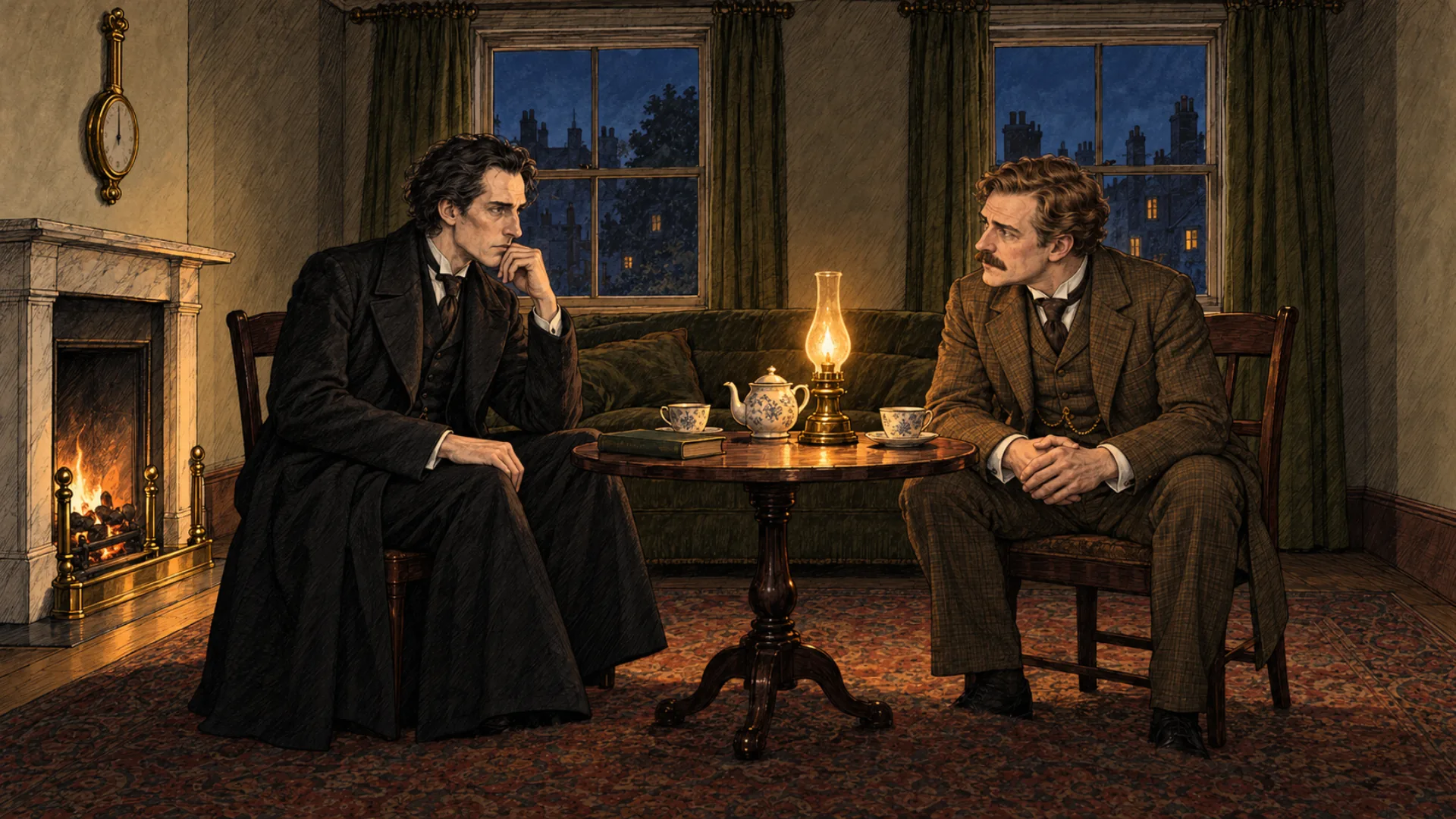
Holmes emphasizes two connected facts: McCarthy had an appointment at the pool, and he called before knowing his son had returned. The appointment therefore cannot have been arranged with James. Holmes says the case depends on these points, then sets the remaining details aside until tomorrow and proposes a change of literary subject.
Japanese in this scene
- であるはずはなかった
- はず expresses a conclusion expected from the available facts. Its negative here rules out the son as the intended person at the appointment, because the father did not know when he would return.
- 叫ぶのを聞かれている
- A verb followed by のを can be the object of 聞く: hearing someone call. The passive 聞かれている reports that other people heard the dead man make that call.
- 細かいことは、すべて明日までお預けだ
- お預け means being made to wait or having something postponed. Holmes playfully puts further details on hold until tomorrow; まで marks how long the discussion is being deferred.
Full text: original English and Japanese translation
"But if he is innocent, who has done it?"
「だが、彼が無実なら、誰がやったんだい」
"Ah! who? I would call your attention very particularly to two points. One is that the murdered man had an appointment with someone at the pool, and that the someone could not have been his son, for his son was away, and he did not know when he would return. The second is that the murdered man was heard to cry 'Cooee!' before he knew that his son had returned. Those are the crucial points upon which the case depends. And now let us talk about George Meredith, if you please, and we shall leave all minor matters until to-morrow."
「ああ、誰なのか。特に、二つの点にきみの注意を向けたい。一つは、殺された男が池で誰かと会う約束をしており、その相手が息子であるはずはなかったことだ。息子は留守で、いつ戻るのか、父親は知らなかったからだ。二つ目は、息子が帰ってきたと知る前に、殺された男が『クーイー』と叫ぶのを聞かれていることだ。事件の行方が懸かっているのは、この決定的な二点なのだ。さて、よければ今度はジョージ・メレディスの話をしよう。細かいことは、すべて明日までお預けだ」