 よみうち英語Read the classics by typing
Notes Scene 45: Returning to the Cry
You've finished this scene
Notes on this scene
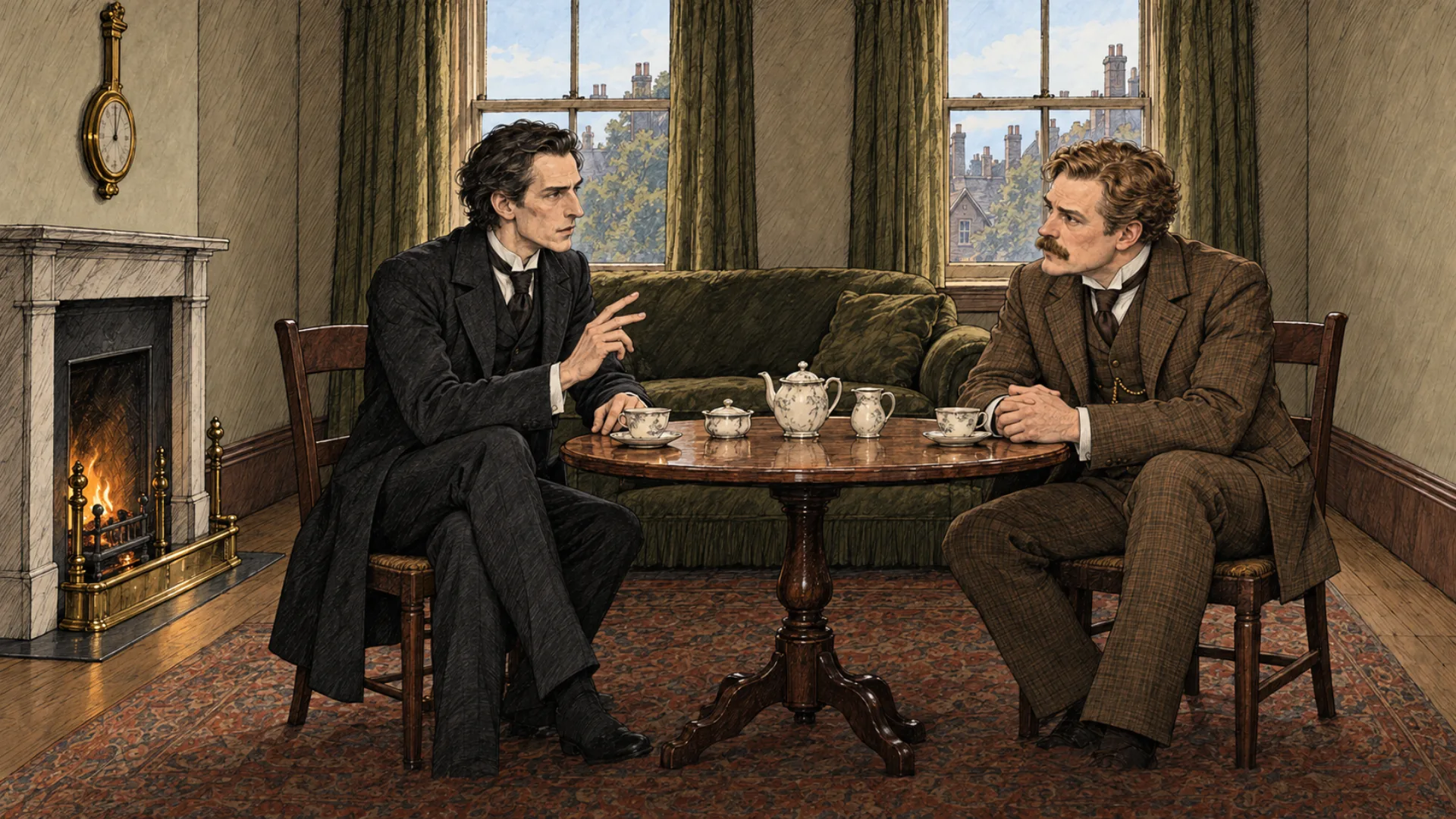
Holmes rules out James as the intended recipient of the call because his father believed him to be in Bristol. His presence within earshot was accidental. The call must have addressed the person McCarthy expected to meet. As cooee is characteristically Australian, Holmes infers that this other person had spent time in Australia.
Japanese in this scene
- ものではありえない
- ありえない means ‘cannot be possible.’ After ものでは, it firmly rejects the proposed identity or purpose: the call could not have been intended for the son.
- いかにもオーストラリアらしい
- いかにも emphasizes a strong impression, while noun + らしい means characteristic of that noun. Together they describe the call as unmistakably or typically Australian.
- いたことのある人間
- Past-form verb + ことがある expresses experience. Within a phrase modifying a noun, が can become の. The description identifies someone who has been in Australia, not necessarily someone currently living there.
Full text: original English and Japanese translation
"What of this 'Cooee!' then?"
「それでは、その『クーイー』はどういうことだい」
"Well, obviously it could not have been meant for the son. The son, as far as he knew, was in Bristol. It was mere chance that he was within earshot. The 'Cooee!' was meant to attract the attention of whoever it was that he had the appointment with. But 'Cooee' is a distinctly Australian cry, and one which is used between Australians. There is a strong presumption that the person whom McCarthy expected to meet him at Boscombe Pool was someone who had been in Australia."
「さて、明らかに、それは息子に向けたものではありえない。父親の知る限りでは、息子はブリストルにいた。声が聞こえる距離に息子がいたのは、まったくの偶然だった。『クーイー』という声は、会う約束をしていた、その誰かの注意を引くためのものだったのだ。だが、『クーイー』は、いかにもオーストラリアらしい呼び声で、オーストラリア人同士が使うものだ。マッカーシーがボスコム池で会うつもりでいた人物は、オーストラリアにいたことのある人間だったと、強く推定できる」
"What of the rat, then?"
「それでは、ネズミのほうは」