 よみうち英語Read the classics by typing
Notes Scene 59: When the Story Ends
You've finished this scene
Notes on this scene
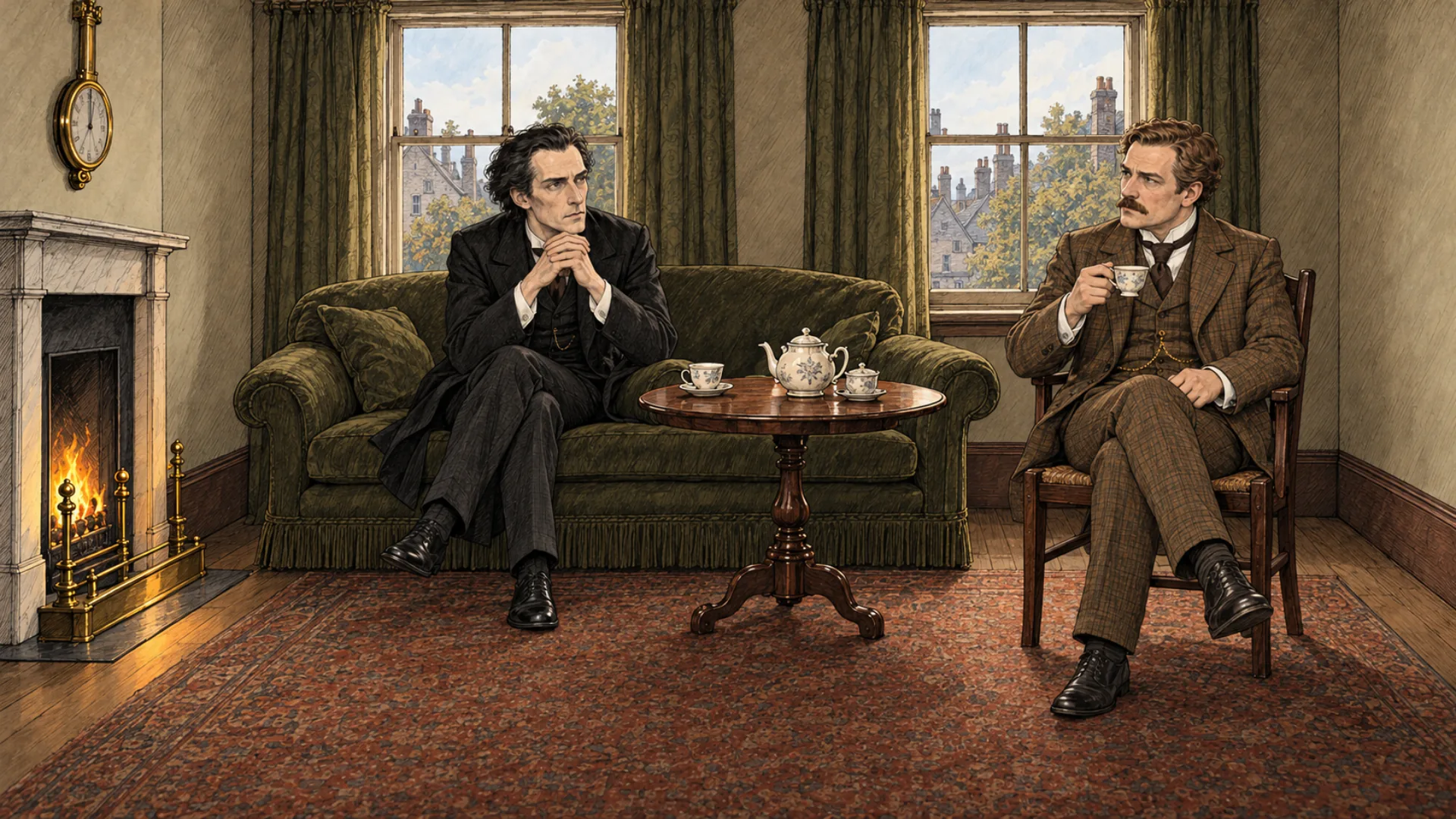
As Turner signs the statement, Holmes declines to judge him and prays they will never face such temptation. Considering Turner's health, he will take no immediate action. He will keep the confession and use it if James is convicted. Otherwise, he promises that its contents will remain secret, whether Turner lives or dies.
Japanese in this scene
- 裁く立場ではありません
- A verb directly modifying 立場 describes a position or role. Holmes denies that judging Turner is his role. He is stating the limits of his own position, not declaring the killing lawful.
- 使わざるを得ません
- This formal construction means ‘will have no choice but to use it.’ The conditional about a guilty verdict defines the circumstance that would force Holmes to produce the confession.
- 生死にかかわらず
- 〜にかかわらず means ‘regardless of.’ 生死 names the alternatives of life and death together. Holmes promises that the secret will be protected whether Turner is alive or dead.
Full text: original English and Japanese translation
"Well, it is not for me to judge you," said Holmes as the old man signed the statement which had been drawn out. "I pray that we may never be exposed to such a temptation."
「さて、私があなたを裁く立場ではありません」とホームズは、老人が書き上げられた供述書に署名する間に言った。「私たちが、決してそのような誘惑にさらされないよう祈ります」
"I pray not, sir. And what do you intend to do?"
「私もそう祈ります。それで、どうなさるおつもりですか」
"In view of your health, nothing. You are yourself aware that you will soon have to answer for your deed at a higher court than the Assizes. I will keep your confession, and if McCarthy is condemned I shall be forced to use it. If not, it shall never be seen by mortal eye; and your secret, whether you be alive or dead, shall be safe with us."
「あなたの健康を考えれば、何もしません。巡回裁判よりも高い法廷で、自分のしたことについて間もなく責任を問われるのは、ご自分でもお分かりでしょう。告白は私が保管し、もしマッカーシーに有罪の判決が下れば、使わざるを得ません。そうでなければ、人間の目に触れることは決してありません。あなたの生死にかかわらず、秘密は私たちが守ります」