 よみうち英語Read the classics by typing
Notes Scene 18: The Wedding Morning
You've finished this scene
Notes on this scene
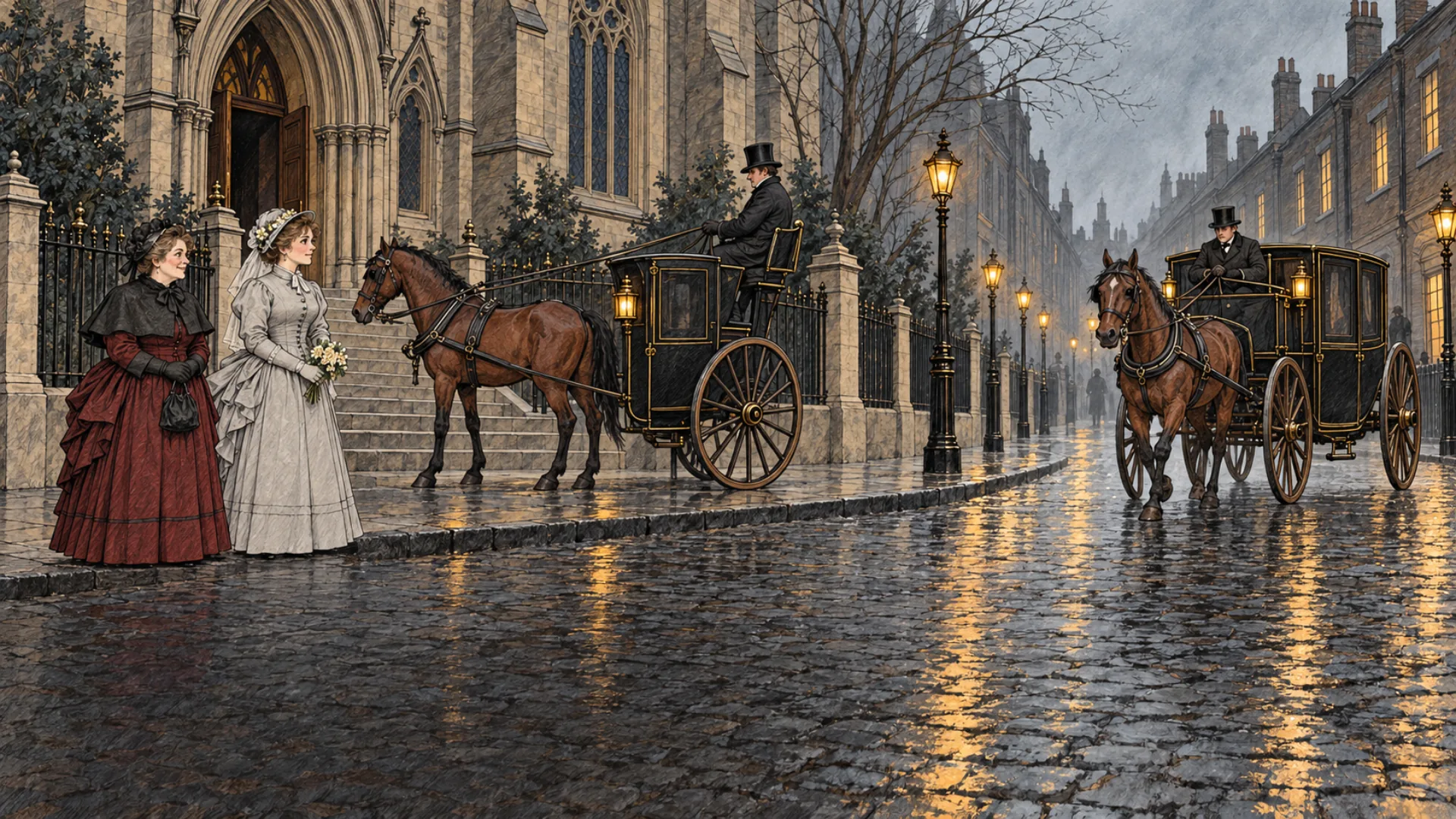
Mary and her mother travel to St. Saviour’s in a hansom while Hosmer follows in a four-wheeled cab. When his cab reaches the church, the driver opens the door and discovers that the passenger has vanished. Hosmer never enters the church.
Japanese in this scene
- は
- は marks the topic of the sentence and can also contrast it with another topic. It is written ha but normally pronounced wa.
- が
- が marks the grammatical subject or introduces newly focused information. It can also connect clauses with a mild contrast.
- を
- を marks the direct object of a verb. With a movement verb, it can instead mark the route or place being crossed.
- に
- に can mark a destination, target, time, recipient, purpose, or resulting state. The predicate shows its role here.
Full text: original English and Japanese translation
"Yes, sir, but very quietly. It was to be at St. Saviour's, near King's Cross, and we were to have breakfast afterwards at the St. Pancras Hotel. Hosmer came for us in a hansom, but as there were two of us he put us both into it and stepped himself into a four-wheeler, which happened to be the only other cab in the street. We got to the church first, and when the four-wheeler drove up we waited for him to step out, but he never did, and when the cabman got down from the box and looked there was no one there! The cabman said that he could not imagine what had become of him, for he had seen him get in with his own eyes. That was last Friday, Mr. Holmes, and I have never seen or heard anything since then to throw any light upon what became of him."
「ええ、でも、ひっそりと行うつもりでした。キングズ・クロスの近くのセント・セイヴィア教会で挙げ、その後はセント・パンクラス・ホテルで朝食をとることになっていました。ホズマーはハンサムで迎えに来ましたが、私たちが二人いたので、そちらには二人とも乗せ、自分は四輪辻馬車に乗りました。それが、たまたま通りにいたもう一台きりの辻馬車だったんです。私たちが先に教会に着き、四輪辻馬車が来ると、彼が降りてくるのを待ちました。でも、いくら待っても降りてこなくて、御者が御者台から降りて見ると、誰も乗っていませんでした。御者は、自分の目で乗るところを見たのだから、彼がどうなったのか見当もつかないと言いました。それが先週の金曜日です、ホームズさん。それ以来、彼がどうなったのか分かるようなことは、何も見ても聞いてもいません」