 よみうち英語Read the classics by typing
Notes Scene 23: Before She Leaves
You've finished this scene
Notes on this scene
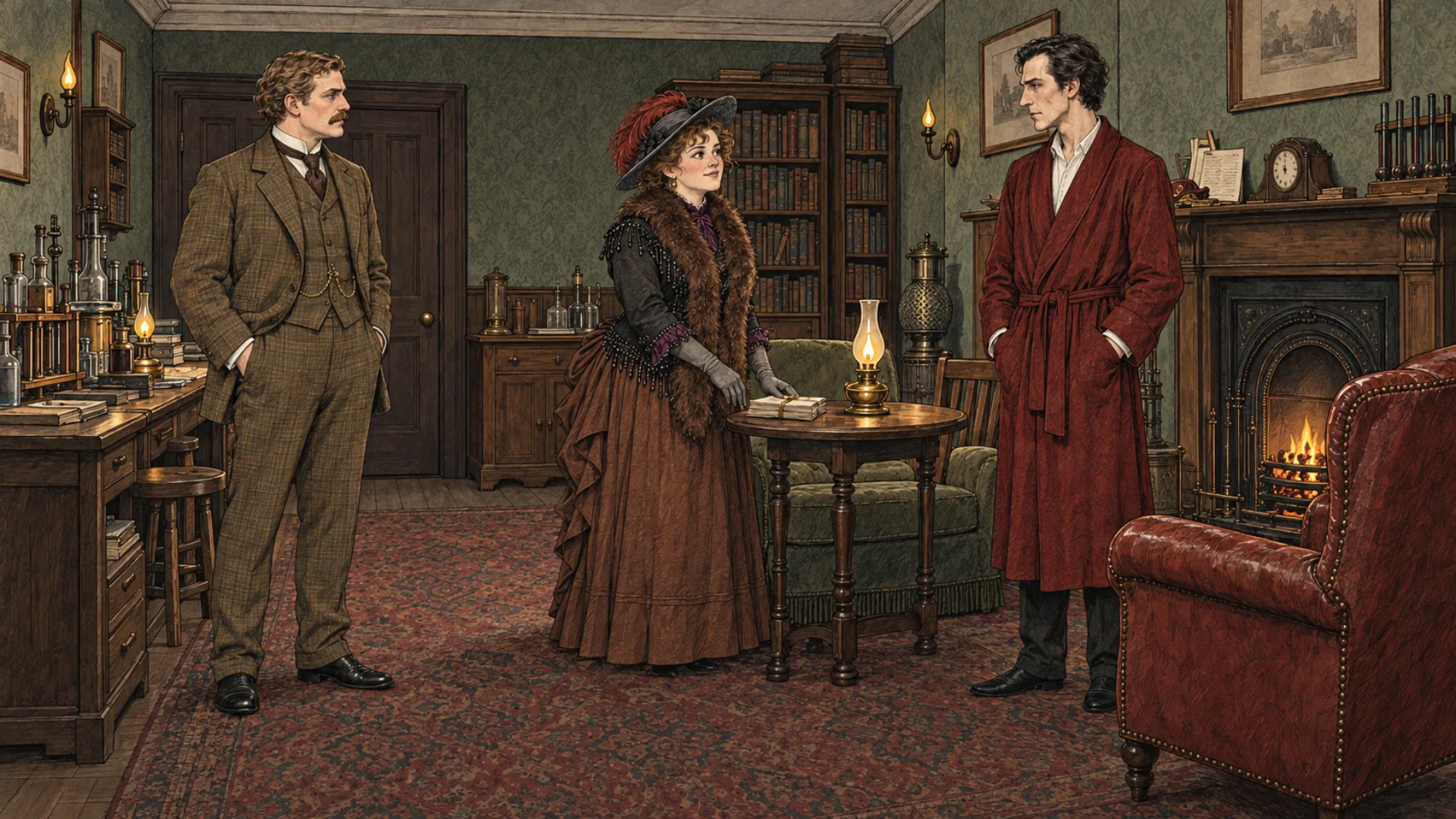
Mary gives Holmes her address and Windibank’s place of work. Rejecting Holmes’s advice to forget Hosmer, she vows to remain faithful and wait for him. After leaving the papers behind, she departs, and both Holmes and Watson are moved by her steadfast trust.
Japanese in this scene
- は
- は marks the topic of the sentence and can also contrast it with another topic. It is written ha but normally pronounced wa.
- が
- が marks the grammatical subject or introduces newly focused information. It can also connect clauses with a mild contrast.
- を
- を marks the direct object of a verb. With a movement verb, it can instead mark the route or place being crossed.
- に
- に can mark a destination, target, time, recipient, purpose, or resulting state. The predicate shows its role here.
Full text: original English and Japanese translation
"Thank you. And your address?"
「ありがとうございます。それで、ご住所は」
"No. 31 Lyon Place, Camberwell."
「キャンバーウェル、ライオン・プレイス三十一番です」
"Mr. Angel's address you never had, I understand. Where is your father's place of business?"
「エンジェルさんの住所は、一度もご存じなかったのですね。ウィンディバンクさんの勤め先はどちらですか」
"He travels for Westhouse & Marbank, the great claret importers of Fenchurch Street."
「フェンチャーチ街の大きな赤ワイン輸入商、ウェストハウス・アンド・マーバンク商会の外回り営業をしています」
"Thank you. You have made your statement very clearly. You will leave the papers here, and remember the advice which I have given you. Let the whole incident be a sealed book, and do not allow it to affect your life."
「ありがとうございます。たいへん分かりやすくお話しくださいました。書類はこちらへ残して、私から申し上げたことを覚えておいてください。この出来事はすべて、固く閉じた本のように、もう開かないものとしてください。暮らしに影響を及ぼさせないことです」
"You are very kind, Mr. Holmes, but I cannot do that. I shall be true to Hosmer. He shall find me ready when he comes back."
「たいへんご親切なお言葉です、ホームズさん。でも、それはできません。私はホズマーに忠実でいます。あの方は戻ってきたとき、私が変わらず待っていると分かるでしょう」
For all the preposterous hat and the vacuous face, there was something noble in the simple faith of our visitor which compelled our respect. She laid her little bundle of papers upon the table and went her way, with a promise to come again whenever she might be summoned.
ばかげた帽子とぼんやりした顔つきにもかかわらず、訪問者のひたむきな信頼には、私たちが敬意を抱かずにいられない気高さがあった。彼女は小さな書類の束を机に置き、呼ばれたらいつでもまた来ると約束して帰っていった。