 よみうち英語Read the classics by typing
Notes Scene 28: The Printed Notice
You've finished this scene
Notes on this scene
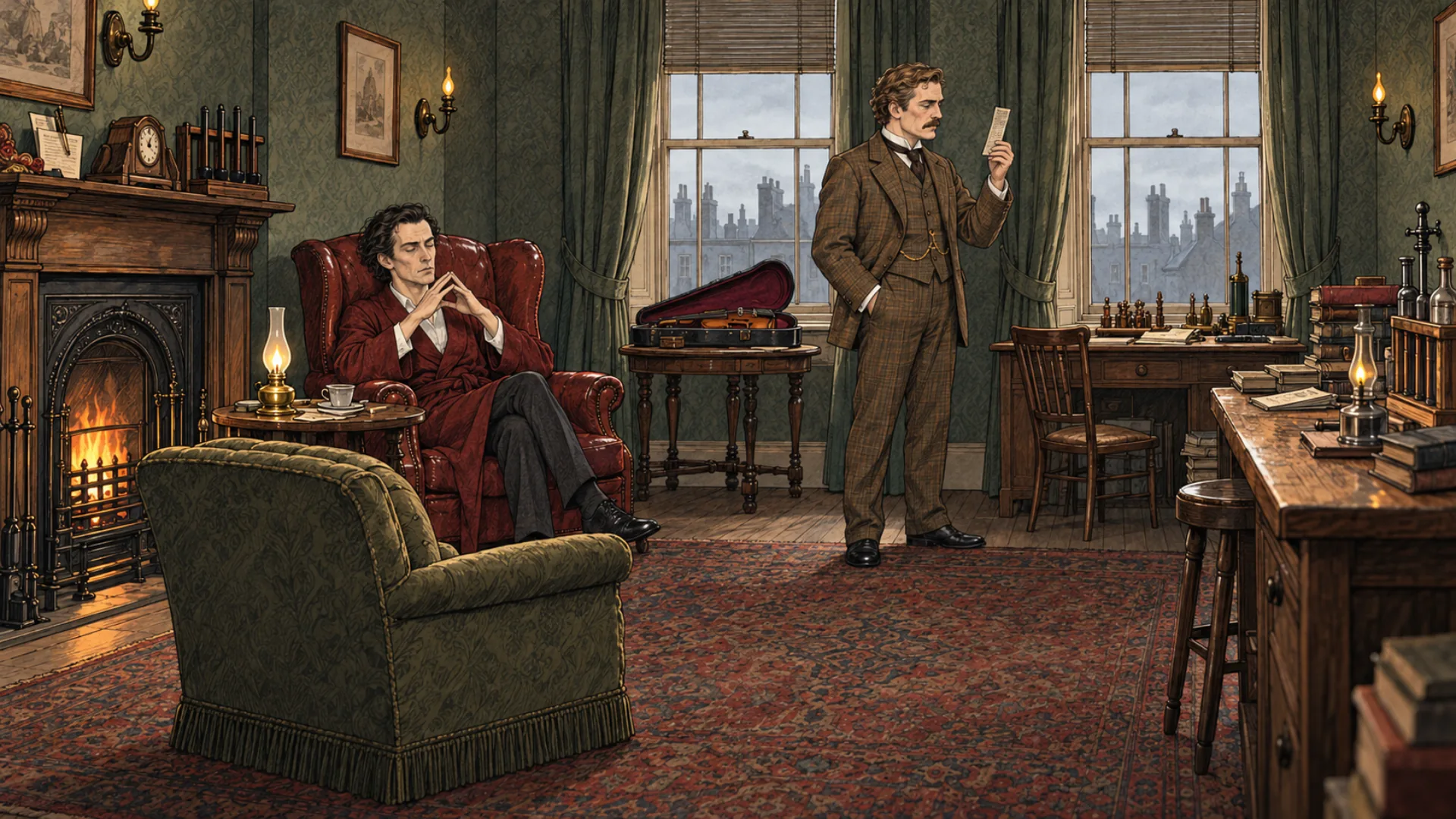
Watson reads the missing-person advertisement aloud. It gives an extensive physical description of Hosmer, including his height, build, coloring, facial hair, glasses, weak voice, clothes, and connection with Leadenhall Street, before directing anyone with useful information to Mary’s address and requesting help from anyone who recognizes him.
Japanese in this scene
- は
- は marks the topic of the sentence and can also contrast it with another topic. It is written ha but normally pronounced wa.
- が
- が marks the grammatical subject or introduces newly focused information. It can also connect clauses with a mild contrast.
- を
- を marks the direct object of a verb. With a movement verb, it can instead mark the route or place being crossed.
- に
- に can mark a destination, target, time, recipient, purpose, or resulting state. The predicate shows its role here.
Full text: original English and Japanese translation
I held the little printed slip to the light. "Missing," it said, "on the morning of the fourteenth, a gentleman named Hosmer Angel. About five ft. seven in. in height; strongly built, sallow complexion, black hair, a little bald in the centre, bushy, black side-whiskers and moustache; tinted glasses, slight infirmity of speech. Was dressed, when last seen, in black frock-coat faced with silk, black waistcoat, gold Albert chain, and grey Harris tweed trousers, with brown gaiters over elastic-sided boots. Known to have been employed in an office in Leadenhall Street. Anybody bringing," &c, &c.
私は小さな新聞の切り抜きを光にかざした。「行方不明」と、そこにはあった。「十四日の朝、ホズマー・エンジェルという紳士。身長約五フィート七インチ。がっしりした体格、黄ばんだ顔色、黒髪で頭頂部が少し薄く、ふさふさした黒い頬ひげと口ひげ。色付き眼鏡を掛け、話し方にやや難がある。最後に見られたときの服装は、絹の見返しを付けた黒いフロックコート、黒いチョッキ、金の懐中時計の鎖、灰色のハリス・ツイードのズボン、脇にゴムの入ったブーツの上に茶色のゲートル。レドンホール街の事務所に勤めていたことが分かっている。情報をお寄せの方は」といった文が続いていた。