 よみうち英語Read the classics by typing
Notes Scene 29: Letters on the Table
You've finished this scene
Notes on this scene
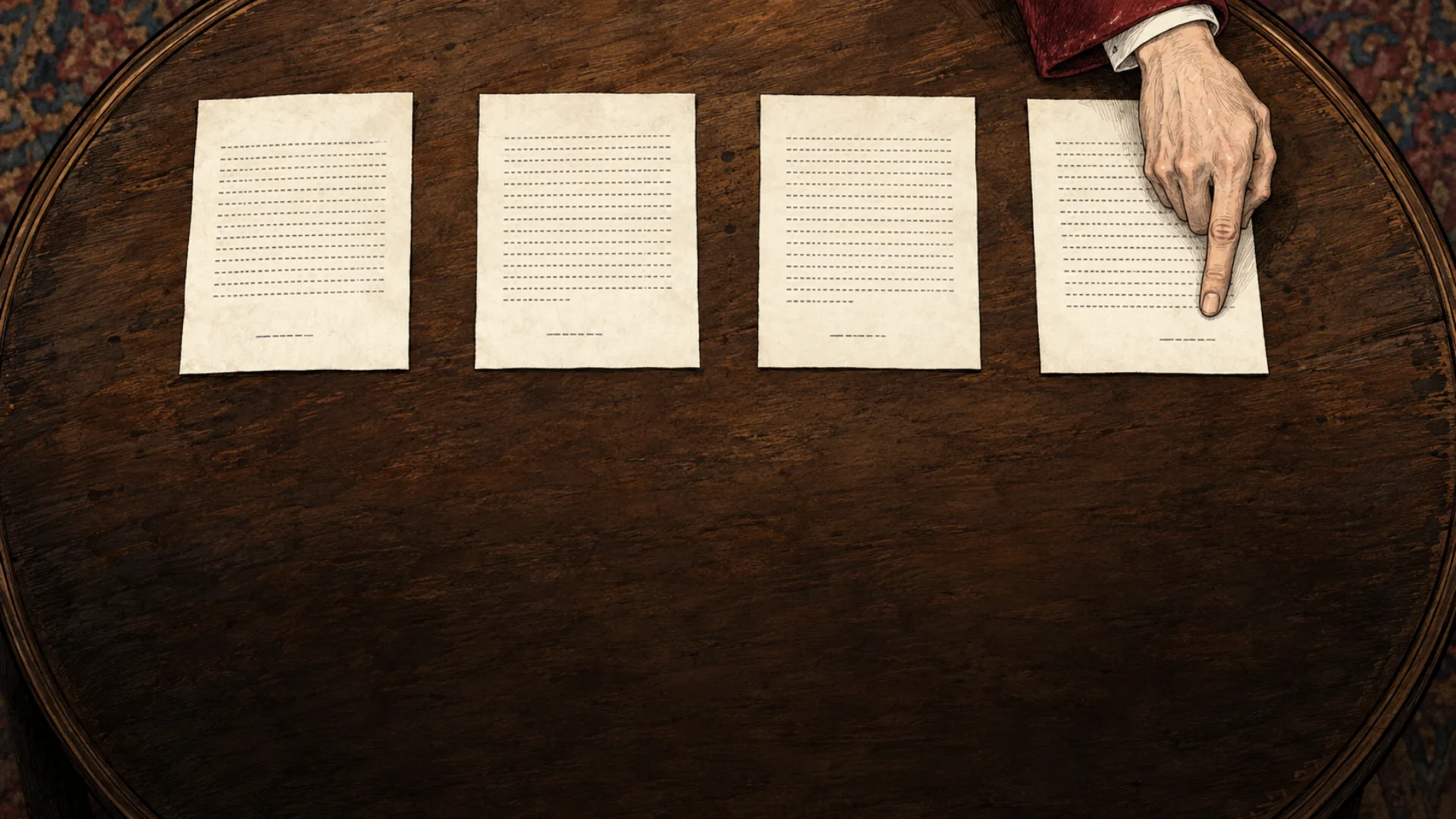
Holmes finds little in the language of Hosmer’s letters but emphasizes that even the signature is typewritten. Asked why that matters, Watson suggests that the writer might later deny responsibility for a breach of promise by claiming the typed name was not his signature.
Japanese in this scene
- は
- は marks the topic of the sentence and can also contrast it with another topic. It is written ha but normally pronounced wa.
- が
- が marks the grammatical subject or introduces newly focused information. It can also connect clauses with a mild contrast.
- を
- を marks the direct object of a verb. With a movement verb, it can instead mark the route or place being crossed.
- に
- に can mark a destination, target, time, recipient, purpose, or resulting state. The predicate shows its role here.
Full text: original English and Japanese translation
"That will do," said Holmes. "As to the letters," he continued, glancing over them, "they are very commonplace. Absolutely no clue in them to Mr. Angel, save that he quotes Balzac once. There is one remarkable point, however, which will no doubt strike you."
「そこまででいい」とホームズは言った。「手紙のほうだが」と、目を通しながら彼は続けた。「ごくありふれたものだ。一度バルザックを引用している以外、エンジェルさんについての手掛かりはまったくない。ただ、一つ注目すべき点があって、きみもきっと気づくだろう」
"They are typewritten," I remarked.
「タイプで打ってあるね」と私は言った。
"Not only that, but the signature is typewritten. Look at the neat little 'Hosmer Angel' at the bottom. There is a date, you see, but no superscription except Leadenhall Street, which is rather vague. The point about the signature is very suggestive—in fact, we may call it conclusive."
「それだけでなく、署名もタイプなのだ。一番下の、こぢんまりと整った『ホズマー・エンジェル』を見たまえ。日付はあるが、差出人の住所はレドンホール街とあるだけで、かなり曖昧だ。署名の点はたいへん示唆的だ。実際、決定的と言ってもよい」
"Of what?"
「何についてだい」
"My dear fellow, is it possible you do not see how strongly it bears upon the case?"
「きみ、これが事件にどれほど強く関係するか、分からないというのかね」
"I cannot say that I do unless it were that he wished to be able to deny his signature if an action for breach of promise were instituted."
「分かるとは言えないよ。婚約不履行で訴えられたときに、自分の署名ではないと言えるようにしたかった、ということでもない限りね」