 よみうち英語Read the classics by typing
Notes Scene 33: The Expected Caller
You've finished this scene
Notes on this scene
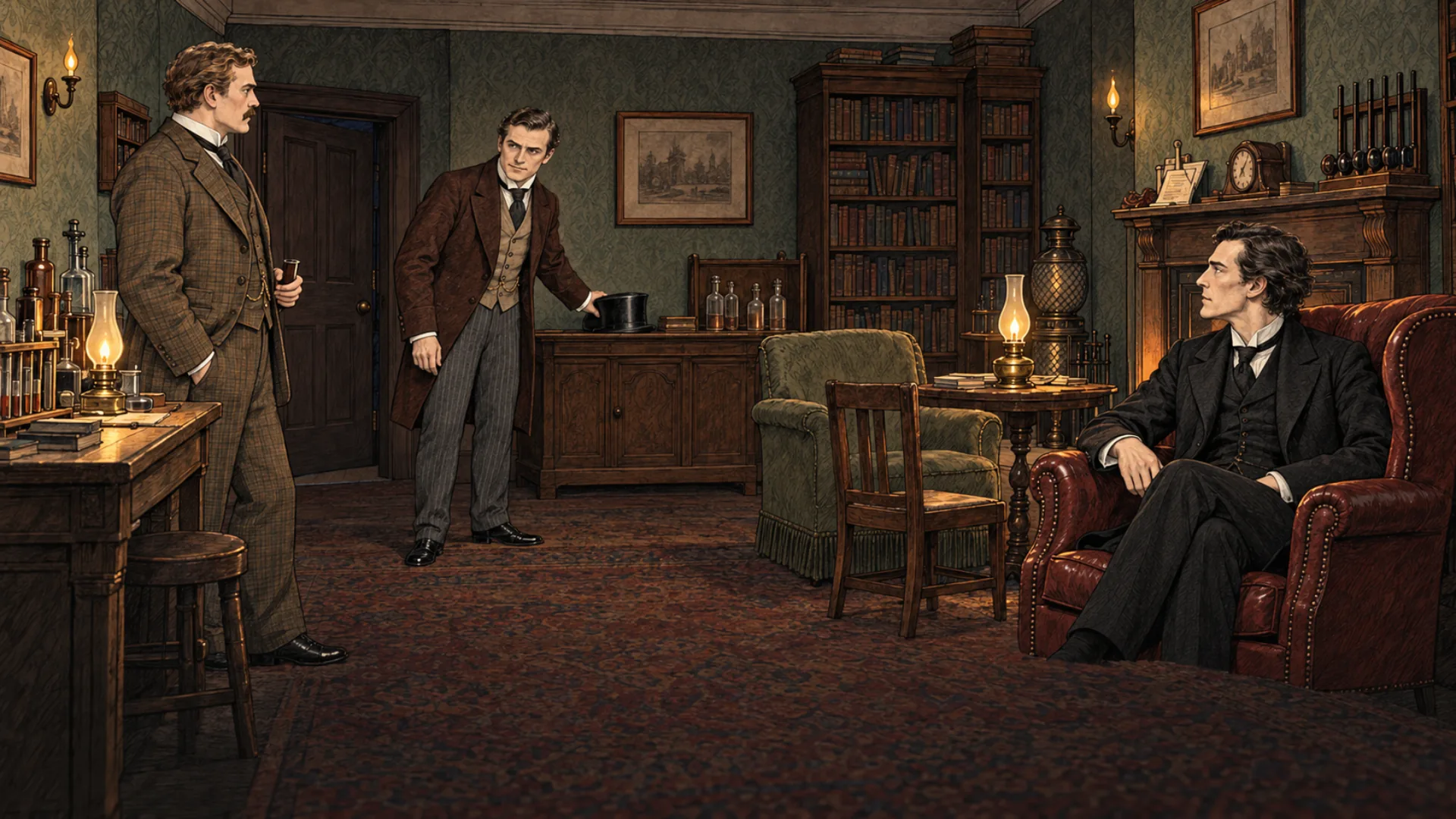
Windibank confirms that he wrote the letter arranging the meeting. He criticizes Mary for taking a domestic concern beyond the family and argues that finding Hosmer Angel is impossible. Holmes listens while the visitor presents the investigation as both useless and needlessly expensive.
Japanese in this scene
- は
- は marks the topic of the sentence and can also contrast it with another topic. It is written ha but normally pronounced wa.
- が
- が marks the grammatical subject or introduces newly focused information. It can also connect clauses with a mild contrast.
- を
- を marks the direct object of a verb. With a movement verb, it can instead mark the route or place being crossed.
- に
- に can mark a destination, target, time, recipient, purpose, or resulting state. The predicate shows its role here.
Full text: original English and Japanese translation
The man who entered was a sturdy, middle-sized fellow, some thirty years of age, clean-shaven, and sallow-skinned, with a bland, insinuating manner, and a pair of wonderfully sharp and penetrating grey eyes. He shot a questioning glance at each of us, placed his shiny top-hat upon the sideboard, and with a slight bow sidled down into the nearest chair.
入ってきた男は三十歳ほどの、がっしりした中背の人物だった。ひげをきれいに剃り、黄ばんだ肌で、愛想よく取り入るような物腰をしていたが、灰色の両目は驚くほど鋭く、人を見透かすようだった。彼は私たち一人一人に探るような視線を投げ、ぴかぴかのシルクハットをサイドボードに置くと、軽く会釈をして、いちばん近い椅子へそっと身を滑らせた。
"Good-evening, Mr. James Windibank," said Holmes. "I think that this typewritten letter is from you, in which you made an appointment with me for six o'clock?"
「こんばんは、ジェームズ・ウィンディバンクさん」とホームズは言った。「この、六時にお会いする約束をしたタイプの手紙は、あなたからのものですね」
"Yes, sir. I am afraid that I am a little late, but I am not quite my own master, you know. I am sorry that Miss Sutherland has troubled you about this little matter, for I think it is far better not to wash linen of the sort in public. It was quite against my wishes that she came, but she is a very excitable, impulsive girl, as you may have noticed, and she is not easily controlled when she has made up her mind on a point. Of course, I did not mind you so much, as you are not connected with the official police, but it is not pleasant to have a family misfortune like this noised abroad. Besides, it is a useless expense, for how could you possibly find this Hosmer Angel?"
「ええ、そうです。少し遅れてしまったようですが、なにしろ、すっかり自分の自由になる身ではありませんので。サザーランドさんがこんな些細なことでご面倒をおかけし、申し訳ありません。この種の内輪の恥を世間にさらさないほうが、ずっとよいと思うのです。あの子がこちらへ来たのは、まったく私の意に反することでした。でも、お気づきかもしれませんが、たいへん興奮しやすく衝動的な娘で、一つのことを決心すると、簡単には言うことを聞かないのです。もちろん、あなたは警察の方ではありませんから、それほど気にはしませんでしたが、こうした家の不幸を世間に広められるのは、愉快ではありません。それに、無駄な出費でしょう。どうしてあなたに、そのホズマー・エンジェルを見つけられるというのですか」