 よみうち英語Read the classics by typing
Notes Scene 41: What Was Checked
You've finished this scene
Notes on this scene
Holmes says that he removed the features belonging to a disguise from Hosmer’s description and sent the remainder to Windibank’s employer, who identified him. Windibank’s typed reply supplied further proof. Holmes decides Mary would reject the truth and quotes a warning about taking away a cherished delusion.
Japanese in this scene
- は
- は marks the topic of the sentence and can also contrast it with another topic. It is written ha but normally pronounced wa.
- が
- が marks the grammatical subject or introduces newly focused information. It can also connect clauses with a mild contrast.
- を
- を marks the direct object of a verb. With a movement verb, it can instead mark the route or place being crossed.
- に
- に can mark a destination, target, time, recipient, purpose, or resulting state. The predicate shows its role here.
Full text: original English and Japanese translation
"And how did you verify them?"
「それで、どうやって確かめたのだい」
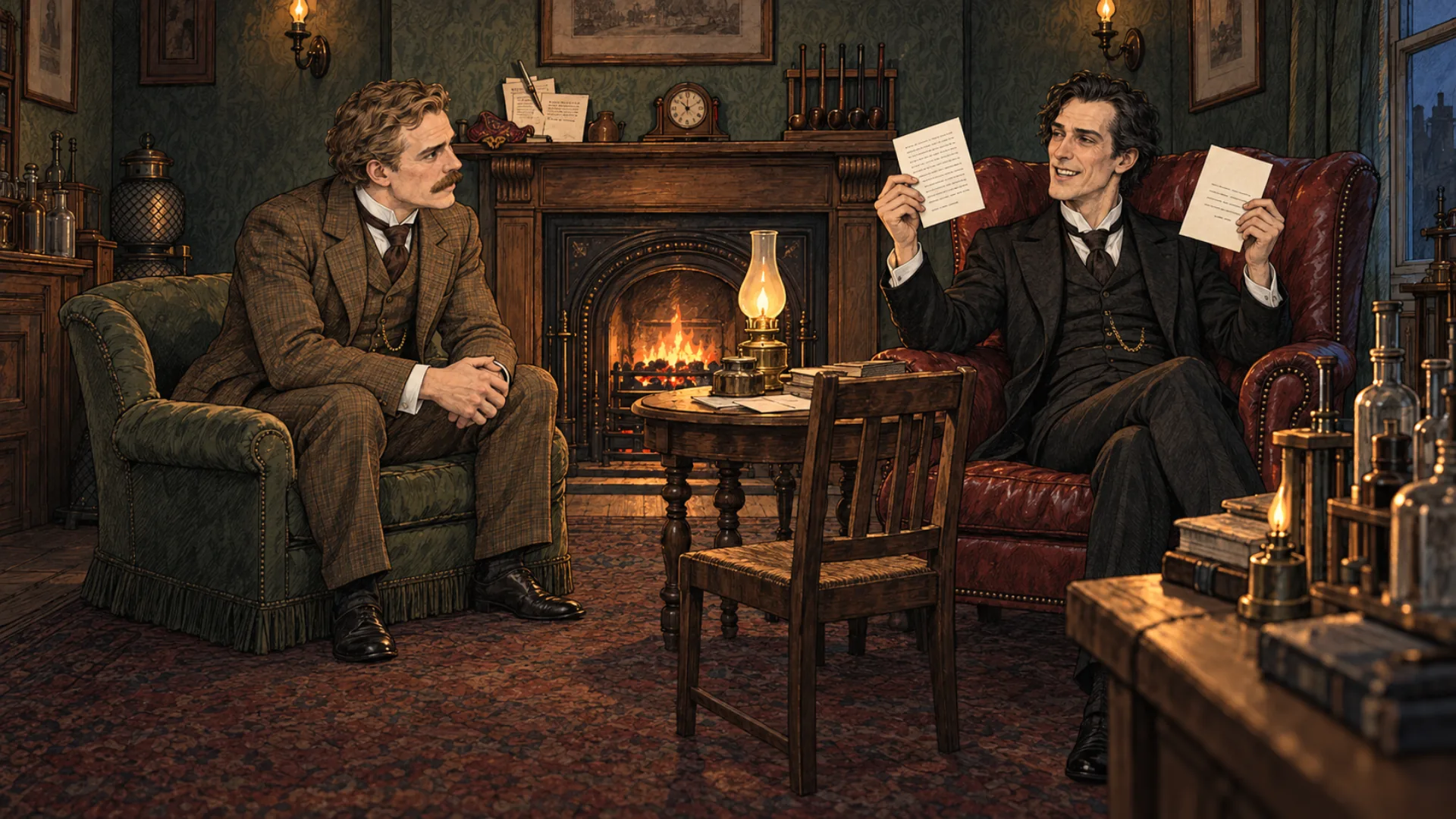
"Having once spotted my man, it was easy to get corroboration. I knew the firm for which this man worked. Having taken the printed description. I eliminated everything from it which could be the result of a disguise—the whiskers, the glasses, the voice, and I sent it to the firm, with a request that they would inform me whether it answered to the description of any of their travellers. I had already noticed the peculiarities of the typewriter, and I wrote to the man himself at his business address asking him if he would come here. As I expected, his reply was typewritten and revealed the same trivial but characteristic defects. The same post brought me a letter from Westhouse & Marbank, of Fenchurch Street, to say that the description tallied in every respect with that of their employé, James Windibank. Voilà tout!"
「一度相手に目星が付けば、裏付けを得るのは簡単だった。この男が勤めている商会は分かっていた。そこで、印刷された人相書きを手に取った。そこから、頬ひげ、眼鏡、声といった、変装の結果でありうるものをすべて取り除き、それを商会へ送り、外回り営業の誰かの特徴に当てはまるか教えてほしいと頼んだ。タイプライターの癖にはすでに気づいていたので、男本人にも勤務先宛てに手紙を出し、こちらへ来るか尋ねた。予想どおり、返事はタイプで打たれ、同じ、些細だが特徴的な欠陥が出ていた。同じ郵便で、フェンチャーチ街のウェストハウス・アンド・マーバンク商会からも手紙が来た。人相書きは、従業員のジェームズ・ウィンディバンクと、あらゆる点で一致するというのだ。これで全部さ」
"And Miss Sutherland?"
「サザーランド嬢にはどうするのだい」
"If I tell her she will not believe me. You may remember the old Persian saying, 'There is danger for him who taketh the tiger cub, and danger also for whoso snatches a delusion from a woman.' There is as much sense in Hafiz as in Horace, and as much knowledge of the world."
「話しても信じないだろう。ペルシアの古い言い伝えを覚えているかもしれないね。『虎の子を奪う者には危険があり、女から思い込みを奪い取る者にも危険がある』というものだ。ハーフィズには、ホラティウスに劣らぬ分別があり、世の中についての知恵も同じくらいあるのだよ」