 よみうち英語Read the classics by typing
Notes Scene 7: A Family Matter
You've finished this scene
Notes on this scene
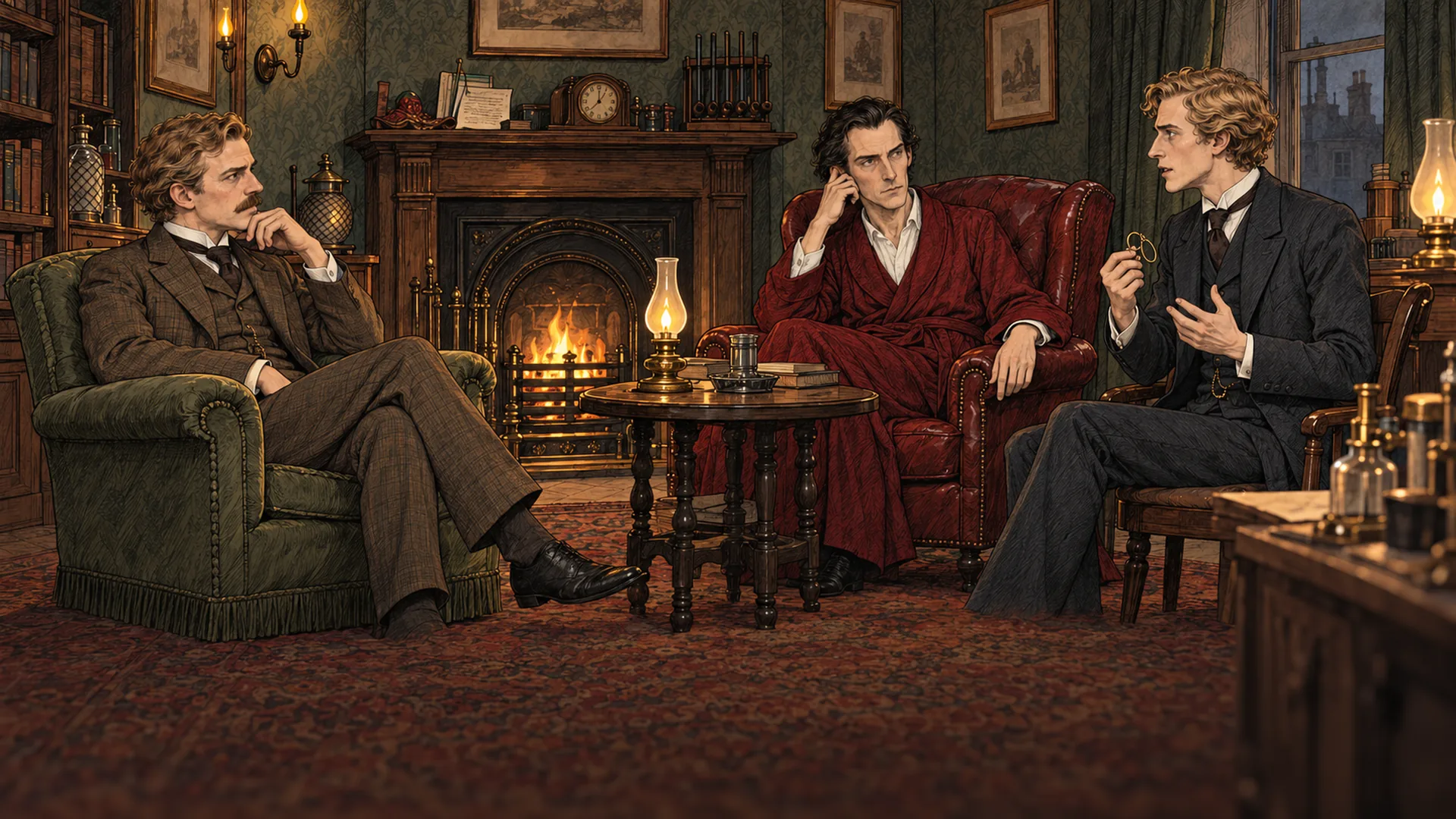
The young man insists that his family’s problem is exceptionally strange, even among Holmes’s cases. Holmes asks him to move nearer the fire and give a clear account from the beginning, so that the facts can be considered in their proper order.
Japanese in this scene
- について
- について means “about; concerning.” It attaches to the topic being discussed or investigated.
- という
- という links a quoted name, statement, or idea to the noun that follows. It can be translated as “called,” “that,” or “the idea that.”
- のでしょう
- のでしょう combines explanatory のです with the tentative でしょう, often asking “what could it be?” or softening a question.
Full text: original English and Japanese translation
"But what is that compared with the number of your successes?"
「けれど、成功なさった数と比べれば、それが何だというのでしょう」
"It is true that I have been generally successful."
「おおむね成功してきたのは確かです」
"Then you may be so with me."
「それなら、私の場合もうまくいくかもしれませんね」
"I beg that you will draw your chair up to the fire and favour me with some details as to your case."
「椅子を火のそばへ寄せて、事件について少し詳しくお聞かせください」
"It is no ordinary one."
「普通の話ではありません」
"None of those which come to me are. I am the last court of appeal."
「私のところへ来る話は、どれも普通ではありません。私は最後の控訴裁判所ですから」
"And yet I question, sir, whether, in all your experience, you have ever listened to a more mysterious and inexplicable chain of events than those which have happened in my own family."
「それでも、あなたのご経験の中でも、私の一族に起きたこと以上に不可解で説明のつかない出来事の連なりは、お聞きになったことがないのではないかと思います」
"You fill me with interest," said Holmes. "Pray give us the essential facts from the commencement, and I can afterwards question you as to those details which seem to me to be most important."
「それは興味を引かれますね」とホームズは言った。「まず初めから肝心の事実をお話しください。特に重要と思える細部は、後からこちらでお尋ねします」
The young man pulled his chair up and pushed his wet feet out towards the blaze.
青年は椅子を引き寄せ、濡れた足を燃え盛る火の方へ差し出した。